
How To
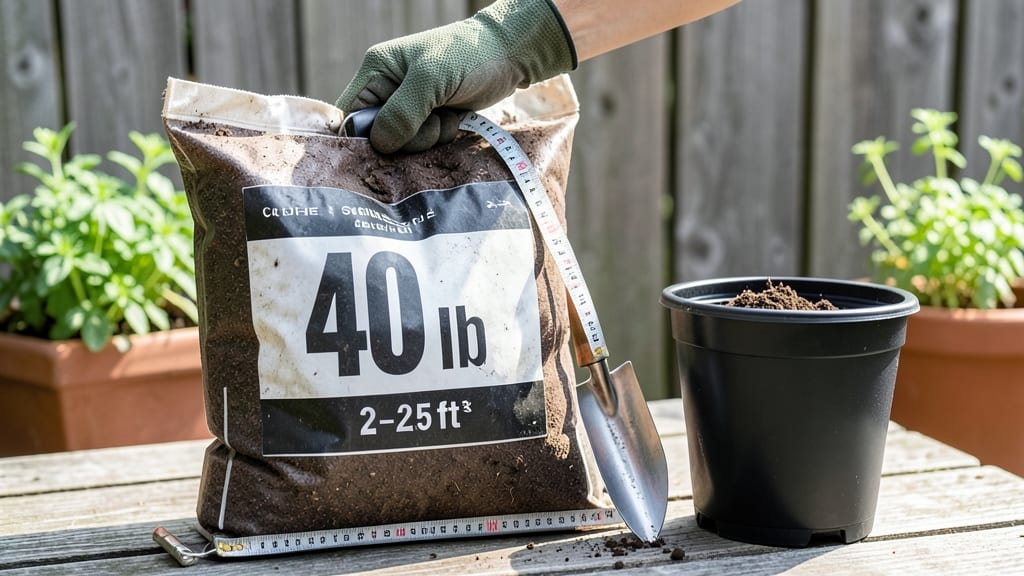
Converting 40 pounds of potting soil to cubic feet gives you roughly 1.2 to 1.5 cubic feet, but this varies based on the mix's density—organic-heavy soils like peat or coco coir take up more space, while mineral-based blends pack tighter. Double-check the bag's volume label for exact measurements.
Understanding this conversion is key because potting soil's weight doesn't directly translate to its volume. 🌱 For example, a bag labeled "40 lbs" might actually contain 1.5 cubic feet of lightweight peat-based mix, while a denser mineral blend could shrink to just 1.2 cubic feet.
This difference matters when planning projects like raised beds or container gardening, where precise volume calculations ensure you buy the right amount without overpaying or running short.
Most gardeners use this rule of thumb: 1 cubic foot of soil typically weighs between 20-40 lbs, depending on moisture levels and organic content. 💛 If you're working with large projects, I recommend measuring your container's volume first (length × width × height) before calculating how many bags you'll need.
For instance, a 4'×2'×1' raised bed requires 8 cubic feet, so you'd need about 6-7 bags of the standard 40 lb variety.
💡 In This Article
- Why Potting Soil Weight Doesn’t Equal Volume
- Calculating Cubic Feet for Garden Projects
Why potting soil weight doesn’t equal volume
Potting soil’s weight and volume don’t align because density varies wildly based on composition. Organic materials like peat moss or coco coir absorb moisture, expanding their volume by up to 30% compared to their dry state.
For example, a 40 lb bag of peat-heavy mix might measure 1.5 cubic feet, while a mineral-heavy blend (with perlite or vermiculite) could compress to just 1.2 cubic feet. This happens because organic matter traps air and water, creating a fluffier structure, while inorganic additives pack tightly.
The bagging process also affects bulk. Compressed bags (like those sold in stores) often settle after opening, reducing volume by 10-15%. Loose, bulk soil expands more due to natural aeration. 🌱 Even moisture levels play a role: wetter soil weighs more per cubic foot, while dry mixes feel lighter.
For instance, a 40 lb bag of moistened potting mix might occupy 1.3 cubic feet, but the same weight in dry form could stretch to 1.6 cubic feet once hydrated.
Understanding this helps avoid common mistakes. Many gardeners assume a 40 lb bag equals 1 cubic foot, but that’s only true for dense, mineral-rich mixes. Organic-heavy soils require 25-30% more volume** for the same weight.
This explains why a raised bed project might need 2-3 more bags than initially calculated if you’re using peat-based soil.
Here’s a quick comparison of common soil types and their volume per 40 lb bag:
- Peat-heavy mixes: 1.4–1.6 cubic feet (fluffy, high air content)
- Coco coir blends: 1.3–1.5 cubic feet (moderate expansion)
- Mineral-based (perlite/vermiculite): 1.1–1.3 cubic feet (compact)
- Compost-rich soil: 1.2–1.4 cubic feet (varies by moisture)
Always check the bag’s label for exact measurements—some brands list both weight and volume. For example, Miracle-Gro’s 40 lb bag typically lists 1.5 cubic feet, while FoxFarm’s Ocean Forest (peat-heavy) might measure 1.6 cubic feet. This precision saves time and money when shopping for large projects.
The key takeaway? Weight is a poor predictor of volume in potting soil. To plan accurately, measure your project’s cubic feet first, then calculate how many 40 lb bags you’ll need based on the mix’s density. 💫