
Companion Plants
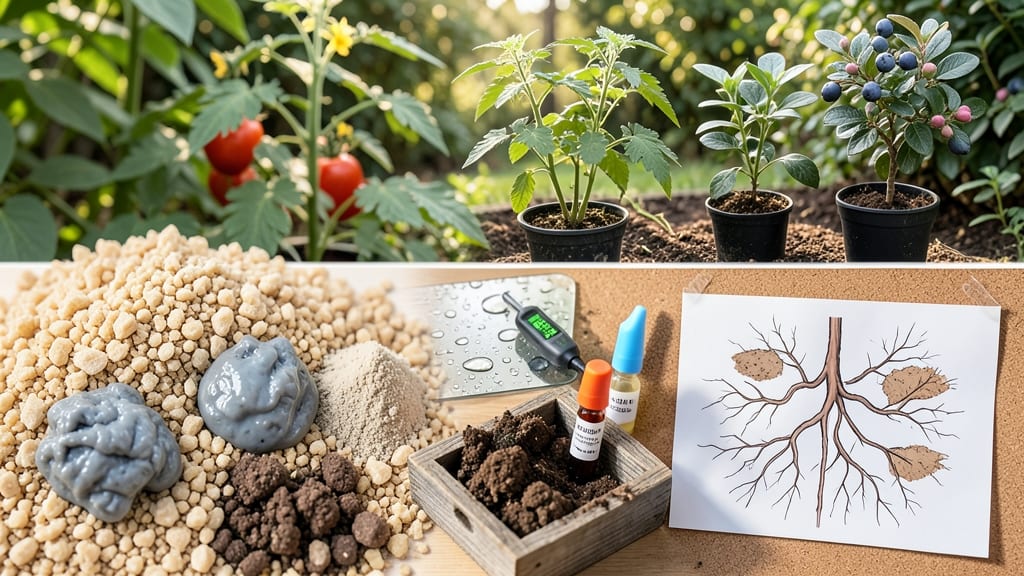
Soil types for plants create dramatically different growing conditions—sandy soil drains quickly but struggles to hold nutrients, dense clay retains moisture but suffocates roots, while loamy soil offers the perfect balance of drainage, fertility, and air circulation for most garden plants. Choosing the right soil type for each species maximizes root health and overall plant vitality.
Understanding your soil's makeup is like knowing your plants' personality. 🌱 Sandy soils, with their coarse particles, let water rush through too fast, often leaving roots thirsty and starved for nutrients.
On the other end, clay soils hold onto water like a sponge but become compacted and airless, making it hard for roots to breathe. Loamy soils—made of equal parts sand, silt, and clay—strike the ideal balance, retaining just enough moisture while allowing roots to spread freely.
This is why gardeners obsessed with perfect blooms often spend hours amending their soil with compost or organic matter to mimic that loamy texture.
What's fascinating is how plants adapt to these conditions. Succulents and cacti thrive in sandy, well-draining soils where they can store water, while blueberries demand acidic, peat-rich soils to unlock their full flavor potential. Even vegetables like tomatoes need that loamy sweet spot to produce heavy yields.
The key is observing your plants' behavior—wilting despite regular watering? You might need more organic matter. Yellowing leaves? Your soil could be too alkaline or nutrient-poor. Every garden tells a story through its soil.
💡 In This Article
- How Soil Composition Affects Plant Root Development
- Best Plants for Common Soil Types: A Gardener’s Guide
How soil composition affects plant root development
Soil texture—made up of sand, silt, and clay particles—creates a physical puzzle that determines how roots grow. Sand particles (0.05-2mm) are coarse and space out, allowing water to drain rapidly but leaving little room for nutrients to cling to surfaces.
This is why sandy soils often require frequent fertilization. Clay particles (0.002mm) are tiny and plate-like, packing tightly to hold moisture but trapping air in microscopic pockets—roots suffocate when oxygen levels drop below 10%.
Silt (0.002-0.05mm) bridges the gap, retaining moisture longer than sand but with better drainage than clay. 🌱
The science gets even more interesting when you look at how roots adapt. Plants in sandy soils develop deeper, more extensive taproots (like carrots or dandelions) to chase down scarce water and nutrients.
In contrast, clay soils encourage shallow, fibrous root systems (common in grasses) that spread horizontally to access surface nutrients. Loamy soils—ideal for most crops—support both types because their balanced structure holds 25-30% air and 30-40% water, creating an oxygen-rich environment where roots can explore freely.
Think of it like a Goldilocks zone for roots: not too dry, not too soggy, just right.
Nutrient availability also shifts dramatically. Sandy soils release nutrients quickly but wash them away, while clay soils bind nutrients so tightly that plants struggle to access them.
Organic matter plays a critical role here—compost or peat moss adds humus, which acts like a sponge, holding nutrients in a form roots can easily absorb. This is why gardeners often amend poor soils with 2-4 inches of compost to create that loamy texture.
Without it, even the hardiest plants will struggle to thrive. 💫
Water retention tells the full story. Sandy soils might feel dry within 24 hours of watering, forcing plants to develop drought-resistant traits like thick cuticles or deep roots. Clay soils, however, can stay waterlogged for days, creating anaerobic conditions where roots rot from lack of oxygen.
The sweet spot—loamy soil—holds moisture for 1-3 days before draining, giving roots steady access to water without drowning. This balance explains why 80% of garden plants prefer loam, from tomatoes to roses.
Even microscopic soil life responds to these conditions. Beneficial bacteria and fungi thrive in well-aerated loamy soils, breaking down organic matter into plant-available nutrients. In sandy soils, these microbes dry out quickly, while clay soils trap them in waterlogged zones where they can't function.
This microbial activity is what turns "dirt" into a living ecosystem that supports healthy roots—proof that soil isn't just a growing medium, but a dynamic partner in plant health. ✨
Here's what this means for your garden: If your soil feels gritty when dry and falls apart when wet, you likely have sand. If it's sticky when wet and hard when dry, it's clay.
The goal? Work toward that crumbly, dark loam that holds its shape when squeezed but breaks apart easily—a texture so perfect, it feels like nature's own plant spa. 🌿