
Landscaping
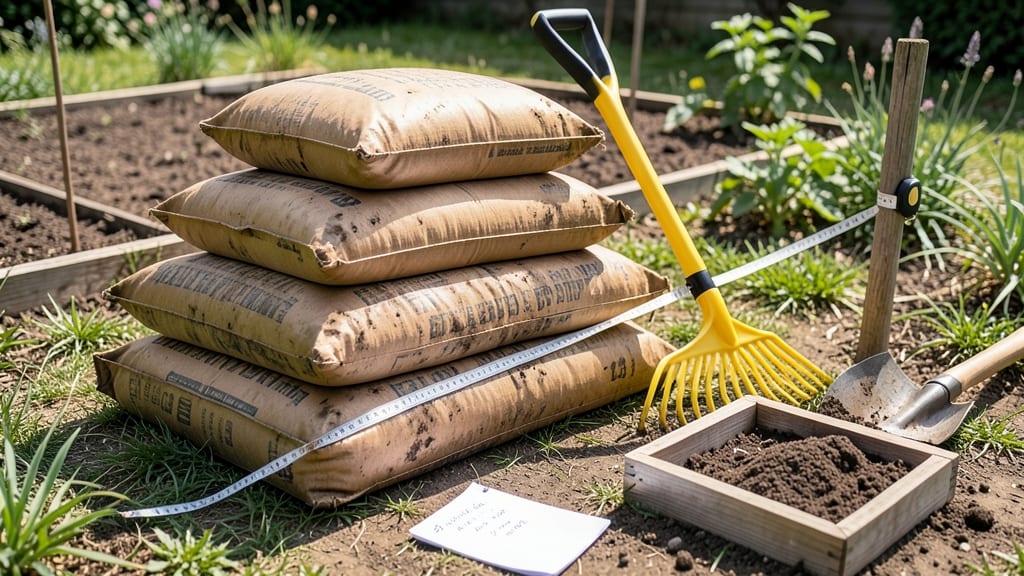
To determine how many 40 lb bags of topsoil are in a yard, you'll need about 27 bags, based on each bag occupying 0.5 cubic feet. Always check the density since moisture or compaction can change the actual volume per bag.
Understanding this conversion starts with knowing that 1 cubic yard equals 27 cubic feet, and most 40 lb bags of topsoil occupy about 0.5 cubic feet each. 🌱 The math is straightforward—27 cubic feet divided by 0.5 cubic feet per bag gives you those 27 bags.
However, real-world factors like moisture content or how tightly the soil is packed can slightly alter this number. For example, freshly delivered topsoil might feel heavier due to moisture, while dried-out soil could weigh less. Always verify the bulk density on the bag's label to ensure accuracy for your project.
When planning your landscaping project, it's wise to account for potential variations. If you're filling raised garden beds, for instance, you might need slightly more due to the depth of the soil layer.
On the other hand, leveling a lawn might require less because you're spreading the soil more thinly. Buying an extra bag or two can save you from running short mid-project.
💡 In This Article
- Calculating Topsoil Volume: Cubic Yards vs. Bags
- Topsoil Bag Buying Guide for Landscaping Projects
Calculating topsoil volume: cubic yards vs. bags
The conversion from cubic yards to bags starts with understanding that 1 cubic yard equals 27 cubic feet. This is a fixed measurement, but where things get interesting is in how much actual soil each bag contains.
Most 40 lb bags of topsoil occupy about 0.5 cubic feet—that’s why 27 cubic feet divided by 0.5 cubic feet per bag equals 27 bags per yard. The key here is that this assumes standard bulk density, which is typically 80-100 pounds per cubic foot for loose topsoil.
However, real-world conditions can shift this calculation. For instance, freshly delivered topsoil often contains 15-25% moisture by weight, making each bag feel heavier and potentially reducing the actual cubic feet per pound.
If the soil is compacted—like when stored in a tightly packed pallet—the volume per bag could shrink to 0.4 cubic feet or less. This means you might get 30+ bags per yard in these cases.
Always check the label for bulk density specs, as some suppliers list it as 60-90 pounds per cubic foot, which directly affects how many bags you’ll need.
Think of it like comparing a bag of flour to a bag of sand. Both weigh 40 lbs, but flour takes up more volume because it’s less dense.
Similarly, dry, sandy topsoil packs more tightly than loamy, moist soil. 🌱 For example, a bag of sandy topsoil might measure 0.6 cubic feet, while clay-heavy topsoil could be as low as 0.4 cubic feet.
This variance is why landscapers often buy 5-10% extra to account for unexpected density changes.
Another factor is how the soil is stored. Topsoil left exposed to rain can absorb extra moisture, increasing weight but reducing volume per bag. Conversely, soil stored in a dry, covered area might lose moisture, making each bag lighter but potentially increasing the cubic feet per pound.
To avoid surprises, weigh a few bags yourself if possible—place one on a kitchen scale and measure its dimensions to calculate its actual cubic feet. This hands-on approach ensures your project stays on track.
For projects requiring precise measurements—like constructing raised garden beds—consider the depth of the soil layer. A 6-inch deep bed covering 100 square feet needs about 0.25 cubic yards of topsoil. Using our 27-bag-per-yard rule, that’s roughly 7 bags.
But if your soil is moist or compacted, you might need 8-9 bags to achieve the same depth. Always round up when in doubt, as running short mid-project can derail your timeline.
Pro tip: If you’re working with bulk topsoil deliveries, ask for the loose cubic yard measurement—this accounts for settling after spreading. Bulk soil often compacts by 10-15% once spread, so a 1-yard delivery might only cover 0.85 yards after leveling.
This is why bagged soil is often preferred for smaller projects—it’s pre-measured and easier to handle.