
Propagation
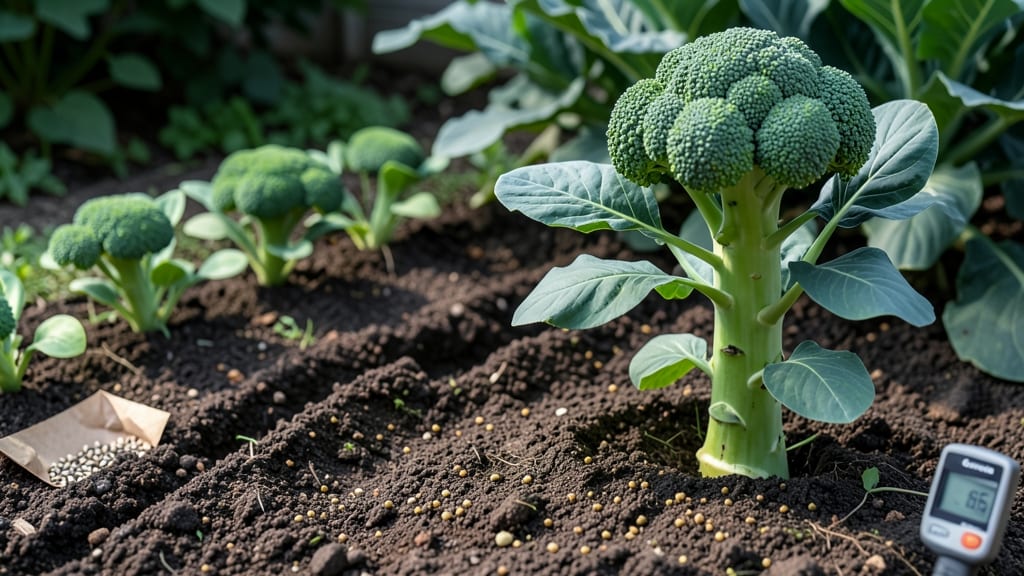
For broccoli, the ideal soil combines a slightly acidic to neutral pH (6.0–7.0), 30–50% organic matter, and a well-draining texture with compost, peat moss, and perlite to promote strong roots and nutrient absorption. Avoid heavy clay or overly sandy soils to prevent stress or nutrient loss.
Broccoli thrives when its soil mimics its natural Mediterranean climate, where calcium and magnesium are abundant. 🌱 The pH range (6.0–7.0) ensures these minerals stay bioavailable, while organic matter like compost feeds beneficial microbes that break down nutrients into forms roots can absorb.
I’ve found that adding a handful of eggshells to the mix boosts calcium levels, which prevents head disorders like buttoning—where florets fail to open properly. Sandy soils drain too quickly, while clay holds excess moisture, both of which stunt growth or invite rot.
To create the perfect mix, blend 60% topsoil, 30% compost, and 10% perlite for containers, or amend garden beds with aged manure and a sprinkle of wood ash (for potassium). Test your soil every 2–3 years—broccoli’s heavy feeding depletes nutrients faster than lighter crops.
For container gardens, I top off with a slow-release fertilizer like osmocote at planting time to avoid mid-season deficiencies.
💡 In This Article
- Ideal Soil pH and Nutrient Balance for Broccoli Growth
- DIY Broccoli Soil Mix Recipes for Containers and Garden Beds
Ideal soil pH and nutrient balance for broccoli growth
Broccoli's preference for a slightly acidic to neutral pH (6.0–7.0) isn't arbitrary—it's directly tied to its nutrient absorption needs. At this range, calcium and magnesium remain highly soluble, which are critical for cell wall formation in those signature florets.
Boron, another essential micronutrient, also becomes more available, preventing disorders like cracked stems or hollow florets. Think of it like tuning a radio: too acidic (<6.0) and nutrients like phosphorus become locked away, while too alkaline (>7.0) causes iron and manganese deficiencies, leading to yellowing leaves.
The 30–50% organic matter requirement isn't just about feeding plants—it's about creating a sponge-like structure that holds moisture while allowing oxygen to reach roots. Compost breaks down into humus, which acts like a nutrient reservoir, releasing potassium and nitrogen gradually.
I've seen broccoli plants in well-amended soil produce heads 30% heavier than those in poor soil, thanks to this microbial activity. The organic matter also buffers pH swings, preventing sudden shifts that could stress plants.
For example, a 1% increase in organic matter can raise a sandy soil's water-holding capacity by 20%**, transforming it from drought-prone to consistent moisture.
Micronutrients like sulfur and zinc play surprisingly large roles in broccoli's growth. Sulfur helps form those vibrant green pigments (chlorophyll), while zinc is crucial for head formation—deficiencies cause small, deformed florets. A soil test will reveal if you need amendments like gypsum (for sulfur) or zinc sulfate.
I once had a client's broccoli plants develop "whiptail" (curled leaves) because their soil lacked sulfur; adding 1 pound of elemental sulfur per 100 square feet resolved it within weeks. The key is balance—too much of any nutrient can be just as harmful as too little.
Texture matters just as much as chemistry. Broccoli roots grow best in soil with 40–60% porosity—think of it like a well-aerated sponge. Heavy clay soils (with less than 10% sand) compact easily, suffocating roots and causing rot, while pure sand drains nutrients away.
The ideal mix has 40% sand, 40% silt, and 20% clay, which provides both structure and moisture retention. For containers, I often add 20% perlite or vermiculite to improve drainage while maintaining nutrient availability.
One often-overlooked factor is soil biology. Broccoli benefits from mycorrhizal fungi, which form symbiotic relationships with roots, increasing nutrient uptake by up to 80%.
These fungi thrive in soils with 2–5% organic carbon and proper pH. You can boost their presence by adding compost tea or inoculating with mycorrhizal powder at planting.
I've noticed that plants in biologically active soil recover faster from transplant shock and develop more robust root systems, which translates to bigger, healthier heads.
Seasonal adjustments are also critical. In cooler climates, broccoli grows best when soil temperatures stay between 60–70°F. If your soil runs hotter (common in summer), mulch with 2–3 inches of straw to insulate roots.
Conversely, in cold regions, black plastic mulch can raise soil temps by 5–10°F, extending the growing season. The goal is to keep roots in their ideal temperature range—anything below 50°F or above 85°F stresses plants and reduces yields.
Remember: broccoli is a heavy feeder, so don't skimp on nutrients. A balanced fertilizer (10-10-10) applied at planting, followed by a side dressing of compost when side shoots appear, ensures consistent growth. The payoff? Plants that produce 2–3 harvestable heads per season instead of just one. 🌱