
Light Requirements
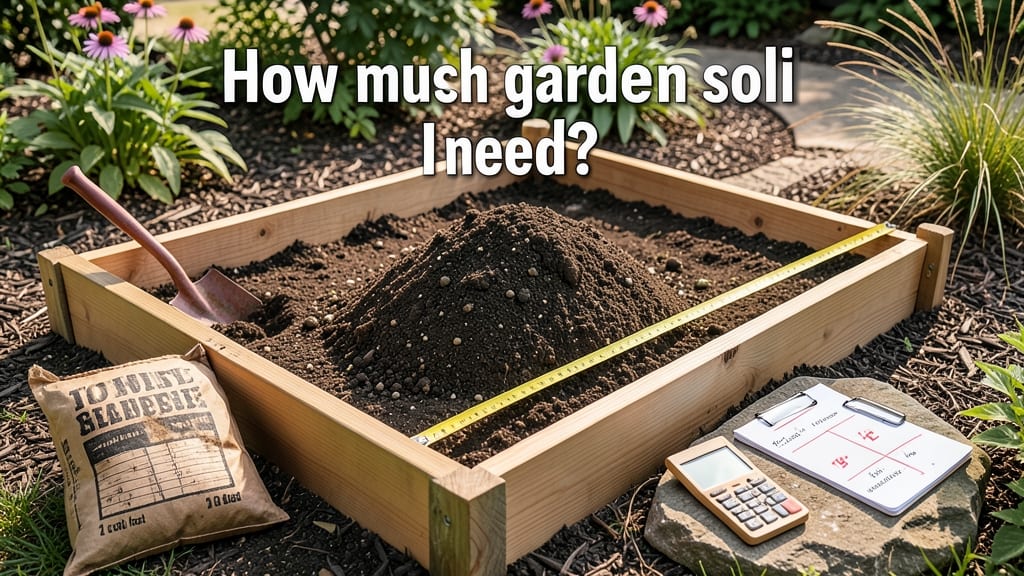
Figuring out how much garden soil you need can save you time, money, and a last-minute trip to the nursery. 🌱 The wrong amount means either lugging home bags of extra dirt or scrambling when your raised bed is half-filled.
My first garden project ended with me buying three extra bags of soil because I didn’t measure properly—don’t make that mistake.
Start by measuring your garden’s length, width, and the depth of soil you want (usually 6–12 inches for most plants). Multiply those numbers to get cubic feet—this is your exact soil volume.
For example, a 4x8-foot raised bed with 10-inch-deep soil needs 27 cubic feet of mix. Round up slightly to account for settling, but don’t overbuy unless you’re amending with compost.
Once you know the volume, adjust for soil type: loose potting mix takes up more space than dense garden soil. A 50-pound bag typically covers about 0.75 cubic feet, so three bags fill a 2x4-foot planter at 6-inch depth.
Pro tip: Use a shovel or wheelbarrow to measure soil in bulk—it’s easier than guessing.
Common mistakes? Skipping depth measurements or assuming "a few bags" will suffice. Trust the math, and you’ll have the perfect foundation for your plants—no surprises, just thriving roots. Ready to calculate yours?
📚 In This Guide
- What you need
- Instructions
- Tips and common mistakes
- Wrapping up and next steps
What you need
- ● Garden soil: Calculate your cubic feet needs using our calculator (e.g., 1 cubic yard ≈ 27 cubic feet). Buy 10-20% extra to account for settling.
- ● Measuring tape or ruler: For precise depth/width measurements (minimum 6-foot tape for larger areas).
- ● Wheelbarrow or shovel: A 5-cubic-foot wheelbarrow or sturdy garden shovel for moving soil efficiently.
- ● Leveling tool: A 2-foot spirit level to ensure even soil distribution (critical for containers!).
- ● Garden gloves: Nitrile-coated for durability (avoid latex if handling chemicals).
- ● Protective eyewear: Safety goggles rated for dust/debris (e.g., ANSI Z87.1 standard).
- ● Soil amendments: Compost (1 part compost to 3 parts soil), perlite (5-10% for drainage), or peat moss for moisture retention.
- ● Landscape fabric: 3-foot width to block weeds in in-ground plots.
- ● Soil pH tester: Digital kits (e.g., Bluelab) to check acidity before planting.
- ● Knee pads: For comfort during long projects (look for gel-cushioned options).
Step-by-step guide to calculating garden soil needs
Here's the foolproof method I use to figure out exactly how much soil your project needs—no guesswork.
📏 Step 1: Measure Your Planting Area Dimensions
Start by measuring the length, width, and depth of your planting space in feet. For in-ground gardens, depth is usually 6-12 inches (most plants don't need deeper than that). Write these numbers down—you'll use them to calculate volume. I like to sketch a quick diagram to visualize the space before doing math.
For containers, measure the interior dimensions. A 5-gallon bucket holds about 0.3 cubic feet, while a 12-inch diameter pot holds roughly 0.7 cubic feet. If your container has odd shapes, break it into simple rectangles or cylinders for easier calculation.
📐 Step 2: Calculate Volume in Cubic Feet
Multiply length × width × depth for rectangular spaces. For example, a 4-foot by 3-foot garden bed that's 1 foot deep needs 12 cubic feet of soil (4 × 3 × 1). For circular areas like raised beds, use the formula πr² × depth—where r is the radius (half the diameter).
Round up to the nearest whole number if your measurements include fractions. A 3.5-foot by 2-foot bed at 10 inches deep becomes 7 cubic feet (3.5 × 2 × 0.83 = 5.81, rounded up). This prevents running short mid-project.
🛒 Step 3: Convert Cubic Feet to Bags or Bulk Quantities
Most garden soil bags list their volume in cubic feet. A standard 2 cubic foot bag covers 2 cubic feet—divide your total by this number to find how many bags you need. For 12 cubic feet, you'd need 6 bags. If buying in bulk, ask for yards³ (1 yard³ = 27 cubic feet).
Here's the thing—soil settles after delivery. Order 10-15% more than your calculation to account for compaction. I always round up to the nearest whole bag or yard to avoid last-minute trips to the store.
⚖️ Step 4: Adjust for Amendments or Special Mixes
If your soil mix includes amendments like compost or perlite, calculate their volumes separately. For example, a 50/50 mix of soil and compost means you need double the cubic feet of total material. Measure each component's volume before combining—this ensures you don't run out of one type mid-project.
For container gardens, consider the drainage layer. If you're adding 2 inches of gravel at the bottom, subtract that volume from your soil calculation. A 12-inch pot loses about 0.2 cubic feet to gravel—adjust accordingly.
📝 Step 5: Double-Check and Order with Confidence
Before placing your order, verify your calculations by visualizing the space. Fill a small section with soil to test how much you're working with—this helps you gauge whether your numbers feel right. I also check the bag size recommendations on the product label to confirm my math aligns with real-world usage.
Order your soil a few days before planting. Fresh soil is lighter and easier to move, plus it gives you time to prep the area without rushing. Pro tip: Store bags in a covered, dry spot to keep moisture out until use.
Tips & tricks for perfect garden soil calculations
These practical shortcuts will help you avoid common mistakes and make your soil ordering process smoother than ever.
Visualization Tip: Before measuring, sketch a simple diagram of your garden space. This helps identify irregular shapes and ensures you don't miss any sections. I've caught multiple calculation errors by visualizing first—especially with L-shaped or curved garden beds. Mark key measurements directly on your sketch to reference while calculating.
Measurement Shortcut: For rectangular beds, remember this handy rule: multiply length × width first, then multiply by depth. For example, a 6-foot by 4-foot bed at 12 inches deep needs 24 cubic feet (6 × 4 × 0.5). Pro tip: Use a tape measure with a built-in level to ensure accurate depth measurements—uneven beds can throw off your entire calculation.
Container Conversion: When dealing with containers, remember these quick conversions: a 5-gallon bucket holds about 0.3 cubic feet, while a 1-gallon container holds roughly 0.13 cubic feet. For oddly shaped containers, fill them with water first, then pour the water into a measuring container to determine their exact volume. This method works perfectly for flower pots, window boxes, and hanging planters.
Ordering Strategy: Always order 10-15% more soil than your calculation suggests. Soil compacts significantly after delivery, and you don't want to run short halfway through your project. I've learned this the hard way—once I had to make a last-minute trip to the garden center because I didn't account for compaction in my 8-foot raised bed.
Pro Tips for How Much Garden Soil Do I Need
- These practical shortcuts will help you avoid common mistakes and make your soil ordering process smoother than ever.
- Visualization Tip: Before measuring, sketch a simple diagram of your garden space. This helps identify irregular shap...
- Measurement Shortcut: For rectangular beds, remember this handy rule: multiply length × width first, then multiply by...
Frequently asked questions
Got questions about calculating garden soil? We’ve got answers!
Here are some of the most common queries to help you plan like a pro.
How do I measure cubic feet for irregularly shaped containers?
For oddly shaped planters, break them into simpler shapes (like rectangles or circles), calculate the volume of each, then add them together. For example, a raised bed with sloped sides? Measure the top and bottom separately and average the depth. Pro tip: Use a measuring tape and a notebook to jot down dimensions!
Can I reuse old garden soil from last year?
Reusing soil is possible, but it may need refreshing. Test for nutrients (like nitrogen or phosphorus) and amend with compost or fertilizer if depleted. Avoid reusing soil from diseased plants—sterilize it with heat or replace it entirely. Mixing in 20-30% fresh soil or compost can revive tired beds!
When is the best time to add soil to my garden?
Add soil in early spring or fall when temperatures are mild and rain is frequent, helping roots establish faster. Avoid extreme heat or frost, which can stress plants. For containers, top up soil anytime, but water thoroughly after adding to settle it in.
What’s a budget-friendly alternative to buying bags of garden soil?
DIY soil blends work great! Mix 1 part compost, 1 part peat moss or coconut coir, and 1 part perlite or vermiculite for drainage. For heavy clay soil, add sand or compost to loosen it. Local nurseries often sell bulk compost cheaper than pre-mixed soil!
My plants are wilting after adding soil—what went wrong?
Overwatering or poor drainage could be the culprit. Ensure your container has drainage holes and avoid compacting soil too tightly. If the soil feels soggy, let it dry slightly before watering again. Amending with perlite or sand can improve airflow and prevent root rot.
How much soil do I need for a hanging basket or vertical garden?
Hanging baskets typically need 1-2 cubic feet per basket, depending on size. For vertical gardens, calculate the volume of each pocket or planter separately—most need 0.5-1 cubic foot per section. Use lightweight potting mix to reduce weight!
Wrapping up and next steps
Calculating the right amount of garden soil for your containers doesn’t have to be a guess—just measure your space, use the formulas, and adjust for compaction! Whether you’re filling raised beds, pots, or window boxes, knowing the exact cubic feet needed ensures healthy roots and thriving plants. 🌱
Now that you’re armed with the know-how, grab your measuring tape and get planting! Start small if you’re new, or tackle that dream garden—every green thumb begins somewhere. Happy gardening!