
Neem Oil
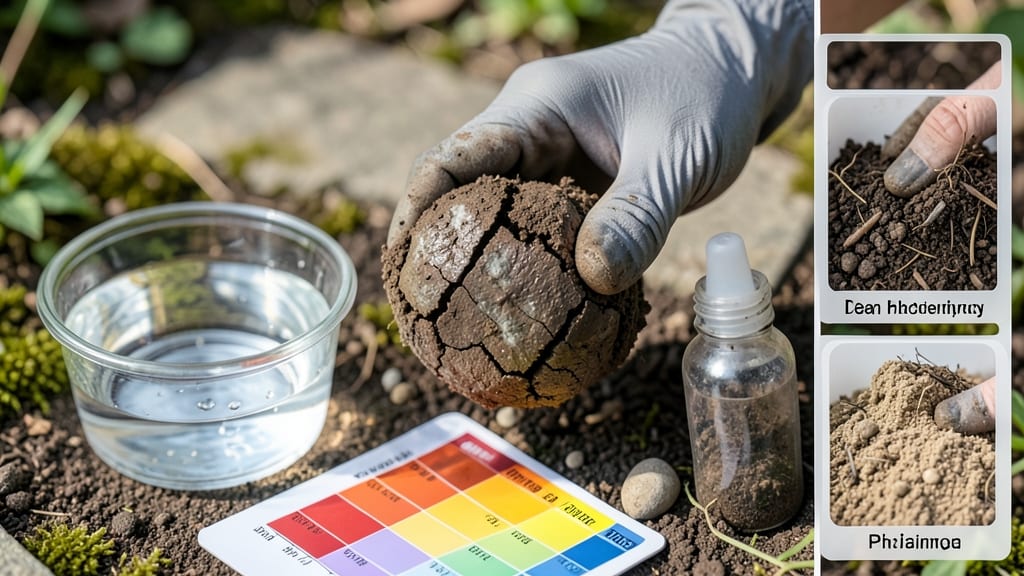
The pH level of clay soil generally falls between 6.0 and 7.0 for best plant growth, though certain plants adapt well to slightly acidic or alkaline environments. Testing with a pH meter or kit helps pinpoint the exact level, so you can amend it using lime (to increase pH) or sulfur (to decrease it).
The pH of clay soil isn't just a number—it impacts how plants access nutrients. 🌱 Clay's dense structure naturally holds onto minerals, but if the pH drifts too far from neutral (6.5-7.0), essential nutrients like phosphorus and nitrogen become locked away.
For example, blueberries thrive in acidic soil (pH 4.5-5.5), while vegetables like tomatoes prefer slightly acidic to neutral (6.0-7.0). The key is testing regularly, especially after heavy rains or amendments, since clay soil can resist pH changes due to its high mineral content.
Adjusting pH in clay soil requires patience. Lime takes months to alter the pH, while sulfur works faster but needs consistent moisture. I recommend testing again in 2-3 months to confirm the changes, as clay's slow-draining nature can delay results.
For organic gardeners, compost or peat moss can gradually acidify the soil without harsh chemicals.
💡 In This Article
- How Soil Composition Affects pH in Clay Soil
- Step-by-Step Guide to Adjusting Clay Soil pH
How soil composition affects pH in clay soil
Clay soil's dense particle structure—made of tiny, tightly packed minerals—creates a unique environment for pH regulation. These particles carry negative charges that naturally attract positively charged nutrients (like calcium and magnesium) while repelling hydrogen ions (H+), which are responsible for soil acidity.
This electrostatic interaction makes clay soil more resistant to rapid pH changes compared to sandy soils, which drain quickly and allow pH fluctuations with each rainfall. 🌱 The high cation exchange capacity (CEC) of clay—typically ranging from 10-40 meq/100g—means it can hold onto nutrients like a sponge, but this also means pH adjustments take longer to show results.
The mineral composition of clay plays a crucial role too. For instance, soils rich in iron oxides tend to be more acidic, while those with high calcium carbonate content (like limestone) lean alkaline.
Organic matter—comprising decomposed plant and animal residues—acts as a natural buffer, gradually stabilizing pH by releasing humic acids that can slightly acidify the soil over time.
In heavy clay, organic matter often decomposes more slowly due to poor aeration, which is why compost or well-rotted manure is essential for maintaining microbial activity that influences pH balance.
Water retention is another critical factor.
Clay's ability to hold 30-60% water by volume creates anaerobic pockets where microbial activity slows down, reducing the breakdown of organic acids that might otherwise lower pH. This is why clay soils often develop a crusty surface—limiting oxygen and accelerating acidification in the top layer.
The contrast between surface and subsurface pH can be dramatic, with topsoil measuring 5.5-6.5 while deeper layers may stay closer to neutral (6.5-7.0) due to better drainage and microbial activity.
Consider how these properties affect plant nutrition. In acidic clay (pH 5.0-6.0), aluminum and manganese become more soluble, potentially toxic to plants, while phosphorus binds tightly to iron and aluminum oxides, making it unavailable.
Conversely, alkaline clay (pH 7.5-8.5) locks up phosphorus and micronutrients like zinc and iron, leading to deficiencies despite the soil's high nutrient capacity. The key is finding that sweet spot where clay's natural buffering capacity aligns with plant needs—usually 6.0-7.0 for most vegetables and fruits.
Microbial communities also play a hidden role. Beneficial bacteria and fungi thrive in slightly acidic to neutral conditions (6.0-7.0), breaking down organic matter and releasing nutrients in forms plants can absorb. In extreme pH conditions, these microbes struggle, reducing soil fertility even if nutrients are physically present.
For example, mycorrhizal fungi—essential for phosphorus uptake—become less active below pH 5.5 or above pH 8.0, directly impacting plant growth in clay soils.
One often-overlooked aspect is how clay's texture affects pH testing accuracy. The dense structure can trap air pockets, making traditional liquid-based pH tests less reliable. For precise readings, use a soil pH meter with a probe designed for heavy soils or send samples to a lab for analysis.
The difference between a surface test (0-2 inches deep) and a core sample (6-12 inches) can reveal pH variations of 0.5-1.0 units, especially in compacted clay layers.
Understanding these interactions helps explain why clay soils often require more frequent pH monitoring and why organic amendments—like composted leaf mold or biochar—work better than synthetic fertilizers for long-term stability.
The goal isn't just to hit a target pH number but to create an environment where clay's natural buffering capacity supports both microbial life and plant roots. 💫