
Tools
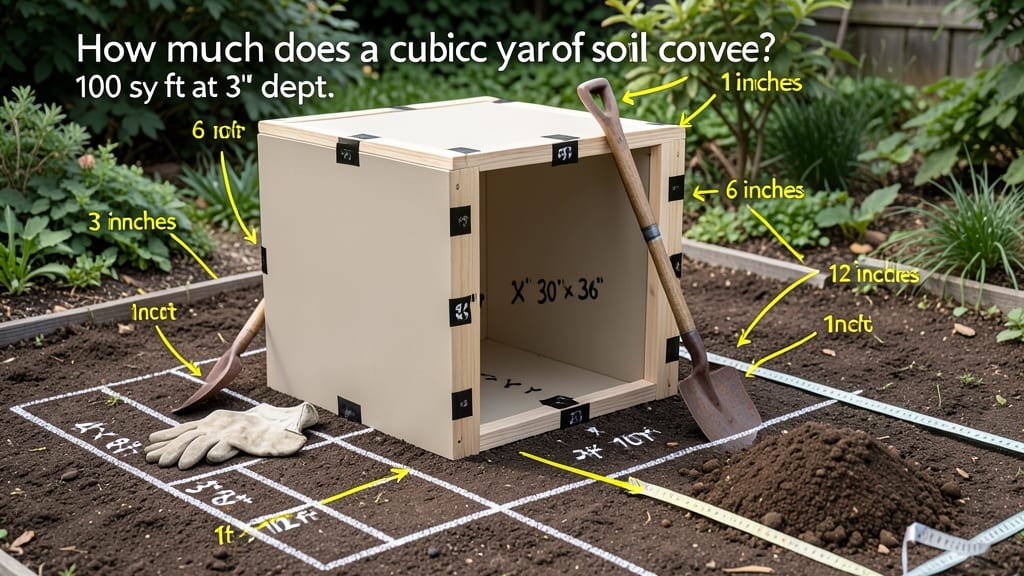
To determine how much a cubic yard of soil covers, calculate that it spreads 108 square feet at 3 inches deep, 36 square feet at 1 inch deep, or 12 square feet at 9 inches deep, depending on your project's depth requirements.
A cubic yard of soil covers different areas depending on how deep you spread it. 🌱 For example, a standard 3-inch layer (common for lawn topsoil) covers about 108 square feet, while a 1-inch layer (ideal for seedbeds) stretches to 36 square feet.
This math comes from dividing the cubic yard's volume (324 cubic inches) by your chosen depth in inches. Uneven ground or soil compaction can shrink coverage, so always order a little extra for real-world projects. I've found that gardeners often misjudge depth—measuring twice before spreading saves money and effort.
For practical projects, a 1 cubic yard bag typically covers 100-120 square feet when spread at 3 inches, making it perfect for small raised beds or flower gardens. 💛 Larger landscapes may need multiple bags, and I always recommend calculating square footage first by multiplying length × width.
Pro tip: mark your area with stakes before ordering—this prevents overbuying and ensures you have enough for the job.
💡 In This Article
- Calculating Soil Coverage: Depth, Volume, and Math
- Real-World Soil Coverage for Gardens and Landscapes
Calculating soil coverage: depth, volume, and math
The core math behind soil coverage comes from understanding that a cubic yard equals 27 cubic feet or 324 cubic inches. To find how much area it covers, divide this volume by your desired depth in inches.
For example, at 3 inches, you'd calculate 324 ÷ 3 = 108 square feet. This works because volume equals area multiplied by depth (V = A × D), so rearranged, area equals volume divided by depth. 🔥 The deeper you spread, the less ground you cover.
Compaction changes everything. Loose soil settles 20-30% after spreading, reducing coverage. For instance, a 1-inch layer of loose soil might compact to 0.75 inches, meaning you'd actually cover 27 square feet instead of the theoretical 36 square feet.
Professionals account for this by ordering 10-15% extra for projects requiring precise depth, like vegetable gardens where root space matters.
Depth isn't just about coverage—it's about plant health. Most lawns need 2-4 inches of topsoil for proper root establishment, while raised beds often require 6-12 inches for deep-rooted vegetables.
The 9-inch depth example (covering just 12 square feet) demonstrates why bulk soil is essential for larger projects like building new garden beds or repairing erosion-prone slopes.
Uneven terrain adds complexity. A sloped area might require 50% more soil than flat ground because you're effectively working with multiple depth layers. For example, a hillside with 3-inch average depth could need 162 square feet of coverage instead of 108 square feet due to varying elevation.
Always measure the lowest points when calculating for slopes.
Here's a quick reference for common depths:
- 1 inch: 36 sq ft (ideal for seedbeds or light mulching)
- 2 inches: 54 sq ft (typical for lawn topdressing)
- 3 inches: 108 sq ft (standard for garden prep)
- 4 inches: 81 sq ft (good for heavy mulch layers)
- 6 inches: 54 sq ft (minimum for raised bed construction)
Remember: these are theoretical maximums. Real-world applications always need adjustments for soil type (sandy soils settle more than clay), moisture content (wet soil is heavier), and equipment limitations (shovels vs. spreaders). 💫