
Light Requirements
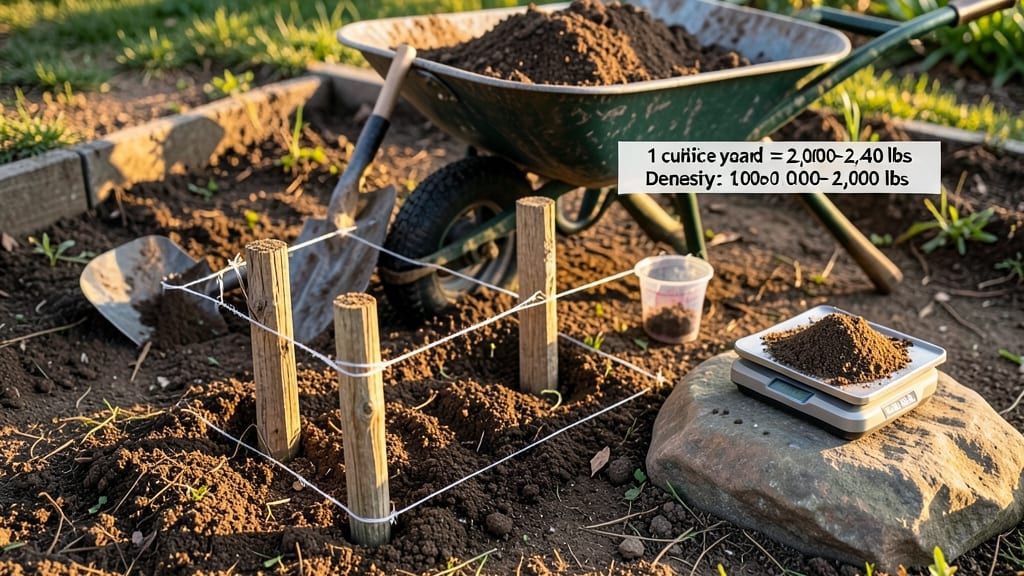
Determining how much a cubic yard of topsoil weighs reveals it typically ranges from 1,800 to 2,200 pounds, but this can shift dramatically based on moisture levels and soil composition.
A cubic yard of topsoil's weight isn't fixed—it fluctuates based on how much water it holds and what it's made of. Clay-heavy soil can push past 2,500 pounds when wet, while sandy soil might weigh closer to 1,500 pounds when dry. 🌱 This variation is why suppliers often ask about your project type (gardens vs. lawns) before estimating delivery needs.
For accurate planning, check if your soil feels damp or compacted—those conditions directly impact weight calculations.
Understanding this helps avoid surprises during delivery. For example, a 10-yard order of moist clay soil could weigh nearly 25,000 pounds, requiring heavy equipment to unload. Always confirm with your supplier whether their weight estimates account for moisture—some adjust prices based on these factors.
Knowing these details ensures you're prepared for both the physical and financial logistics of your landscaping project.
💡 In This Article
- Factors Affecting Topsoil Weight per Cubic Yard
- Practical Tips for Estimating Topsoil Weight Before Delivery
Factors affecting topsoil weight per cubic yard
Topsoil weight isn't static—it's influenced by three core factors: moisture content, particle composition, and compaction. Moisture alone can add 500-1,000 pounds to a cubic yard, since water accounts for 25-50% of soil's total weight.
For example, dry sandy loam might weigh 1,500 pounds, but when saturated, it jumps to 2,000 pounds or more. This is why spring deliveries often require heavier equipment—soil absorbs rainwater like a sponge, increasing its bulk density.
The mineral makeup plays an equally critical role. Clay particles bind tightly, creating dense structures that weigh more than sandy soils with larger air gaps. A cubic yard of clay-heavy topsoil can exceed 2,500 pounds when wet, while sandy topsoil might only reach 1,300 pounds in dry conditions.
Organic matter also matters—compost-amended soil weighs slightly less due to its porous structure, but the difference is usually 100-200 pounds per cubic yard. These variations explain why suppliers often specify "dry weight" versus "bulk weight" in contracts.
Compaction is the third silent weight-changer. Foot traffic or machinery can reduce soil volume by 20-30%, turning a loose cubic yard into a denser, heavier mass.
For instance, a 10-yard delivery of freshly tilled soil might weigh 18,000 pounds, but after being compacted by a bulldozer, it could approach 22,000 pounds. This is why professional landscapers always verify soil conditions before estimating project requirements. The science behind it?
Soil porosity—the more air pockets, the lighter the weight.
Regional differences add another layer. Northern climates often have heavier topsoil due to glacial deposits, while desert regions produce lighter, mineral-rich soils. For example, Midwest topsoil might average 2,000 pounds per cubic yard, while Southwest soils could dip to 1,600 pounds.
These regional variations mean your local nursery's weight estimates should always be your first reference point. Understanding these factors helps you anticipate delivery challenges—like whether your truck bed can handle 2,200 pounds of moist clay soil or if you'll need a trailer.
Here's a quick comparison to visualize the range:
- Dry Sandy Soil: 1,300-1,500 pounds (low moisture, high porosity)
- Average Loam (moderate moisture): 1,800-2,200 pounds (balanced composition)
- Wet Clay Soil: 2,500-3,000 pounds (high moisture, dense particles)
What most people overlook is how temperature affects weight too. Cold soils hold more water, increasing weight by 5-10%, while hot, dry conditions can reduce it. This seasonal fluctuation is why summer deliveries often feel "lighter" than spring ones—even if the volume appears identical. 🌡️