
Light Requirements
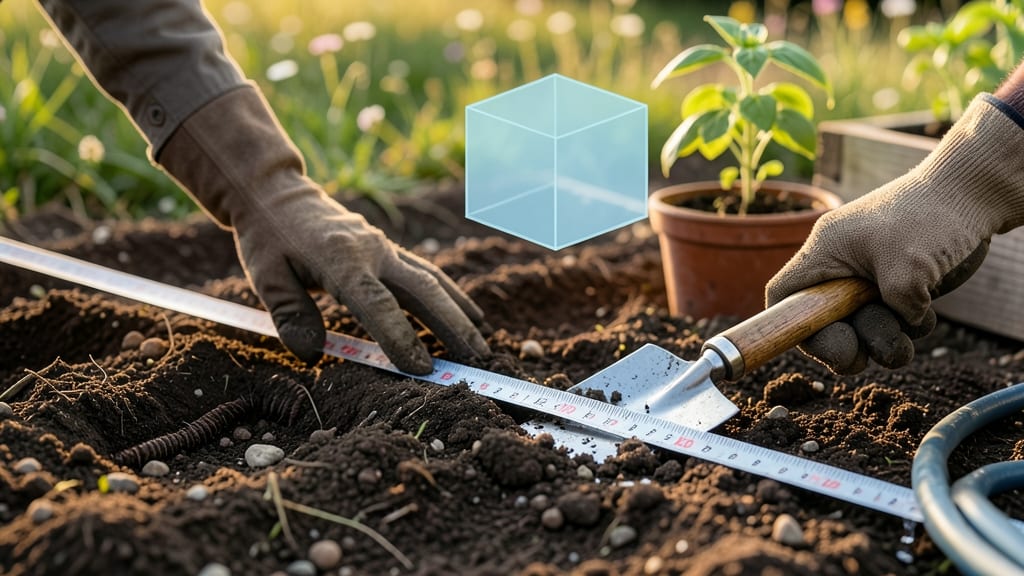
To determine how many cubic feet of soil you need, multiply the planting area’s length, width, and depth (in feet) to calculate total volume—most plants require at least 1 cubic foot of soil per gallon of container size or 12-18 inches of depth for in-ground planting.
Understanding soil volume is all about giving roots the space they need to thrive. 🌱 For container gardening, the rule of thumb is simple: match the plant's mature root ball size to your pot's capacity.
A 5-gallon container holds about 0.67 cubic feet of soil, while a 10-gallon pot provides roughly 1.33 cubic feet. In-ground planting gets trickier—shallow-rooted plants like strawberries need just 6-12 inches of depth, while deep-rooted trees may require 2-3 cubic feet per year of growth.
Always account for drainage too; compacted soil reduces usable volume by up to 30%.
Pro tip: Use a tape measure and calculator for raised beds—most gardeners err on the side of extra soil to prevent root binding.
For example, a 4'x8' raised bed with 12" depth needs 32 cubic feet of soil, but adding 6" extra depth gives roots room to expand without crowding. 💛 This extra space pays off during droughts or when plants outgrow their initial space.
💡 In This Article
- Calculating Soil Volume for Different Plant Types
- Soil Volume Guide by Plant Category
Calculating soil volume for different plant types
Soil volume calculations hinge on two critical factors: root spread and plant maturity. Shallow-rooted plants like herbs (basil, thyme) or lettuce thrive in just 1-2 cubic feet of soil, while deep-rooted perennials (roses, lavender) need 3-5 cubic feet—even more for trees.
The key difference lies in how roots explore vertically versus horizontally. For example, a 5-gallon container (0.67 cubic feet) works for a single basil plant, but the same volume would stifle a tomato plant's root system, which spreads 12-18 inches wide and deep.
Container gardening simplifies calculations since you control dimensions. A 10-gallon pot (1.33 cubic feet) accommodates small shrubs like dwarf boxwood, but larger pots (like 25-gallon containers with 3.33 cubic feet) are needed for fruit trees.
In-ground planting requires accounting for the entire root zone—most vegetables need 12-18 inches of depth, while trees demand 2-3 cubic feet per year of expected growth.
The science here involves soil aeration: compacted soil reduces usable volume by up to 30%, so always loosen native soil before planting.
Raised beds offer precise control over soil volume. A 4'x8' bed with 12" depth holds 32 cubic feet, but adding 6" extra depth (total 18") gives roots 48 cubic feet—critical for heavy feeders like broccoli or cabbage. The extra space prevents root competition and improves drought resilience.
For comparison, a 1-gallon container (0.13 cubic feet) suffices for succulents, while bog plants (like pitcher plants) need 2-3 inches of constantly moist soil—highlighting how plant type dictates volume needs beyond basic math.
Here’s a quick reference for common scenarios:
- Herbs/Vegetables: 1-2 cubic feet per plant in containers or 12-18" depth in-ground
- Shrubs/Trees: 3-5 cubic feet (scale with maturity—e.g., a 10-year-old oak needs 10+ cubic feet)
- Raised Beds: 12-18" depth (minimum) for most crops; deeper for root crops (carrots, potatoes)
- Containers: 1 cubic foot per gallon (e.g., 5-gallon = 0.67 cubic feet, 15-gallon = 2 cubic feet)
Pro tip: For trees, dig a hole twice as wide as the root ball but no deeper—this encourages roots to spread horizontally where nutrients are abundant.
Over-deep planting suffocates roots and invites disease. 🌳 The same logic applies to perennials: a 12" deep hole for a 3-gallon plant ensures proper root expansion without crowding.
One common mistake is assuming "more soil is always better." While extra volume helps, poor drainage becomes a bigger issue in oversized containers. Always include 20-30% perlite or sand to prevent waterlogging—especially critical for tropical plants like ferns or calatheas, which need 1.5-2 cubic feet of airy, moisture-retentive soil.
The balance between volume and drainage is where many gardeners trip up.