
Landscaping
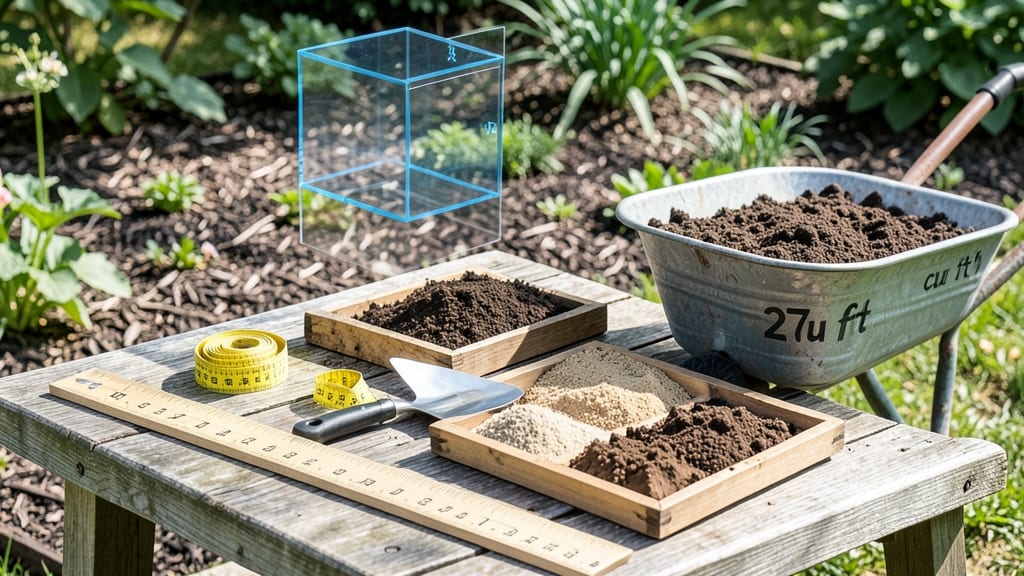
Converting 1 yard of soil equals 27 cubic feet, since a cubic yard is 3 feet long, 3 feet wide, and 3 feet deep—this simple math helps you estimate soil needs accurately for any gardening or landscaping project.
Understanding this conversion is a game-changer for planning projects like raised garden beds or mulch layers. 🔥 A cubic yard's volume (27 cubic feet) gives you the exact amount needed to fill a space measuring 3 feet in all directions, whether that's a small garden plot or a larger landscape area.
For example, if you're filling a 3-foot-deep flower bed that's 6 feet by 6 feet, you'll need 2 cubic yards of soil—calculating this in cubic feet first helps visualize the space more clearly.
This measurement also explains why bulk bags of soil often list their volume in cubic feet—it's the practical unit for smaller projects. A 1 cubic foot bag covers just a tiny area (like a 1-foot square by 1-foot deep), while a 27 cubic foot yard is perfect for larger tasks.
Knowing this helps you avoid overbuying or running short when prepping your garden or yard.
💡 In This Article
- How Cubic Yards and Cubic Feet Relate in Gardening
- Practical Uses for Measuring Soil in Cubic Feet
How cubic yards and cubic feet relate in gardening
The relationship between cubic yards and cubic feet comes down to basic geometry.
A cubic yard is essentially a cube measuring 3 feet in length, width, and height, which means its total volume is calculated by multiplying these dimensions: 3 ft × 3 ft × 3 ft = 27 cubic feet.
This conversion is essential because gardening projects often require precise soil volume measurements, whether you're filling raised beds or creating mulch layers. 🌱
Imagine you're planning a 3-foot-deep raised garden bed that's 4 feet by 6 feet. First, calculate the total volume in cubic feet: 4 ft × 6 ft × 3 ft = 72 cubic feet.
Since 1 cubic yard equals 27 cubic feet, you'd need approximately 2.67 cubic yards of soil (72 ÷ 27). This math helps you avoid buying too much or too little, saving time and money while ensuring your project has the right foundation.
Why does this matter in practice? Soil settles and compacts over time, especially when watered or walked on. Loose soil may occupy more space initially, but as it settles, the volume decreases by 10-30%, depending on the soil type.
For example, a bag labeled as 1 cubic foot might only provide 0.7 cubic feet of usable soil after settling. This is why professionals recommend buying 10-20% more soil than your calculations suggest to account for compaction.
Another key factor is the type of soil you're using. Topsoil, which is rich in organic matter, tends to settle less than sandy or rocky soil.
For instance, a 27 cubic foot yard of topsoil might only shrink to 22-25 cubic feet after settling, while the same volume of sandy soil could reduce to just 18-20 cubic feet.
Understanding these variations helps you adjust your soil order based on the specific needs of your project. 💫
Visualizing this in real-world terms, think of a standard pickup truck bed. Most can hold about 2 cubic yards (54 cubic feet) of soil, which is roughly enough to fill a 3-foot-deep garden bed measuring 6 feet by 6 feet.
This is a handy reference when you're at the nursery and need to estimate how many truckloads you'll require. Whether you're working on a small herb garden or a large landscape renovation, mastering this conversion ensures you have the right amount of soil for the job.
For larger projects, like covering a 100 square foot area with 3 inches of mulch, the calculation changes. First, convert the mulch depth to feet: 3 inches = 0.25 feet. Then multiply by the area: 100 sq ft × 0.25 ft = 25 cubic feet.
This equals just under 1 cubic foot per yard of mulch needed. Breaking down projects into these smaller cubic foot measurements makes it easier to visualize and execute, especially when working with bulk materials.
Finally, remember that soil isn't the only material you'll measure this way. Gravel, sand, and even compost are often sold by the cubic yard or cubic foot. Knowing how these volumes translate helps you compare prices and ensure you're getting the right quantity for your needs.
Whether you're prepping a vegetable garden or installing a drainage layer, this conversion is your secret weapon for precision in landscaping. ✨