
Light Requirements
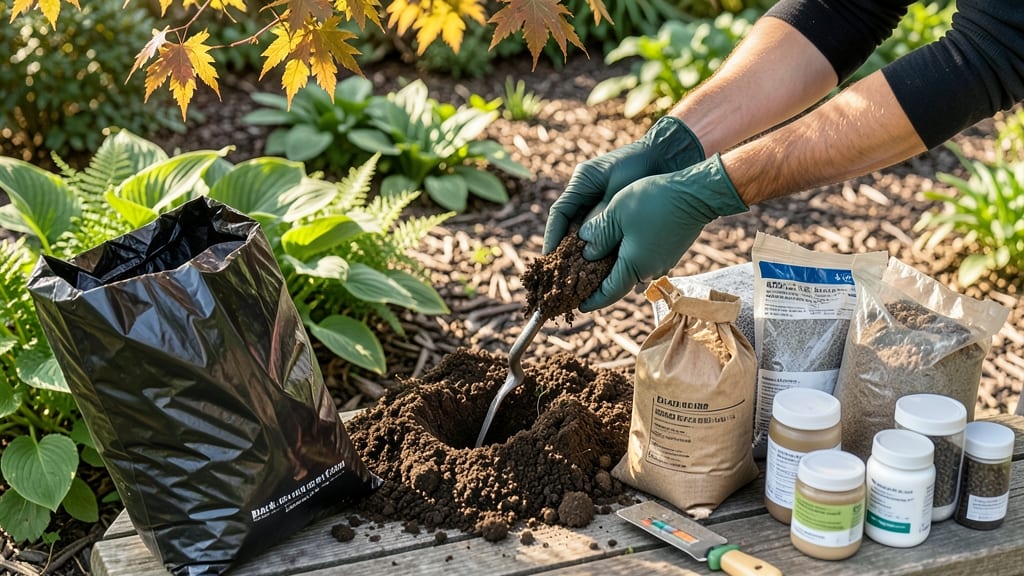
To determine what soil amendments you need, start with a soil test to identify pH levels, organic matter content, and nutrient deficiencies. Based on results, use compost to boost organic matter, lime for acidic soil, sulfur for alkaline soil, and gypsum for compacted or clay-heavy soil. Micronutrients like iron or manganese may also be required.
Your soil's health is the foundation of any thriving garden, and the right amendments can transform poor soil into a nutrient-rich growing medium. 🌱 A soil test reveals critical details like pH balance—acidic soils (below 6.5) often need lime to raise pH, while alkaline soils (above 7.5) benefit from elemental sulfur.
For plants struggling in heavy clay, gypsum improves drainage without altering pH, making it ideal for root crops like carrots. Organic matter, like compost, enhances water retention and microbial activity, while micronutrients address specific deficiencies, such as yellowing leaves signaling iron deficiency.
Don't guess—test first! Many garden centers offer affordable soil test kits, or send samples to a lab for precise analysis. The key is matching amendments to your plants' needs: acid-loving blueberries thrive in soil with a pH of 4.5-5.5, while lavender prefers slightly alkaline conditions.
Seasonal timing matters too—spring is ideal for adding compost, while lime or sulfur should be worked into the soil 2-3 months before planting to allow pH adjustments to take effect.
💡 In This Article
- How Soil Test Results Determine Your Soil Amendments
- Best Soil Amendments for Common Plant Types
How soil test results determine your soil amendments
Soil tests reveal three critical factors that dictate your amendment needs: pH balance, nutrient levels, and soil texture. The pH scale runs from 0 (acidic) to 14 (alkaline), with most plants thriving between 6.0-7.5.
For example, blueberries need pH 4.5-5.5 to absorb iron, while azaleas struggle below pH 5.0. A test showing pH 5.5 would signal lime addition to raise alkalinity, while pH 8.0 would require sulfur to acidify the soil gradually over 2-3 months.
Nutrient deficiencies appear as specific symptoms: yellowing leaves between veins indicate iron deficiency, while purple stems suggest phosphorus lack. Micronutrients like manganese or zinc often require chelated forms for better absorption. Soil texture—sand, clay, or loam—affects drainage and root growth.
Clay soils (0.002mm particles) compact easily, while sandy soils (0.05-2mm) drain too quickly. Gypsum improves clay by replacing sodium ions with calcium, reducing compaction without altering pH.
Organic amendments like compost work through microbial activity, breaking down into humus that holds 3-5 times its weight in water. Inorganic amendments like lime (calcium carbonate) or sulfur (elemental sulfur) provide quick pH adjustments but lack organic matter benefits.
For example, adding 5 pounds of lime per 100 sq ft raises pH by 1 unit over time, while compost adds 1-2% organic matter annually.
Seasonal timing matters: apply compost in spring to boost microbial activity before planting, while lime or sulfur should be worked in 2-3 months prior to allow chemical reactions. For instance, sulfur takes 3-6 months to lower pH by 1 unit, so plan ahead.
Heavy clay soils may need 50 pounds of gypsum per 100 sq ft spread evenly and watered in to prevent surface crusting.
Consider your plants' native conditions: rhododendrons from acidic forests need peat moss or pine bark fines, while rosemary thrives in alkaline Mediterranean soils.
A soil test's CEC (cation exchange capacity) measures nutrient-holding ability—low CEC (5-10 meq/100g) means frequent amendments, while high CEC (> 20 meq/100g) retains nutrients longer. Match amendments to both soil data and plant requirements for optimal results.
For example, a test showing pH 6.8, low organic matter (1%), and high clay content would need:
- 2 inches of compost to boost organic matter
- 10 pounds of gypsum to improve drainage
- Iron chelate if leaves show chlorosis
Remember: soil is a living ecosystem. Amendments should enhance its natural functions—water retention, microbial life, and root penetration—rather than mask problems with quick fixes. Start small, test again after 6 months, and adjust as needed. Your plants will thank you with stronger growth and vibrant blooms! 🌿