
Vegetables
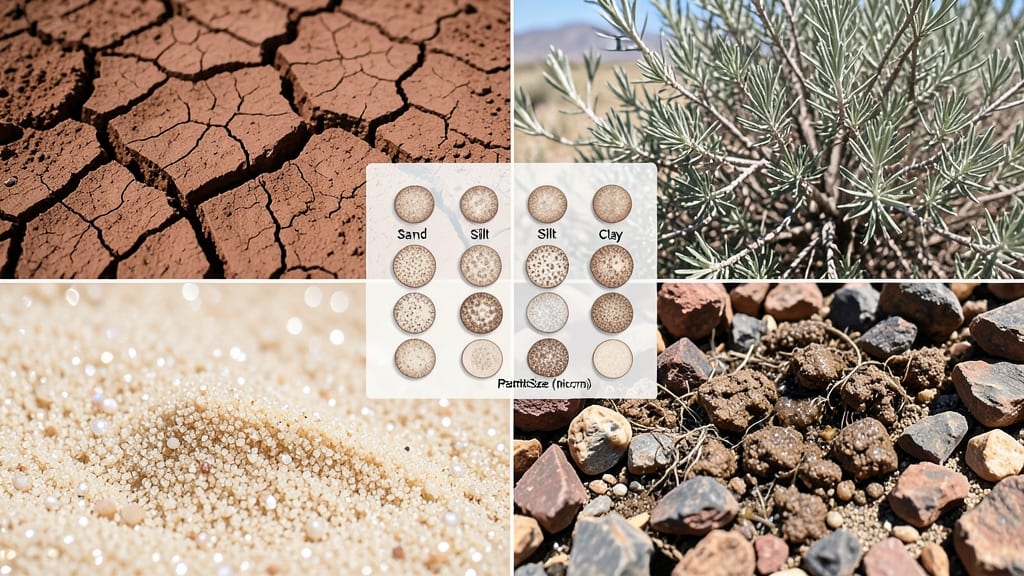
The types of soil in deserts primarily include aridisols (the most widespread), entisols (young and minimally developed), and occasionally saline or gypsum soils, all of which thrive in extreme heat, minimal rainfall, and sparse plant coverage. These soils are typically alkaline and nutrient-poor but perfectly suited for drought-resistant flora like cacti and creosote bushes.
The harsh desert climate shapes these soils through intense weathering and minimal organic matter accumulation.
Aridisols dominate because their low moisture levels prevent rapid decomposition, while saline soils form when water evaporates and leaves behind mineral deposits. 🌵 Understanding these soil types helps gardeners adapt planting strategies—like using mulch to retain moisture or choosing native plants that naturally thrive in these conditions.
Desert soils often lack the organic material found in other ecosystems, which makes them challenging for traditional gardening. However, their unique properties—like high mineral content—can actually benefit certain crops if managed correctly.
For example, adding compost improves fertility without disrupting the soil's natural structure, while proper irrigation techniques prevent salt buildup that could harm plants.
💡 In This Article
- How Desert Soils Form: Geological and Climatic Factors
- Gardening in Desert Soils: Best Practices for Plants and Seeds
How desert soils form: geological and climatic factors
Desert soils develop through a combination of extreme climatic conditions and geological processes that create their distinctive characteristics. The primary driver is low precipitation—often less than 10 inches per year—which prevents organic matter from decomposing quickly.
This slow decay means aridisols (the dominant desert soil type) accumulate minimal humus, leaving them nutrient-poor but rich in minerals like calcium carbonate and gypsum. 🌡️ In contrast, entisols form in younger desert landscapes where erosion hasn't had time to develop deeper soil profiles.
The high evaporation rates in deserts—sometimes exceeding 100 inches annually—force dissolved minerals to crystallize at the surface, creating a hardpan layer that restricts water penetration. Saline soils form when water evaporates, leaving behind concentrated salts like sodium chloride and magnesium sulfate, which can reach toxic levels for most plants.
This process is especially common in playas (dry lake beds) where seasonal water collects and evaporates repeatedly. The result is a soil profile with distinct horizons: a thin organic layer at the top, followed by layers of calcium carbonate, gypsum, and finally salt deposits.
Temperature extremes also play a critical role. Desert soils experience daily swings of 50°F or more, causing physical weathering through freeze-thaw cycles in cooler deserts or thermal expansion-contraction in hotter regions. This mechanical breakdown produces coarse, granular textures typical of aridisols.
Additionally, the lack of vegetation means minimal protection against wind erosion, which further shapes these soils into their characteristic, often rocky surfaces. 🏜️ These geological processes explain why desert soils appear so different from their temperate counterparts—more mineral-rich, more alkaline (often with pH levels above 8), and far less fertile for conventional agriculture.
One fascinating mechanism is the formation of caliche, a hard layer of calcium carbonate that forms just below the surface. This occurs when rainwater dissolves calcium from parent rock, then evaporates, leaving behind a cement-like layer that can be several feet thick.
This layer acts as a natural barrier, preventing water from seeping deeper and forcing plants to develop extensive root systems near the surface—a key adaptation seen in desert flora like mesquite trees and barrel cacti.
The combination of these factors creates a soil environment that's uniquely adapted to survival in arid conditions. While these soils may seem inhospitable, their mineral composition actually supports specialized plant life that's perfectly evolved to thrive in such extreme environments.
For example, creosote bushes produce deep taproots that can access groundwater, while cacti store water in their fleshy stems—a direct response to the soil's limited moisture retention. 💧
Understanding these formation processes helps explain why desert soils behave differently than other soil types. Their low organic content means they lack the sponge-like structure of loamy soils, while their high mineral content can actually benefit certain crops if managed properly.
For instance, the high calcium levels in aridisols can improve soil structure when combined with organic amendments, creating a more hospitable environment for drought-resistant plants.