
Plants
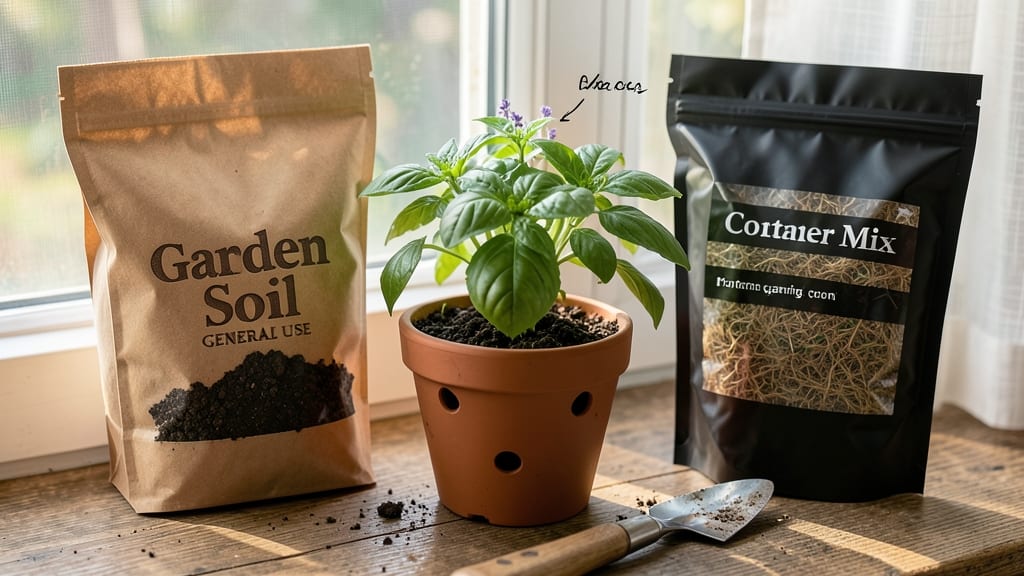
You shouldn't use garden soil for potting plants because it compacts easily, drains poorly, and often contains pests or diseases. Most plants thrive better in lightweight, sterile potting mixes with perlite or compost for aeration and drainage instead.
Garden soil is heavy and clay-rich, which means it doesn't allow water or air to move through it easily. 🌱 This can suffocate plant roots, leading to rot and stunted growth. Unlike garden soil, potting mixes are designed to be airy and well-draining, preventing these issues.
For example, a blend of coconut coir, perlite, and compost creates an ideal environment for root health and nutrient absorption.
Even if you amend garden soil with sand or peat moss, it still won't match the performance of a proper potting mix. Many gardeners make the mistake of assuming "dirt is dirt," but the structure and composition of garden soil make it unsuitable for container gardening.
Always opt for a mix specifically formulated for potted plants to ensure your greenery thrives.
💡 In This Article
- Why Garden Soil Fails as Potting Mix
- Best Potting Mix Alternatives for Healthy Plants
Why garden soil fails as potting mix
Garden soil is designed to hold nutrients and moisture for deep-rooted plants in the ground, but its dense structure makes it terrible for containers. The clay particles in garden soil pack tightly when watered, creating a compacted mass that blocks air flow to roots.
This suffocation effect reduces oxygen availability by up to 70% compared to ideal potting mixes, which are formulated to stay loose and aerated. 🌱
The organic matter in garden soil also breaks down unevenly, creating pockets of waterlogging that drown roots. Unlike potting mixes with consistent moisture retention (like cocopeat or peat moss), garden soil can leave some areas bone-dry while others remain soggy.
This inconsistency triggers root rot in 3-5 days for sensitive plants like ferns or calatheas, while proper mixes maintain balanced moisture.
Pests and pathogens thrive in garden soil too. Weeds, grubs, and fungal spores hitchhike from the yard into pots, creating hidden threats. A single tablespoon of garden soil can contain thousands of weed seeds and microscopic organisms that outcompete your plants for nutrients.
Even sterilizing garden soil doesn't fix its structural flaws—it still compacts and drains poorly.
Consider the particle size: garden soil contains 20-50% sand/silt/clay, while potting mixes use 50-80% organic matter (like bark or coir) plus 10-20% perlite/vermiculite for air pockets. This porous structure allows roots to breathe while water drains freely—exactly what garden soil fails to provide.
For example, a 1-gallon pot filled with garden soil might weigh 12-15 pounds when saturated, while the same pot with potting mix weighs only 6-8 pounds. This weight difference shows how garden soil's density stresses plant roots and makes containers harder to move—another practical downside.