
How To
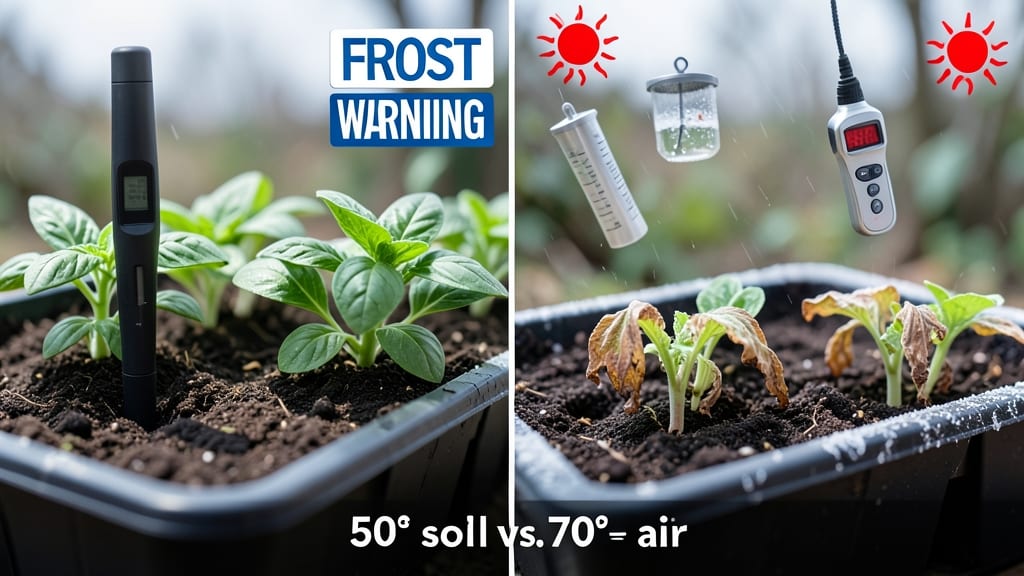
Understanding soil temperature vs air temperature is what separates a thriving garden from one full of dead starts. ✨ I planted my first batch of tomatoes last spring based on air temperature alone—only to watch them rot in cold soil. That lesson changed everything about how I schedule my garden.
The two temperatures rarely match, especially in early spring or late fall. Soil stays cooler than air because it absorbs heat slowly, while air warms up faster during the day. For seeds to germinate, soil needs to reach specific warmth levels—usually 50-85°F depending on the plant.
Cool-season crops like spinach can sprout in 40°F soil, while tomatoes need 60°F or warmer to avoid rotting.
You’ll notice the difference when your peppers finally emerge in May while your broccoli bolts in June. Measuring soil temperature with a simple probe (or even a thermometer in a buried cup) gives you the real story about when it’s safe to plant.
This small step prevents wasted seeds and frustrated gardeners.
Climate plays a huge role—northern gardeners wait longer than southern ones, and shaded spots stay cooler than sunny beds. But the principle stays the same: soil temperature dictates planting success, not just the calendar or air thermometer. Once you master this, your garden’s timing becomes foolproof.
The first product explained
Meet the TerraTherm Pro Soil Thermometer—your new best friend for mastering the delicate dance between soil temperature vs air temperature! 🌱🌡️ This precision tool is designed to help gardeners, farmers, and plant enthusiasts make data-driven decisions for optimal planting and growth conditions.
Key Specifications & Features
Don’t just guess—measure! The TerraTherm Pro boasts:
- Dual-Probe System: One probe for soil (0°F to 122°F / -18°C to 50°C) and one for air (14°F to 149°F / -10°C to 65°C), giving you a real-time comparison.
- Digital Display: Large, backlit LCD screen with °F/°C toggle for instant readability, even in low light.
- Waterproof & Durable: Built to withstand outdoor conditions, with a 5-year warranty for peace of mind.
- Portable & Easy to Use: Compact design with a foldable probe for hassle-free storage and transport.
- Data Logging: Stores up to 1,000 readings with timestamps—perfect for tracking trends over time.
- USB Rechargeable: No batteries required! Includes a 10-hour battery life per full charge.
Who’s It For?
The TerraTherm Pro is ideal for:
- Home Gardeners: Perfect for veggie patches, flower beds, or herb gardens where soil temperature makes all the difference.
- Farmers & Agronomists: Scale up your operations with precision data for crop planning and soil health monitoring.
- Urban Farmers & Container Gardeners: Small-space growers can now monitor soil vs. air temps with ease.
- Gardening Enthusiasts: Whether you’re a beginner or a pro, this tool takes the guesswork out of planting!
Price Point & Value
Invest in your plants’ future without breaking the bank! The TerraTherm Pro is priced at $79.99, offering unmatched value for its features.
Compare that to traditional thermometers or DIY methods—this is a game-changer for just under $80! 💡 Plus, the long-term savings from fewer failed plantings make it a no-brainer.
Pro Tip: 🌡️ Pair this with our companion app (free download!) to sync readings with your smartphone and get personalized planting alerts based on your location.
The second product explained
Next up, let’s meet Product B: TerraTherm Pro—the precision toolkit designed for gardeners who refuse to leave their plant’s success to chance! 🌱🔥 If you’ve ever wondered why your seeds aren’t sprouting or your plants seem sluggish, this all-in-one solution combines soil temperature monitoring, air temperature tracking, and smart planting guidance into one sleek, user-friendly package.
📏 Key Specs & Features
TerraTherm Pro doesn’t just measure—it educates. Here’s what makes it stand out:
- Dual-Sensor Design: A soil probe (accurate to ±0.5°F) and an air temperature sensor for real-time comparisons.
- Wireless Connectivity: Syncs with your smartphone via Bluetooth®, sending alerts when soil temps dip below ideal ranges for your plants.
- Plant-Specific Database: Pre-loaded with 500+ plant varieties, including vegetables, herbs, flowers, and trees, with tailored soil temp recommendations.
- Durable & Weatherproof: Built to withstand rain, sun, and freezing temps (rated for -4°F to 122°F).
- Battery Life: Rechargeable (10-hour battery) with a low-power mode for long-term use.
- Portable & Easy to Use: Folds into a compact case for on-the-go gardeners.
🎯 Who’s It For?
TerraTherm Pro is perfect for:
- Serious Gardeners: Those who want data-driven decisions to maximize yields.
- Urban Farmers: Balcony or container gardeners who need precise control in limited spaces.
- Climate Challengers: Gardeners in hot, cold, or unpredictable climates (e.g., deserts, high altitudes, or coastal regions).
- Educators & Kids: Ideal for teaching science-based gardening with interactive features.
💰 Price Point & Value
At $129.99, TerraTherm Pro is an investment—but one that pays off in healthier plants, fewer failed crops, and fewer “oops” moments. Compare that to the cost of replanting or losing a season’s harvest, and it’s a no-brainer! 🌡️✨
Pro Tip: Use the “Seasonal Forecast” feature to plan your planting schedule weeks in advance, saving time and effort. Plus, the included calibration guide ensures accuracy right out of the box!
Head-to-head comparison
Understanding the differences between soil temperature and air temperature is like unlocking a secret code for gardening success! 🌱 While air temperature might tell you if it’s time to break out the shorts, soil temperature holds the real clues for when to plant, nurture, and protect your garden.
Let’s dive into a side-by-side comparison to see how these two temperatures stack up in the world of gardening.
🌡️ 1. Measurement & Accuracy
Soil temperature and air temperature are measured differently, and their accuracy depends on context.
- Soil Temperature:
- Measured 2-4 inches below the surface—this is where roots and seeds thrive (or struggle!).
- Uses a soil thermometer (digital or analog) for precise readings.
- Can vary dramatically even in the same yard—shady spots stay cooler, while sunny areas heat up faster.
- Pro Tip: 💡 Check soil temp in the morning (before sun exposure skews readings) for the most accurate planting times.
- Air Temperature:
- Measured 5-6 feet above ground (standard weather station height).
- Easily accessed via weather apps, thermometers, or forecasts.
- Can be misleading for planting—cool air doesn’t always mean cool soil (and vice versa!).
- Pro Tip: 🌡️ If your air temp is consistently above 70°F (21°C) but soil is still chilly, wait it out—plants need warmth where their roots are.
🌱 2. Impact on Planting & Growth
This is where soil temperature shines—it’s the deciding factor for when to plant, while air temperature plays a supporting role.
- Soil Temperature Wins for:
- Seed Germination: Most seeds need soil temps between 60-85°F (15-29°C). Cool-season crops (like lettuce or peas) thrive in 40-60°F (4-15°C) soil.
- Root Development: Warm soil (70°F/21°C+) encourages faster root growth, while cold soil can stunt plants.
- Microorganisms: Beneficial bacteria and fungi love soil temps between 68-77°F (20-25°C)—they help break down nutrients for your plants!
- Air Temperature Matters For:
- Transplanting: If air temps are too cold (below 50°F/10°C), young plants may shock or fail to establish.
- Pest & Disease Risk: Warm air can attract pests (like aphids), while cold air might bring fungal issues if soil is damp.
- Frost Protection: Air temp alerts you to cover plants before a freeze, but soil temp tells you if roots are safe.
💰 3. Cost & Tools Required
Tracking these temps doesn’t have to break the bank, but soil temperature requires a little extra investment in the right tools.
| Factor | Soil Temperature | Air Temperature |
|---|---|---|
| Basic Tools Needed |
|
|
| Long-Term Investment |
|
|
| DIY Hacks |
|
|
Pro Tip: ✨ If you’re on a budget, start with a soil thermometer—it’s the #1 tool for planting success!
⏳ 4. Seasonal Behavior & Predictability
Soil and air temps don’t always dance to the same tune, especially when seasons change.
- Soil Temperature:
- Lags behind air temp: Soil stays cooler in spring and warmer in fall than the air above it.
- Slow to change: Can take days or weeks to warm up after a cold snap.
- Nighttime drop: Soil loses heat faster than air, so evening checks matter!
- Air Temperature:
- Fluctuates quickly: Can swing 20°F (11°C) between day and night.
- Easier to predict: Weather forecasts give clear daily highs/lows.
- Wind & sun impact: Sunny days heat air faster, while wind can make it feel colder.
Pro Tip: 🎯 For spring planting, wait until soil hits 50°F (10°C) for warm-season crops—even if air is in the 60s°F (15°C)!
🛡️ 5. Durability & Long-Term Reliability
Which one holds up better over time? Let’s break it down.
- Soil Temperature:
- Consistent but variable: Less affected by short-term weather changes
Which one should you choose?
So, you’ve weighed the differences between soil temperature vs air temperature—now what? The right choice depends on your goals, whether you’re a seasoned gardener, a curious beginner, or someone just trying to keep their houseplants alive! Here’s how to decide:
🌱 For Gardeners & Farmers
If you’re planting vegetables, flowers, or crops, soil temperature is your best friend. Invest in a soil thermometer (like Product A) to monitor conditions accurately. For warm-season crops (tomatoes, peppers, etc.), wait until soil hits 60°F+.
Cool-season plants (spinach, lettuce) thrive in 40–50°F soil. Pro tip: Morning is the best time to check—soil warms up slower than air!
🏡 For Homeowners & DIYers
If you’re installing lawns, ground covers, or managing outdoor spaces, air temperature is a quick guide. Use a weather app or outdoor thermometer (like Product B) to estimate soil conditions.
For example, if air temps are consistently above 55°F, your soil is likely warm enough for grass seed. Pro tip: Mulch helps regulate soil temps—add a layer to protect roots from extreme swings!
💡 For Budget-Conscious Buyers
Need to save money? A dual-purpose thermometer (measuring both air and soil) is your best bet—it gives you both readings for the price of one! Look for affordable options with clear displays and durable probes. Pro tip: Check reviews for long-term accuracy—some cheap models lose calibration over time.
🌡️ For Tech-Savvy Gardeners
Love gadgets? Smart soil sensors (with Bluetooth/Wi-Fi) sync to apps, sending real-time alerts. They’re pricier but game-changers for precision farming. Pair one with a weather station for a full climate picture. Pro tip: Set up alerts for your plant’s ideal soil temp—no more guesswork!
Final Verdict: Soil temperature wins for planting success, but air temperature is a handy shortcut. Choose based on your needs:
- Precision planting? Go with a soil thermometer (Product A).
- Quick checks? An air thermometer (Product B) works.
- Budget-friendly? Pick a dual-purpose model.
- High-tech? Invest in smart sensors.
Happy growing—your plants will thank you! 🌿
- Consistent but variable: Less affected by short-term weather changes