
Light Requirements
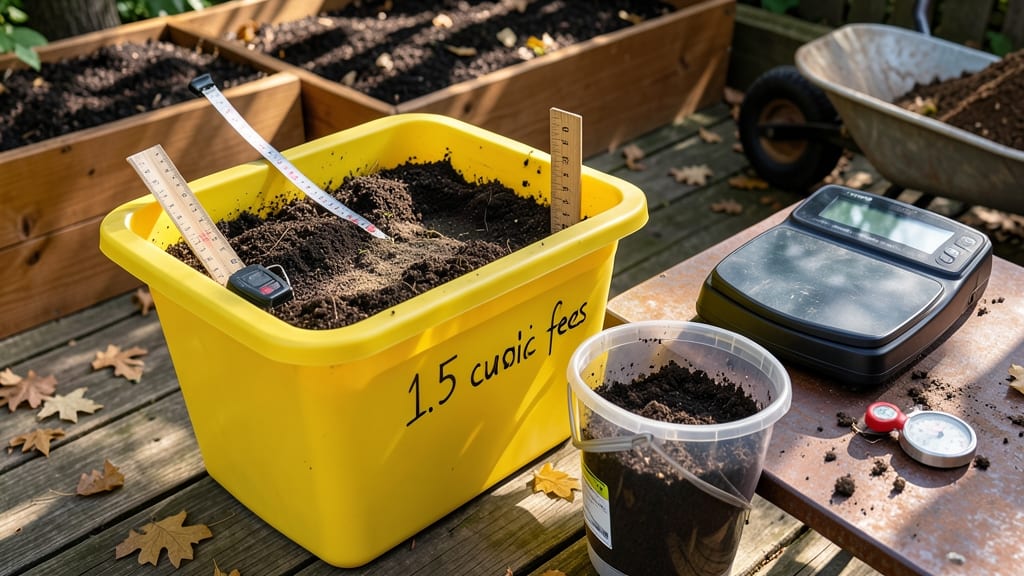
To determine how much 1.5 cubic feet of soil weighs, expect between 20 to 50 pounds, depending on the soil type—sandy soil is lighter (20–30 lbs), while clay or loamy soil can reach 40–50 lbs. Moisture levels also significantly increase weight, adding up to 10 extra pounds when saturated.
Understanding soil weight is key for projects like raised garden beds or container planting. 🌱 Sandy soil's loose particles create more air space, keeping its weight on the lighter side, while clay's dense structure packs more mass into the same volume.
Even a small change in moisture can add noticeable pounds—think of how a damp sponge feels heavier than a dry one. For accurate planning, always account for both soil type and current moisture conditions in your calculations.
This variation matters most when moving soil or designing structures. For example, a 4x4-foot raised bed (about 1.5 cubic feet deep) filled with clay soil could weigh 200+ pounds—heavy enough to require assistance or reinforcement.
I recommend using a soil density calculator or testing a small sample first to adjust your project's weight estimates accordingly.
💡 In This Article
- Soil Density Factors Affecting Weight in Cubic Feet
- Practical Weight Estimates for Garden Projects
Soil density factors affecting weight in cubic feet
Soil weight varies dramatically because of its particle composition and how tightly those particles pack together. Sandy soil, made of large, coarse grains, has high porosity—meaning it contains more air pockets and less solid material.
This gives it a bulk density of about 90-100 pounds per cubic foot, so 1.5 cubic feet weighs roughly 20-30 pounds when dry.
In contrast, clay soil particles are tiny and plate-like, packing densely with minimal air space, creating a bulk density of 110-130 pounds per cubic foot—nearly double that of sand.
The science gets even more interesting when you consider moisture. Water fills those air pockets, dramatically increasing weight. A saturated sandy soil can absorb 20-30% of its dry weight in water, adding 4-9 extra pounds to that 1.5 cubic feet sample.
Clay soil holds even more water—up to 50% of its dry weight—potentially adding 10+ pounds when fully saturated. 💧 Think of it like comparing a dry sponge (light) to a soaked one (heavy). This moisture effect explains why gardeners often underestimate soil weight after rain.
Compaction plays a crucial role too. Loose, freshly tilled soil weighs less because it retains more air. But when you walk on it or use machinery, the particles settle closer together, increasing density and weight.
For example, compacted loam soil (a mix of sand, silt, and clay) can reach 100-120 pounds per cubic foot, making 1.5 cubic feet weigh 35-45 pounds—significantly heavier than its loose counterpart. This is why construction sites carefully control soil compaction for stability.
Organic matter also influences weight. Peat or compost-amended soils contain lighter, decomposing plant material that reduces overall density. A peat-heavy mix might weigh 15-25 pounds per cubic foot, making 1.5 cubic feet lighter than pure mineral soil.
However, as organic matter decomposes, it becomes denser over time, gradually increasing weight. This decomposition process is why garden soil often feels heavier after a few seasons of use.
For precise calculations, soil scientists use a formula: bulk density = dry weight / volume. Measuring this at home requires simple tools—a calibrated container (like a known-volume bucket) and a scale.
Fill it with soil, weigh it wet, then dry it in an oven at 212°F for 24 hours to find the dry weight difference. This method reveals whether your soil is closer to the sandy or clay end of the spectrum.
Understanding these factors helps explain why a 5-gallon bag of potting mix (about 0.35 cubic feet) might weigh 12-18 pounds—light enough for one person to carry, while a wheelbarrow of clay soil (roughly 2 cubic feet) could exceed 80 pounds when wet.
This knowledge is critical for planning projects like raised beds or heavy planters where structural support matters.