
Light Requirements
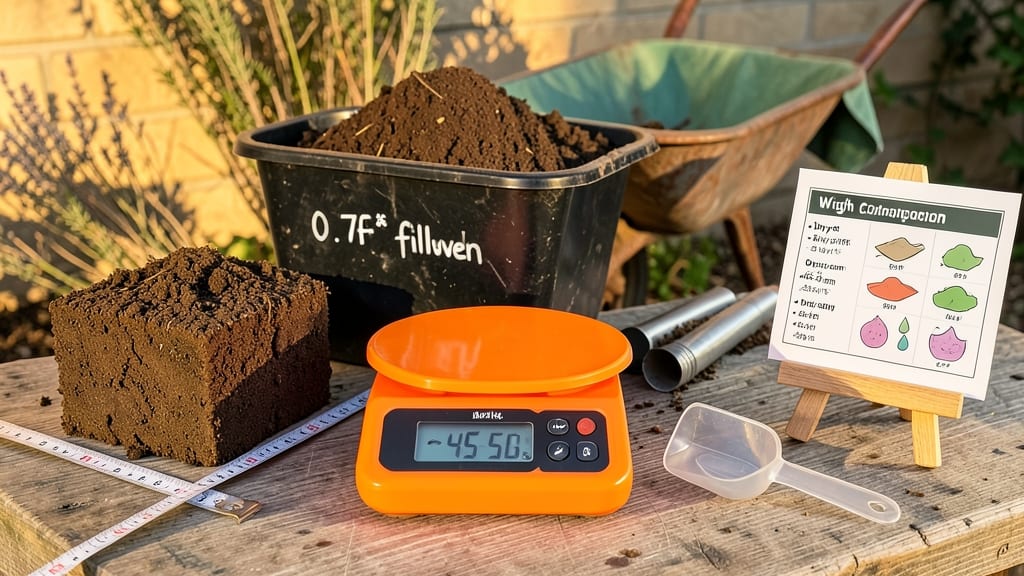
To determine how much 0.75 cubic feet of soil weighs, you'll find it ranges between 25 to 45 pounds, with sandy soil on the lighter end (25–35 lbs), loamy soil averaging 35–42 lbs, and clay-heavy soil reaching 40–45 lbs—moisture can add an extra 5–15% to the total weight.
Understanding soil weight isn't just about the numbers—it's about how those particles pack together and absorb water. 🌱 Sandy soil feels lighter because its coarse grains leave more air pockets, while clay holds moisture tightly, making it denser.
Even a small change in moisture can shift the weight significantly, especially in gardening projects where you're moving soil by the bagful. For example, a raised bed filled with damp loamy soil might feel surprisingly heavy compared to dry sandy soil in the same volume.
This variation matters whether you're calculating materials for a DIY project or planning how to transport soil. 💫 For instance, a 5-gallon bucket of clay-heavy soil could weigh nearly 10 pounds when packed, while the same container of sandy soil might only tip the scales at 6 pounds.
Always account for moisture—especially after rain—when estimating loads for wheelbarrows or trucks.
💡 In This Article
- Soil Density Variations by Composition and Moisture
- Practical Weight Estimates for Gardening Projects
Soil density variations by composition and moisture
Soil weight varies dramatically because of its particle composition—sand, silt, and clay each pack differently. Sandy soil has large, loose grains with high porosity, meaning about 25-40% air space, which reduces density.
In contrast, clay particles are tiny and plate-like, packing tightly with only 40-50% air space, making it 20-30% denser than sand by volume. Loamy soil, the ideal mix of 40% sand, 40% silt, and 20% clay, strikes a balance with 50% porosity, giving it a moderate weight.
The real game-changer is moisture content. Dry sandy soil might weigh 25 lbs per 0.75 cubic feet, but when saturated, it can absorb 15-20% extra water by weight, pushing it to 30 lbs.
Clay, however, holds moisture like a sponge—its weight can jump 30-50% higher when wet due to capillary action trapping water between particles. Even loamy soil, prized for gardening, can see 10-20% weight gain after rain.
This is why a wheelbarrow of "light" soil can suddenly feel like a 20-pound dumbbell after a downpour. 💧
Compaction further skews weight calculations. Foot traffic or machinery can reduce air pockets by 10-25%, increasing density. For example, a 0.75 cubic feet sample of loose topsoil might weigh 35 lbs dry, but after being walked on, it could weigh 40 lbs—a 14% increase without adding water.
This matters for projects like patios or garden paths, where soil is often compacted during installation.
Organic matter also plays a role. Peat moss or compost adds bulk but reduces overall density—10% organic content can lighten soil by 5-10% compared to mineral-only soil. Meanwhile, minerals like iron oxides or limestone can add 5-15% extra weight to clay-heavy soils.
These variations explain why two 0.75 cubic feet samples from the same yard might weigh 3 lbs different depending on where you scoop them.
For precise calculations, consider the bulk density formula: weight ÷ volume. Most garden soils fall between 60-120 lbs per cubic foot, but this shifts with moisture.
A simple field test: Scoop 0.75 cubic feet into a known-weight container (like a 5-gallon bucket) and weigh it—your scale will reveal the real-world variation. This method beats guesswork for projects like raised beds or erosion control. 🌿
Understanding these factors helps avoid overestimating or underestimating loads. For instance, a 4'x8' raised bed (2 cubic feet) filled with clay soil could weigh 160-240 lbs when dry, but 200-300 lbs** when wet—a critical detail for structural support.
Always err on the side of caution when calculating for heavy equipment or manual labor. ✨