
Vegetables
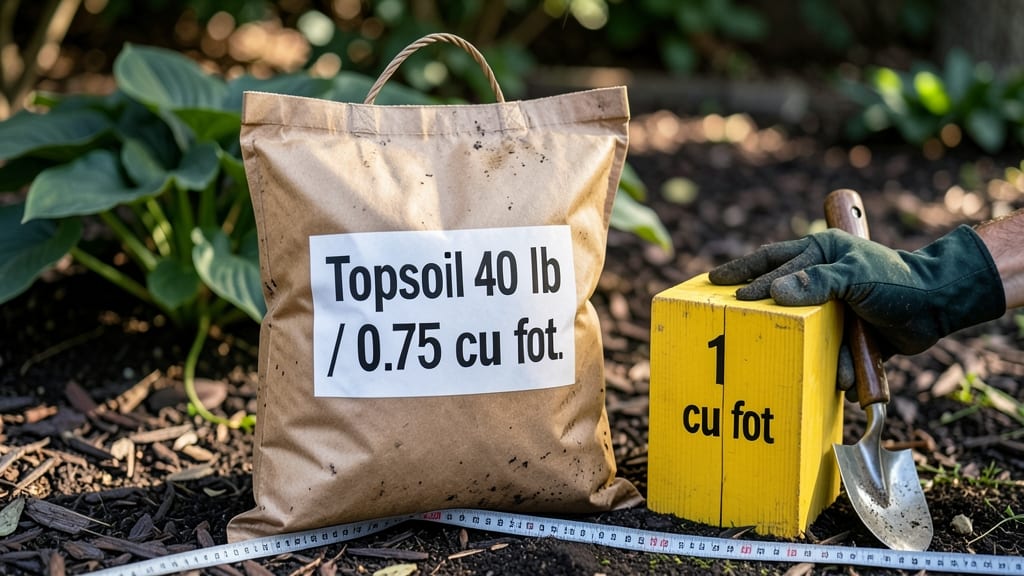
A 40 lb bag of topsoil converts to roughly 0.5 to 0.75 cubic feet, but this depends on how compacted or moist the soil is—drier, looser soil takes up more space, while wet or clay-heavy soil shrinks the volume. Always double-check the manufacturer's conversion chart for exact measurements in your project.
A 40 lb bag of topsoil isn't one-size-fits-all because soil behaves differently based on its makeup. Moisture content plays a huge role—wet soil can weigh significantly more per cubic foot, while dry, sandy soil spreads out further. Organic matter also affects this: compost-rich topsoil may feel lighter but still pack tightly.
For accurate planning, I recommend weighing your empty wheelbarrow first, then filling it with soil and comparing the total weight to standard conversion tables. This method gives you real-world numbers for your specific project.
For practical applications, think about your project's dimensions. A 10-foot by 10-foot garden bed that's 6 inches deep needs about 4.17 cubic feet of topsoil—so you'd need roughly 6-8 bags (accounting for settling). Sloped areas require extra calculations, as depth varies across the surface.
Pro tip: always buy 10-15% more than your calculations suggest, since soil naturally compacts over time, especially after rain or foot traffic. 💫
💡 In This Article
- How Topsoil Weight Converts to Cubic Feet
- Calculating Topsoil Needs for Garden Beds and Landscaping
How topsoil weight converts to cubic feet
Topsoil's weight-to-volume conversion hinges on its bulk density, which measures how tightly particles pack together. Sandy soil, with larger particles and air gaps, typically weighs about 70-90 pounds per cubic foot, while clay-heavy soil—denser and heavier—can reach 100-120 pounds per cubic foot.
This means a 40 lb bag of sandy topsoil will occupy more space (closer to 0.7 cubic feet) than the same weight of clay-rich soil (around 0.4 cubic feet). The key difference lies in particle size and porosity, where sand's coarse texture traps more air, reducing density.
Moisture content drastically alters these calculations. Wet soil can weigh up to 30% more than dry soil due to absorbed water, shrinking its volume by nearly 20%.
For example, a bag labeled "40 lbs" might actually contain 50 lbs of waterlogged soil, reducing its usable cubic feet by almost a third. Conversely, dry, crumbly topsoil might expand to 0.8 cubic feet—so always check the bag's moisture level before estimating.
Pro tip: Fluff the soil in your wheelbarrow to mimic natural settling before measuring.
Organic matter adds another layer of complexity. Compost-amended topsoil often feels lighter but packs densely due to decomposed plant fibers binding particles together. This creates a bulk density of 60-80 pounds per cubic foot, meaning your 40 lb bag could yield 0.6-0.7 cubic feet.
The trade-off? Organic soil improves plant growth but may require more frequent replenishment. For precision, manufacturers test soil in controlled conditions—typically at 15-20% moisture content—so their conversion charts assume this baseline. 🌱
Compaction is the wild card in these calculations. Foot traffic or machinery can reduce topsoil volume by 10-30% after spreading. For instance, a freshly tilled garden bed might need 5 cubic feet of loose soil, but after settling, you'll only have 4 cubic feet of usable space.
This is why landscapers recommend overestimating by 10-20% for projects where settling occurs. Think of it like packing a suitcase: the more you compress, the less volume remains.
To visualize this, imagine filling a 12-inch cube (1 cubic foot) with different soils:
- Sandy soil: Weighs ~80 lbs, leaves room for air
- Clay soil: Weighs ~110 lbs, feels heavy and dense
- Organic soil: Weighs ~70 lbs but may compact more over time
For DIYers, the easiest way to test your soil's conversion is the bucket method: Fill a known-volume container (like a 5-gallon bucket, which holds ~0.11 cubic feet) with soil from your bag, then weigh it. Divide the weight by 0.11 to get pounds per cubic foot.
For example, if your bucket weighs 10 lbs, your soil's bulk density is ~90 lbs/cubic foot—meaning a 40 lb bag would yield ~0.44 cubic feet. This hands-on approach beats guessing based on bag labels alone. ✨