
Lawn
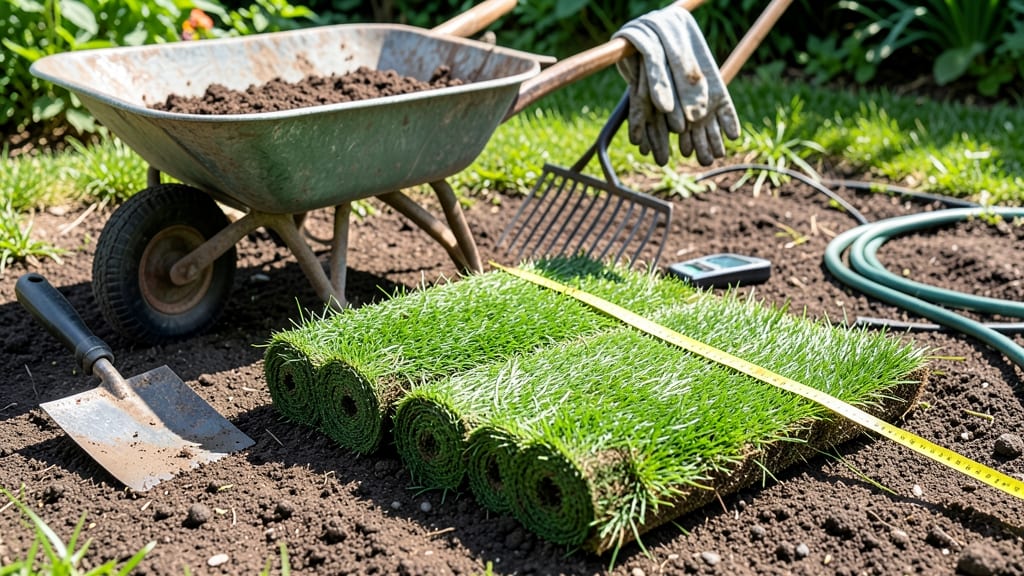
To determine how much topsoil for sod, spread 2 to 3 inches over the prepared area to support root growth and drainage. A 100-square-foot lawn needs 2 to 3 cubic yards of topsoil, adjusted for soil type and terrain.
Understanding the right amount of topsoil for sod isn't just about measurements—it's about creating the perfect foundation for your new grass.
The 2 to 3 inch layer promotes strong root development while preventing waterlogging, which can suffocate your sod. 🌱 For example, clay-heavy soils may need deeper topsoil to improve drainage, while sandy soils benefit from extra depth to retain moisture.
I always recommend testing your existing soil first—this helps avoid common pitfalls like poor nutrient absorption or uneven settling.
When calculating topsoil volume, think beyond square footage. A 100-square-foot area with 3 inches of topsoil requires about 2.5 cubic yards, but slopes or uneven ground can increase this by up to 20%.
Pro tip: Rent a topsoil calculator app or use the simple formula—length × width × depth (in feet) ÷ 27—before ordering. This small step saves money and ensures your sod thrives from day one.
💡 In This Article
- Topsoil Depth Requirements for Healthy Sod Roots
- Calculating Topsoil Volume by Yard Size
Topsoil depth requirements for healthy sod roots
The ideal 2 to 3 inch topsoil layer for sod isn't arbitrary—it's a sweet spot for root development. Grass roots need this depth to penetrate and establish a strong anchor while accessing moisture and nutrients.
Shallower layers (1 inch) risk poor root contact, while deeper layers (> 4 inches) can lead to waste and uneven settling.
The top 1 inch of this layer is especially critical as it contains the highest concentration of beneficial microbes that break down organic matter for your grass.
Soil composition dramatically affects how well sod thrives. Clay-heavy soils compact easily, reducing aeration and water drainage—this is why many landscapers recommend 3 inches of topsoil in these cases.
Sandy soils, on the other hand, drain too quickly, so adding 2-3 inches of loamy topsoil helps retain moisture while preventing compaction.
Think of it like a sponge: clay soils need more "pores" (depth) to hold water, while sandy soils need more "fiber" (organic matter) to retain it. 🌱 The texture you're aiming for is similar to a well-worked garden bed—crumbly yet cohesive.
Compaction is the silent killer of new sod. When soil is packed down (often from heavy foot traffic or machinery), it creates a dense layer that roots can't penetrate. To combat this, always loosen the existing soil to 4-6 inches deep before adding your topsoil layer.
This creates a "root zone" where grass can establish itself properly. I've seen cases where homeowners skipped this step and ended up with patchy, weak sod—even with the right amount of topsoil. The key is working with the soil's natural structure, not against it.
Moisture retention becomes a balancing act in different climates. In hot, dry regions, the 3 inch depth helps maintain soil moisture longer, while in wetter climates, you might lean toward 2 inches to prevent waterlogging.
The topsoil's organic matter content (aim for 5-10%) plays a huge role here—it acts like a moisture reservoir. For example, a 100-square-foot area with 3 inches of topsoil containing 7% organic matter will hold about 15 gallons more water than the same area with 3% organic matter.
Consider the seed-to-sod transition if you're renovating. When installing sod over existing grass or weeds, you'll need to add 3-4 inches of topsoil to completely smother the old vegetation while providing enough depth for new roots.
This extra depth gives your sod a fighting chance against weeds trying to push through.
The first 2 weeks after installation are critical—this is when roots are most vulnerable to drying out or being smothered by compacted soil. 💧 Proper depth ensures they have the space to grow downward while leaves spread outward.
One common mistake is assuming all topsoil is created equal. Screened topsoil (particle size 1/4 inch) is ideal for sod because it compacts evenly and promotes uniform root growth. Cheaper bulk topsoil often contains larger clumps that can create air pockets or uneven surfaces.
I recommend spending the extra $5-$10 per cubic yard for screened topsoil—it makes a noticeable difference in how evenly your sod establishes itself. The visual difference is like comparing a freshly tilled garden bed to one with large rocks and clods.