
Landscaping
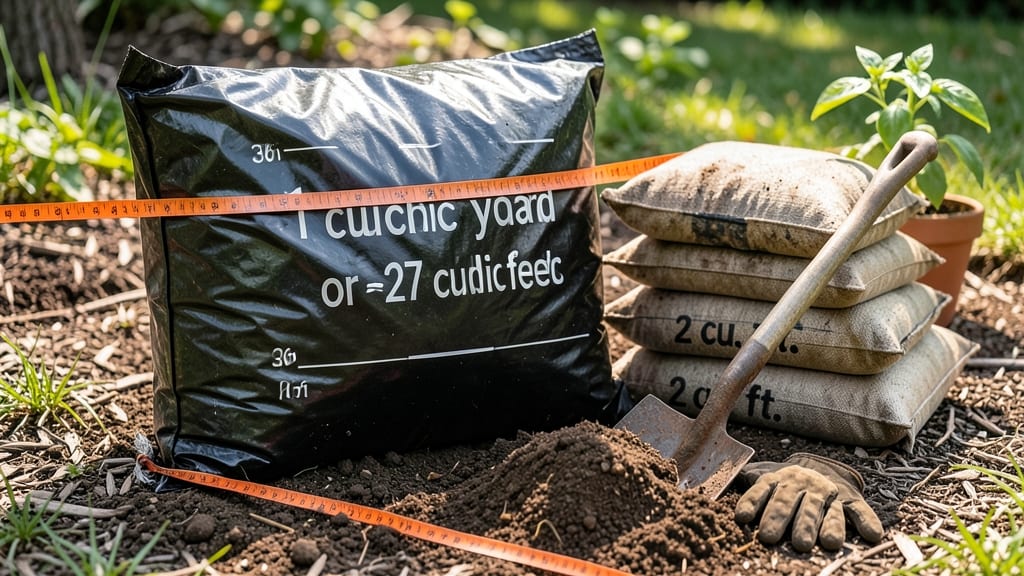
Figuring out how many bags make 1 cubic yard of soil depends on the type—standard 40-pound bags of topsoil or garden soil typically yield about 27 bags, but sand needs fewer (20-25 bags) while clay or compost may require 30+ bags due to their varying densities.
Understanding soil density is key to getting this right. 💫 Different materials pack differently—sand, being lightweight, takes up more volume per pound, while clay or compost compresses tightly, increasing weight. For example, a cubic yard of potting mix might need 30 bags, but construction-grade fill dirt could drop to 25.
Always check the bag's weight label and your project's soil type requirements before ordering.
Pro tip: Retail stores often sell by the cubic yard, but their "standard" bags might vary in weight. I always ask for a density chart or calculate based on the soil's moisture content—wet soil weighs more, so factor that in if you're buying for a rainy season.
For large projects, consider bulk delivery to save money and reduce trips.
💡 In This Article
- How Soil Density Affects Bag Counts
- Choosing the Right Soil Bags for Your Project
How soil density affects bag counts
The number of bags needed per cubic yard of soil comes down to a simple physics principle: density. Think of it like packing feathers versus bricks into the same box—the feathers (sand) take up way more space for the same weight, while the bricks (clay) pack tightly.
Sand typically weighs about 2,400 pounds per cubic yard, meaning you'd need just 20-25 bags of 40-pound sand to fill that space. In contrast, clay soil packs at 2,800 pounds per cubic yard, requiring 30+ bags for the same volume.
Moisture content adds another layer of complexity. Wet soil can weigh up to 30% more than dry soil because water fills the air pockets between particles.
For example, a cubic yard of dry garden soil might need 27 bags, but if it's freshly watered, you could need 35 bags to account for the extra weight.
This is why professional landscapers always specify whether they're measuring by volume (cubic yards) or weight (tons)—a critical distinction for large projects.
Here's how density breaks down for common soil types:
- Sand: 2,400 lbs/yd³ → 20-25 bags (lightest, most porous)
- Loam (ideal garden soil): 2,600 lbs/yd³ → 25-27 bags (balanced texture)
- Clay: 2,800 lbs/yd³ → 30+ bags (heavy, compacted particles)
- Compost/Topsoil: 2,200-2,700 lbs/yd³ → 27-30 bags (varies by organic content)
For precise calculations, check the soil's bulk density—a measurement you can often find on manufacturer websites or ask for at garden centers. For instance, miracle-gro® garden soil lists a bulk density of 2,500 lbs/yd³, so you'd divide 2,500 lbs by 40 lbs/bag to get your exact bag count.
Always round up when ordering to account for settling and moisture variations.
One real-world example: I once planned a raised garden bed and ordered 27 bags of topsoil for 1 cubic yard, only to realize the soil was unusually dry. After adding water, the volume shrank by 15%, forcing me to buy 5 extra bags to complete the project.
This taught me to always verify moisture levels before purchasing—especially in dry climates where soil can lose up to 20% of its weight to evaporation.
For projects where accuracy matters (like foundation work), some contractors use a soil density calculator that accounts for compaction. For example, compacted fill dirt can reach 3,000 lbs/yd³, meaning you'd need 35+ bags for the same volume.
Always clarify whether your soil needs to be loose (for gardens) or compacted (for construction)—the bag count changes dramatically.