
Landscaping
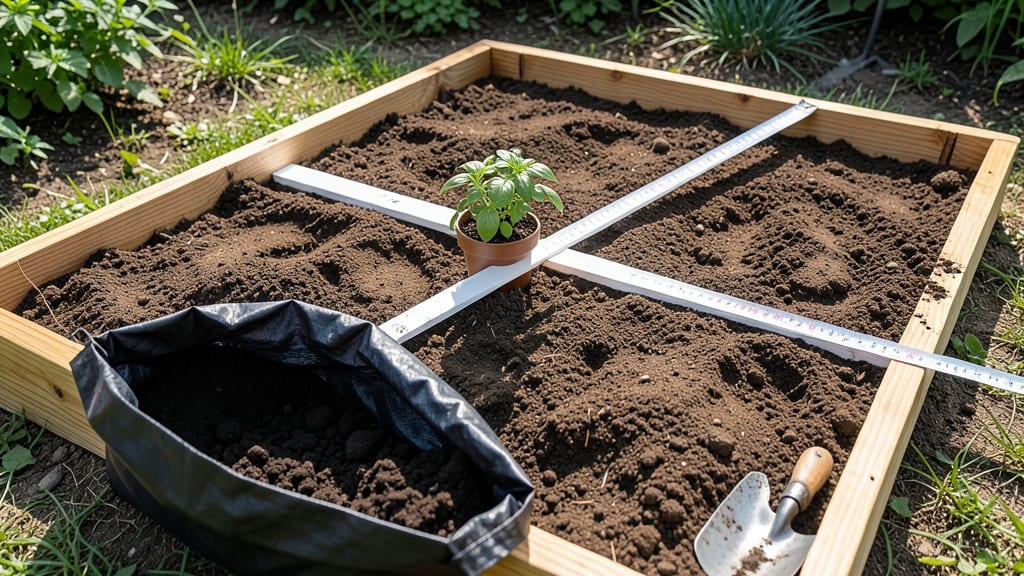
A yard of soil covers 100 square feet when spread 3 inches deep, making it ideal for standard landscaping projects. For deeper beds (e.g., 6 inches), use half a yard per 100 sq ft, while shallower layers (1 inch) require 3 yards per 100 sq ft.
A yard of soil is calculated based on volume, not just surface area. 🌱 This means the depth of your soil layer directly affects how much you'll need. For example, a 6-inch-deep garden bed will require half the soil volume of a 3-inch layer for the same area.
I always recommend measuring your project area first—multiply length by width to get square footage, then divide by the depth (in inches) to determine cubic yards needed. This simple formula helps avoid costly over-purchases or last-minute trips to the nursery.
Understanding this relationship also helps with budgeting. Thicker layers improve drainage and root growth, but they cost more upfront. 💰 For raised beds, I suggest starting with 4-6 inches of soil to balance cost and plant health.
And remember: bulk soil is cheaper per cubic yard, so buying in larger quantities often saves money in the long run.
💡 In This Article
- Calculating Soil Coverage by Depth for Gardens
- Choosing the Right Soil Quantity for Planting Projects
Calculating soil coverage by depth for gardens
At its core, soil volume follows a simple geometric principle: 1 cubic yard = 100 square feet × 3 inches deep.
This comes from converting cubic yards (3 feet × 3 feet × 3 feet) into inches (36 inches × 36 inches × 3 inches), where the top layer's depth determines coverage.
For example, a 3-inch layer spreads across 100 sq ft, while a 6-inch layer covers only 50 sq ft—the volume doubles, but the area halves. This inverse relationship is why depth measurements matter so much in gardening. 🌱
Let's break down the math: 1 cubic yard = 27 cubic feet. When spread at 3 inches (0.25 feet), it covers 108 square feet (27 ÷ 0.25). However, most suppliers round this to 100 sq ft for simplicity, accounting for slight compaction.
For 1-inch layers, you'll need 3 cubic yards per 100 sq ft—that's because the volume triples while the area stays constant. This is why raised beds often require precise calculations: a 4-inch layer over 100 sq ft needs 1.5 cubic yards, not 1.
Real-world applications show why this matters. A 10×10-foot garden bed at 4 inches deep needs 1.33 cubic yards of soil (100 sq ft ÷ 4 inches × 1 cubic yard).
If you miscalculate and use only 1 cubic yard, you'll end up with a 3-inch layer—too shallow for most vegetables. Conversely, overestimating leads to wasted money and potential compaction issues. 💰 The key is measuring your space accurately and adjusting for the specific depth needed.
Different projects demand different depths. Lawn topsoil typically uses 1-2 inches, while vegetable gardens thrive with 6-12 inches for root development. Flowerbeds often sit at 3-4 inches, balancing cost and aesthetics.
For example, a 5×5-foot flowerbed at 3 inches needs 0.28 cubic yards—just enough for one small bag. But a 10×20-foot vegetable patch at 6 inches requires 4 cubic yards, a bulk purchase best ordered in advance.
Pro tip: Use a soil depth gauge (a simple ruler works) to verify measurements on-site. Many gardeners also account for 10-15% extra to compensate for uneven terrain or settling. For example, a 100 sq ft area with 3-inch depth might need 1.1-1.2 cubic yards to ensure full coverage.
This small buffer prevents last-minute scrambles and ensures your plants have the right foundation. 🌿
Understanding this relationship also helps with soil types. Sandy soil compacts less than clay, so you might need 5-10% more of the lighter material to achieve the same depth. Conversely, compost-amended soil settles more, requiring adjustments. Always check the supplier's recommendations—some bags of "topsoil" contain additives that alter volume.
For instance, a 2 cubic-foot bag covers 8 sq ft at 3 inches, but a 3 cubic-foot bag covers 12 sq ft—the difference adds up quickly in large projects.
For advanced gardeners, consider layering. A 6-inch bed might use 3 inches of topsoil (for nutrients) over 3 inches of compost (for drainage). Here, you'd calculate each layer separately: 0.5 cubic yards of topsoil + 0.5 cubic yards of compost for 100 sq ft.
This technique maximizes plant health while keeping costs manageable. 🌱 The formula stays the same—only the purpose changes.