
Planting
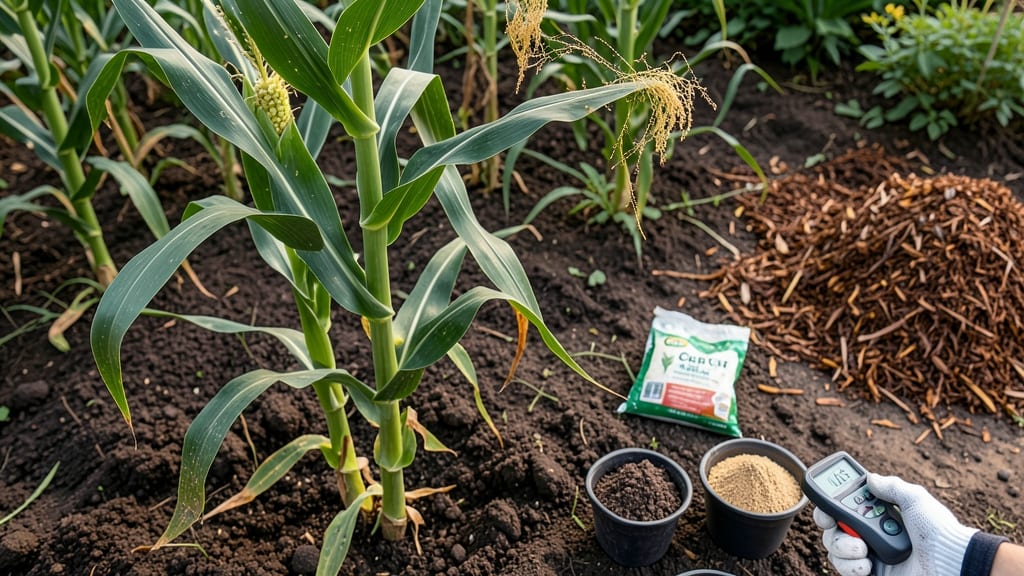
Growing corn with the right soil requirements means the difference between tall, golden ears and stunted, weak stalks that barely produce anything.
Even experienced gardeners can overlook how critical soil pH, drainage, and nutrient balance are for 🌽 corn—and those small details often determine whether your harvest is worth celebrating or just another lesson learned.
The right foundation isn’t just about dirt; it’s about creating the perfect environment for corn to thrive.
In this guide, I’ll break down the ideal soil conditions for corn—from pH levels to texture and drainage—plus how to fix common soil mistakes that sabotage yields. Whether you’re working with clay-heavy soil in Zone 6a or sandy ground, these tips will help you set your corn up for success.
You’ll discover how to test your soil, which amendments work best, and when to fertilize for maximum growth. Let’s get your corn off to the strongest start possible.
Ideal soil pH, texture & drainage for corn growth
Corn thrives when planted in soil that mimics its natural habitat—rich, fertile, and well-balanced. The soil requirements for corn are more specific than many gardeners realize, and getting them right can mean the difference between plump, sweet ears and disappointing yields.
Let’s break down the three critical factors: pH balance, soil texture, and drainage, so you can create the perfect foundation for your corn plants.
First, corn prefers a slightly acidic to neutral pH range of 5.8 to 7.0. This range ensures the plant can efficiently absorb essential nutrients like nitrogen, phosphorus, and potassium.
Testing your soil’s pH before planting is a game-changer—it’s the first step to avoiding nutrient deficiencies that stunt growth or lead to poor ear development.
I always test my soil in early spring, and if the pH is off, I adjust it with lime (to raise pH) or sulfur (to lower pH) before planting.
| Soil Requirement | Ideal Specification | How to Achieve |
|---|---|---|
| pH Level | 5.8 – 7.0 (slightly acidic to neutral) | Test with a pH kit; amend with lime or sulfur as needed. |
| Soil Texture | Loamy (equal parts sand, silt, clay) | Mix compost or aged manure into heavy clay or sandy soil. |
| Drainage | Well-draining (no waterlogging) | Amend with perlite or organic matter; avoid compacted soil. |
| Organic Matter | 3–5% (high fertility) | Add compost, worm castings, or well-rotted manure before planting. |
| Clay Soil Fix | Loosen with gypsum or sand | Work in 1–2 inches of compost per square foot annually. |
| Sandy Soil Fix | Add organic matter to retain moisture | Mix in peat moss or coconut coir to improve water retention. |
When it comes to soil texture, corn loves loamy soil—a perfect blend of sand, silt, and clay that drains well but retains enough moisture to support deep roots.
If your soil is heavy clay, it can become waterlogged and suffocate roots, while sandy soil drains too quickly, starving plants of nutrients.
To improve clay soil, I mix in compost and perlite to create air pockets, while sandy soil benefits from peat moss or coconut coir to boost water retention.
Drainage is another non-negotiable for corn. Stagnant water at the roots leads to root rot and fungal diseases, which can devastate your crop. If your garden has poor drainage, consider planting corn in raised beds or mounding soil to create elevation.
I’ve seen corn thrive in containers with drainage holes, too—just use a high-quality potting mix with added compost. Always ensure your planting area has a slight slope to encourage water runoff.
For gardeners with clay-heavy soil, don’t despair—corn can still grow, but you’ll need to take extra steps. Start by testing your soil’s compaction level; if it feels hard when dry, it’s time to amend.
Work in 2–3 inches of compost and till it into the top 6–8 inches of soil before planting. Adding gypsum can also help break up clay particles over time. In my own garden, I’ve transformed stubborn clay soil into a corn-friendly bed by consistently adding organic matter each season.
On the flip side, sandy soil drains too fast, washing away nutrients and leaving corn plants thirsty. To fix this, I blend in well-rotted manure or composted leaves to improve moisture retention. A thick layer of mulch (like straw or wood chips) helps lock in humidity and keeps roots cool.
If you’re growing corn in containers, choose a mix designed for vegetables with added organic matter—it makes all the difference in preventing nutrient loss.
One of my biggest lessons came from a soggy spring a few years ago, when my corn patch turned into a swamp. The plants wilted, and the roots turned black from rot. Since then, I’ve made it a rule to test drainage before planting.
Dig a hole, fill it with water, and time how long it takes to drain—if it’s still wet after 6 hours, your soil needs help. Raised beds or mounded rows
Essential nutrients corn needs (and how to supplement deficiencies)
Corn is a heavy feeder, meaning it demands a steady supply of macronutrients like nitrogen, phosphorus, and potassium to thrive. Without the right balance, your plants may show stunted growth, poor ear development, or even collapse under stress.
I’ve learned the hard way—skipping fertilizer adjustments led to yellowing leaves and tiny, underdeveloped ears in my first attempt at growing sweet corn. Let’s break down what corn truly needs and how to meet those demands organically or synthetically.
For optimal growth, corn requires a 3-1-2 NPK ratio (Nitrogen-Phosphorus-Potassium) during early stages, shifting to a 1-2-2 ratio as ears form.
This shift ensures strong stalks first, then robust ear development. Micronutrients like zinc, magnesium, and boron also play critical roles—zinc prevents white banding on kernels, while magnesium (as part of chlorophyll) keeps leaves vibrant.
My soil tests revealed a zinc deficiency last season, which I fixed with a simple chelated zinc spray mid-season.
Organic vs. Synthetic Fertilizers for Corn
Organic Fertilizers
- Pros: Improves soil structure, slow-release nutrients, earthworm activity
- Cons: Requires frequent applications, slower results
Synthetic Fertilizers
- Pros: Fast nutrient delivery, precise ratios, easy to apply
- Cons: Can burn roots, no soil improvement, environmental concerns
To diagnose deficiencies early, I’ve adopted a DIY soil test kit (available for under $20) and a simple leaf analysis. Look for yellowing lower leaves (nitrogen deficiency), purple stems (phosphorus shortage), or weak stalks (potassium lack).
For organic solutions, I mix composted manure (high in nitrogen) with bone meal (phosphorus boost) at planting. Synthetic options like a 10-10-10 fertilizer work well mid-season, but I’ve found organic blends like fish emulsion or kelp meal provide steady, balanced nutrition without risking root burn.
Don’t overlook side-dressing—applying fertilizer alongside corn stalks at the 6-inch mark when tassels appear. This targets the roots where they’re actively growing. Last season, I split my fertilizer applications into three doses: at planting, at knee-high stage, and when silks emerged.
The result? Larger ears with fewer blank kernels. For micronutrients, a foliar spray of Epsom salt (magnesium sulfate) every 3 weeks kept my leaves lush and green, even in clay-heavy soil that locks out nutrients.
If you’re unsure about your soil’s current status, grab a handful and squeeze it. If it crumbles easily, it’s likely sandy and nutrient-poor—ideal for frequent organic top-dressings. If it sticks together like clay, amend with peat moss or compost to improve drainage and nutrient availability.
My community garden plot had compacted clay, so I raised beds and filled them with a 50-50 mix of garden soil and compost. The difference in plant vigor was night and day.
Remember, corn’s nutrient needs change as it grows. Start with a balanced fertilizer at planting, then adjust based on leaf color and stalk strength. For organic gardeners, compost tea or worm castings are excellent slow-release options.
For those prioritizing speed, a slow-release granular fertilizer applied every 4-6 weeks works wonders. The key is consistency—corn won’t forgive neglect, but it rewards careful attention with ears of gold that feed your family for months. 🌽