
How To
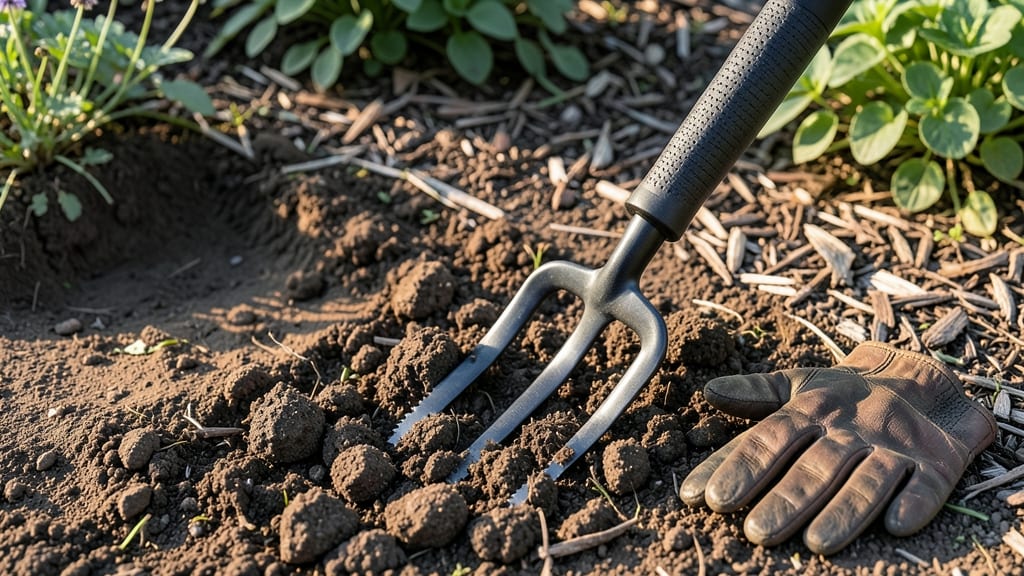
A soil loosener tool breaks up compacted soil layers to boost root growth and water absorption. These tools come in four main types—hand forks, spading forks, aeration spikes, and powered core aerators—each designed for specific soil depths and garden sizes.
Compacted soil is like a brick wall for plant roots, stifling growth and drainage. Soil loosener tools tackle this by physically breaking up dense layers, whether clay-heavy or sandy. 🌱 Hand forks are perfect for small garden beds, while core aerators handle large lawns efficiently.
The key is matching the tool to your project—deep compaction needs heavy-duty equipment, while light maintenance can use simple spikes. I always recommend testing soil first: poke a trowel in—if it resists, you’ve got compaction to fix.
For best results, work when soil is slightly moist (never soggy) to avoid creating clods. Powered aerators are ideal for lawns, but manual tools work great for vegetable gardens.
Just remember: regular loosening prevents long-term damage, especially in high-traffic areas. Think of it like giving your soil a deep-tissue massage—roots will thank you!
💡 In This Article
- How Soil Loosener Tools Work: Mechanism and Soil Science
- Selecting the Best Soil Loosener for Your Garden Type
How soil loosener tools work: mechanism and soil science
Soil compaction happens when external pressure—like foot traffic, heavy machinery, or even rain—squeezes soil particles together, reducing pore space by up to 50%. This creates a dense layer called hardpan, typically 4-6 inches below the surface, where roots struggle to penetrate.
Soil loosener tools combat this by physically disrupting these layers through mechanical action. Hand forks and spading forks work by driving their 4-6 tines into the soil, prying apart clay or silt particles with each insertion.
The leverage creates fractures that restore pore space, allowing water and air to move freely again.
The design of the tool's tines or blades determines how effectively it breaks up compaction. For example, spading forks have shorter, wider tines (about 1-2 inches apart) that cut through dense clay, while aeration spikes use narrow, pointed tips to pierce compacted layers without spreading soil.
Powered core aerators take this further by extracting 2-3 inch diameter plugs of soil, creating deep channels that improve drainage and root access. The key difference? Manual tools rely on your strength and precision, while motorized tools deliver consistent, deep aeration over large areas in minutes.
Beyond physical disruption, these tools trigger a cascade of benefits for soil health. Breaking up compacted layers boosts microbial activity by restoring oxygen levels—critical for decomposers that recycle organic matter. In clay soils, aeration also prevents waterlogging by creating pathways for excess moisture to drain. 🌱 The immediate result?
Roots can explore deeper, accessing nutrients locked in lower soil horizons. For instance, a vegetable garden with loosened soil might see 20-30% faster growth in root crops like carrots or potatoes compared to compacted beds.
Manual tools excel in precision but require significant effort, especially in hardpan. A 12-inch hand fork can loosen soil to depths of 8-10 inches with repeated strikes, but it’s labor-intensive for large areas.
Motorized core aerators, on the other hand, cover 1,000-2,000 square feet per hour, making them ideal for lawns. The trade-off? They’re expensive (typically $300-$1,000) and may require rental for one-time use.
For most gardeners, the choice hinges on project scale and soil type—clay benefits most from deep, aggressive tools, while sandy soils may only need light fluffing.
Timing matters too. The best time to loosen soil is when it’s moist but not soggy—think of it like working with damp clay. Dry soil crumbles easily but doesn’t break up hardpan effectively, while wet soil compacts again when disturbed.
For lawns, aim for spring or fall when roots are actively growing. In vegetable gardens, loosen soil before planting to give roots a head start. Pro tip: If you’re working with clay, add compost or gypsum after loosening to improve structure long-term.
What most gardeners overlook is how tool design affects soil structure differently. For example, a spading fork with 4 tines creates more surface area to break compaction than a hand fork with 3 tines, but it’s bulkier to maneuver in tight spaces.
Aeration spikes, while convenient, only create small holes—ideal for maintenance but not for severe compaction. The right tool transforms your soil from a suffocating barrier into a thriving ecosystem where roots can stretch and grow unhindered.