
Neem Oil
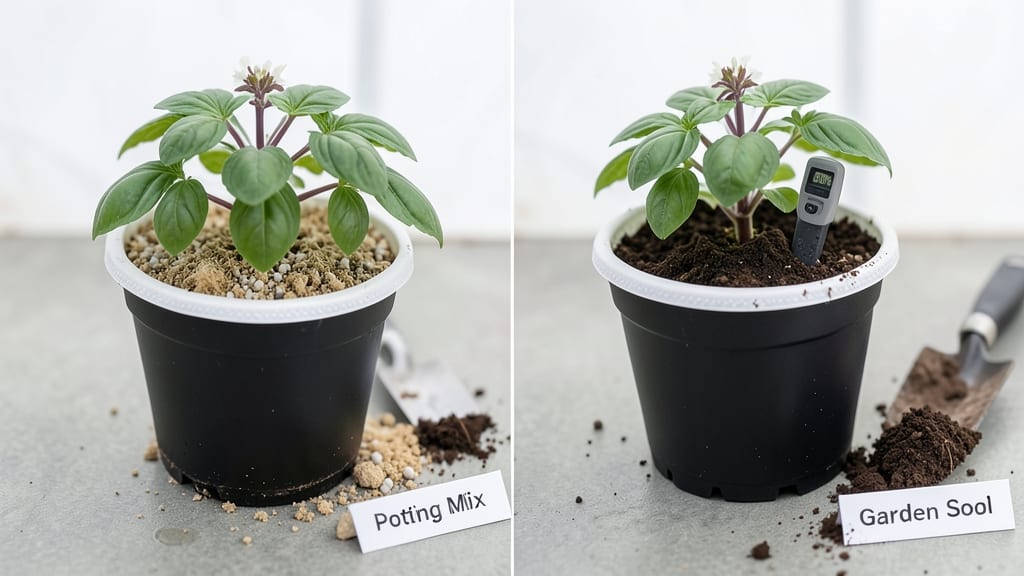
The right potting mix vs. garden soil makes all the difference for container plants. 🌱 I learned this the hard way when my basil wilted in heavy garden soil—it was too dense, drained poorly, and suffocated roots. The key isn't just "soil" but the perfect lightweight blend designed for pots.
Potting mix is engineered for containers: it's fluffy, drains fast, and packed with organic matter to feed plants quickly. Garden soil, meanwhile, is heavy clay or loamy dirt from your yard—great for in-ground planting but terrible for pots. The difference?
Potting mix has perlite or vermiculite to prevent compaction, while garden soil stays dense and waterlogged. For herbs, succulents, and veggies in pots, stick with potting mix—it keeps roots oxygenated and prevents rot. But for in-ground veggies or perennials, garden soil (amended with compost) gives the structure they need.
The secret? Know your plant's home before you pick your mix. Mixing your own? Start with 60% potting mix, 30% compost, and 10% perlite for containers. For garden beds, blend garden soil with 30% compost. The right mix turns struggling plants into thriving ones—trust me, I've seen the difference.
The first product explained
Meet Miracle-Gro Indoor Potting Mix—your go-to solution for lush, happy container plants! 🌿✨ This premium blend is designed to give your houseplants, herbs, and small veggies the perfect foundation to thrive, even in cozy indoor spaces. Let’s break down why it’s a favorite among gardeners and plant parents alike.
📏 Key Specs & Features
This lightweight, peat-based potting mix is engineered for optimal drainage and aeration, preventing soggy roots while retaining just the right amount of moisture. Here’s what makes it stand out:
- Perfect for: Houseplants, herbs, succulents, and small vegetables (like lettuce or strawberries).
- Texture: Fluffy and easy to work with—no clumping or compaction.
- Nutrient boost: Contains continuous-release plant food to feed your plants for up to 6 months.
- pH-balanced: Ideal for most plants, with a neutral to slightly acidic profile (5.5–6.5).
- Eco-friendly option: Made with renewable peat moss and other natural ingredients.
🎯 Who’s It For?
This potting mix is a versatile powerhouse for:
- Beginners: Simple to use—just add water and plant! No guesswork.
- Urban gardeners: Ideal for small spaces, balconies, and windowsills.
- Herb and veggie lovers: Supports fast-growing greens and aromatic herbs like basil or mint.
- Plant collectors: Great for repotting or refreshing soil in decorative containers.
💰 Price Point & Value
Priced at $6.97 for a 8-quart bag (or around $10–$15 for larger 12–16 quart sizes), this mix offers exceptional value. For context, that’s roughly $0.87 per quart—far cheaper than buying fresh soil every few months.
Plus, the long-lasting nutrients mean fewer mid-season fertilizers, saving you money (and time!) in the long run.
Pro Tip: 💡 Mix it with perlite or vermiculite (10–20%) for even better drainage if you’re growing moisture-sensitive plants like succulents or cacti!
The second product explained
Meet Miracle-Gro Indoor Potting Mix—the ultimate companion for your container garden! 🌱✨ This premium blend is designed to give your houseplants, herbs, and veggies the nutrient-packed foundation they crave, whether you're a seasoned green thumb or just dipping your toes into indoor gardening.
📏 Key Specs & Features
- Perfect for: Houseplants, herbs, vegetables, and flowering plants in containers.
- Soil composition: Lightweight, airy blend with coconut coir, peat moss, and perlite for optimal drainage and aeration.
- Nutrient boost: Pre-mixed with continuous-release plant food (12-4-8 NPK ratio) to feed plants for up to 6 months—no extra fertilizing needed!
- pH-balanced: Neutral pH (6.0–7.0) to support healthy root development.
- Bag size: 8-quart bag (enough for 2–3 standard 12-inch pots or 1 large 18-inch container).
- Organic matter: Contains 50% sphagnum peat moss for moisture retention and microbial activity.
🎯 Who’s It For?
This potting mix is a game-changer for:
- 🌿 Beginners: No guesswork—just add plants and water! The built-in nutrients simplify care.
- 🏡 Urban gardeners: Ideal for small spaces, balconies, and windowsills.
- 🌶️ Herb & veggie lovers: Supports fast growth in basil, tomatoes, peppers, and more.
- 🌸 Flower enthusiasts: Encourages vibrant blooms in petunias, ferns, and African violets.
- 🐾 Pet owners: Safe for cats and dogs (unlike some organic mixes with harmful additives).
💰 Price Point & Value
Priced at $12.99 per 8-quart bag (varies by retailer), this mix offers exceptional value:
- 💡 Cost-effective: Eliminates the need for separate fertilizers or soil amendments.
- 🌱 Long-lasting: One bag can last months, depending on your plant’s needs.
- 🛒 Easy to find: Available at Home Depot, Lowe’s, Amazon, and garden centers.
Pro Tip: 🌡️ For tropical plants like ferns or calatheas, mix in a handful of perlite to boost drainage and prevent root rot!
Head-to-head comparison
🌱 Performance: How They Stack Up for Your Plants
When it comes to nurturing your container garden, the performance of your potting mix is everything. Let’s break down how these two options measure up in real-world growing conditions.
- Drainage & Aeration:
Product A shines here with its open, chunky texture, thanks to perlite and vermiculite. This blend ensures excess water drains quickly, reducing the risk of root rot—perfect for succulents, herbs, and citrus trees that hate soggy roots. 💧
Product B, while still well-draining, leans slightly heavier due to its higher peat moss content. It’s ideal for moisture-loving plants like ferns, calatheas, and impatiens, but may require extra drainage holes in containers.
- Nutrient Retention:
Product A’s balanced organic matter (compost + worm castings) provides a steady release of nutrients, but it may need occasional top-dressing with fertilizer for heavy feeders like tomatoes or peppers. 🌿
Product B’s slow-release fertilizer granules give it an edge for long-term growth, especially in slow-growing plants. However, it might not be as rich for fast-growing or high-demand plants without supplemental feeding.
- Moisture Control:
Product A dries out faster, making it better for drought-tolerant plants or forgetful gardeners. A quick spray with water often keeps it happy! 💦
Product B holds moisture longer, which is a win for tropical plants or busy gardeners who can’t water daily. Just be cautious—overwatering is still a risk.
🛠️ Features: What’s Inside the Bag?
Not all potting mixes are created equal—here’s what you’re getting in each bag:
| Component | Product A | Product B |
|---|---|---|
| Primary Soil Base | Coconut coir + peat moss blend | Peat moss + composted bark |
| Amendments | Perlite, vermiculite, worm castings, mycorrhizal fungi | Vermiculite, slow-release fertilizer, sphagnum moss |
| pH Level | Slightly acidic (6.0–6.5) | Neutral to slightly acidic (6.5–7.0) |
| Best For | Herbs, veggies, citrus, succulents | Ferns, tropicals, flowering plants, seed starting |
Pro Tip: 💡 If you’re growing acid-loving plants like blueberries or azaleas, Product A’s slightly lower pH might give it a slight advantage. For everything else, Product B’s versatility wins.
💰 Price: Value for Your Green Thumb
Your wallet will notice the difference between these two—let’s talk cost efficiency.
- Product A:
Priced at $6.99 for a 12-quart bag, it’s a mid-range option. The premium amendments (like worm castings and mycorrhizal fungi) justify the cost for serious gardeners. 💰
- Product B:
Slightly cheaper at $5.49 for the same size, but don’t let the price fool you—it’s packed with slow-release nutrients, reducing the need for extra fertilizers down the line.
Budget Hack: ✨ If you’re on a tight budget, mix Product B with a handful of compost to boost nutrients without breaking the bank.
🏗️ Durability: How Long Will It Last?
Potting mix doesn’t last forever—here’s how long you can expect each to keep your plants thriving before a refresh.
- Product A:
Lasts 6–12 months for most plants, thanks to its rich organic matter. However, heavy feeders (like tomatoes) may deplete nutrients faster, requiring a fertilizer boost after 3–4 months. 🌱
- Product B:
The slow-release fertilizer extends its lifespan to 12–18 months, making it a set-and-forget favorite for low-maintenance gardeners. That said, it may compact over time, reducing aeration.
Longevity Tip: 🌡️ To prolong either mix, top-dress with compost or worm castings every few months and avoid overwatering.
🌿 Sustainability: Eco-Friendly or Not?
If you’re eco-conscious, this factor might tip the scales for you.
- Product A:
Uses coconut coir (a renewable resource) and worm castings (a byproduct of composting), making it a greener choice. The packaging is also 100% recyclable. ♻️
- Product B:
Relies more on peat moss (a non-renewable resource), which isn’t ideal for long-term sustainability. However, its longer shelf life means less frequent repurchasing.
Green Thumb Tip: 🌎 For a fully sustainable setup, consider amending Product B with coir or compost to reduce peat moss dependency.
Which one should you choose?
So, which blend is the perfect fit for your container garden? The answer depends on your plants, goals, and gardening style! Here’s a quick verdict to help you decide:
🌱 For Beginners & Low-Maintenance Growers
If you’re new to container gardening or just want a hassle-free option, Product A is your best bet. Its pre-mixed, nutrient-rich formula and moisture-retention properties make it ideal for herbs, succulents, and small veggies like lettuce or basil.
Plus, the slow-release fertilizer means fewer feedings—just add water and watch your plants thrive! 🌿
🌿 For Serious Gardeners & Diverse Plant Collections
If you’re growing a mix of plants (think tomatoes, peppers, or even tropicals like ferns), Product B wins with its customizable, well-aerated mix. The higher organic matter content supports root health, and the balanced drainage prevents overwatering—critical for picky plants.
It’s the pro’s choice for those who want control over their soil’s composition.
💡 Pro Tip for All Gardeners:
No matter which you choose, amend your mix if needed! Add perlite or vermiculite to Product B for extra drainage, or mix in compost to boost Product A’s nutrients. And always sterilize your pots to avoid pests—happy plants start with clean soil! ✨
📊 Quick Decision Guide
| Choose Product A if... | Choose Product B if... |
|---|---|
| You want convenience and nutrient consistency. | You need versatility for a variety of plants. |
| Your plants are low-maintenance (herbs, succulents, small veggies). | You’re growing heavy feeders (tomatoes, peppers, citrus). |
| You prefer moisture retention with less frequent watering. | You want better drainage and root aeration. |
Still unsure? Test both! Try Product A for a batch of herbs and Product B for your tomatoes—you might just fall in love with the difference they make. Happy planting! 🌱💚