
Landscaping
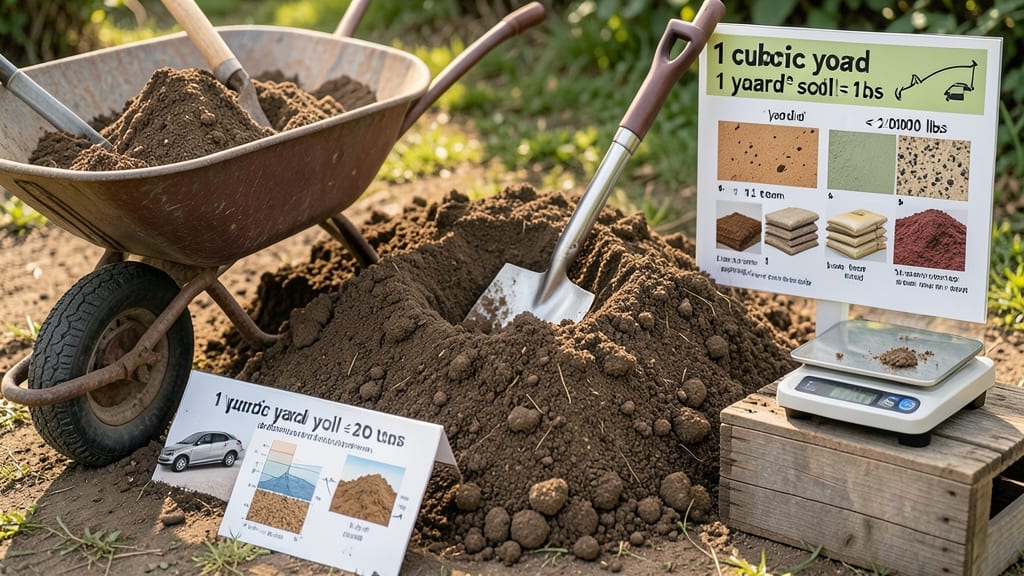
Determining the weight of one yard of soil reveals it typically ranges from 2,000 to 2,700 pounds, with variations based on moisture levels, organic content, and soil composition. Clay-heavy soils can push past 3,000 pounds when saturated, while sandy loam averages closer to 2,200 pounds.
Understanding soil weight is crucial for landscaping projects, especially when ordering materials or estimating delivery costs. The density differences between wet and dry soil can significantly impact your calculations—moisture alone can add hundreds of pounds to a cubic yard.
For example, a freshly tilled garden bed might weigh far less than the same volume of compacted clay from a construction site. 🔥
Most soil weight charts use dry conditions as a baseline, but real-world applications often require adjustments. Sandy soils are lighter due to their loose structure, while clay holds more water and weighs substantially more. Even organic-rich topsoil can vary widely depending on its compost content and compaction level.
For practical purposes, I recommend checking with your supplier for moisture-adjusted weights, particularly for large projects. Many landscaping companies provide weight estimates based on your specific soil type and project requirements, helping you avoid costly over-ordering or delivery surprises.
💡 In This Article
- Factors Affecting Soil Weight per Cubic Yard
- Calculating Soil Weight for Landscaping Projects
Factors affecting soil weight per cubic yard
Soil weight varies dramatically because of its three core components: mineral composition, moisture content, and organic material. Clay particles, for instance, are flat and tightly packed, creating dense structures that can hold up to 50% water by volume—this alone can double the weight compared to dry clay.
Sandy soils, with their coarse, loosely arranged grains, typically weigh less because they hold only 10-30% water and contain fewer minerals per cubic inch. 🔥
The moisture factor is critical: saturated clay can weigh 3,200 pounds per cubic yard or more, while the same volume when dry might only hit 2,200 pounds.
Organic matter adds another layer—compost-rich topsoil often weighs 1,500-2,000 pounds per yard when dry but can absorb 3-5 times its weight in water, making it deceptively heavy when damp. Even slight compaction from foot traffic or machinery can increase density by 10-20%.
Here's how the science breaks down: soil density (pounds per cubic foot) is calculated by dividing weight by volume. Clay's high surface area allows water molecules to bond tightly, while sand's larger particles create air pockets that reduce overall mass.
The USDA Soil Texture Triangle helps visualize these differences—clay soils fall into the 2.6-2.8 g/cm³ density range, while sand sits at 1.6-1.8 g/cm³. 💫
Field observations reveal these variations matter immensely. A 10-foot by 10-foot garden bed (1 cubic yard) of sandy loam might require a wheelbarrow for transport when dry, but the same volume of wet clay could need a tractor trailer.
The key is recognizing that what looks like "just dirt" can have wildly different physical properties based on its hidden composition.
For practical applications, consider this rule of thumb: every 1% increase in moisture can add 20-50 pounds per cubic yard depending on soil type. This explains why freshly dug soil often feels lighter than aged, settled earth—water evaporates over time, reducing the total mass.
Understanding these factors helps landscapers and gardeners make precise material estimates for projects.
One real-world example: a 500-square-foot lawn requiring 6 inches of topsoil (≈2.5 cubic yards) might need 5,000-6,500 pounds of material when dry, but could double in weight if delivered during rainy season. Always confirm moisture conditions with suppliers to avoid project delays.