
How To
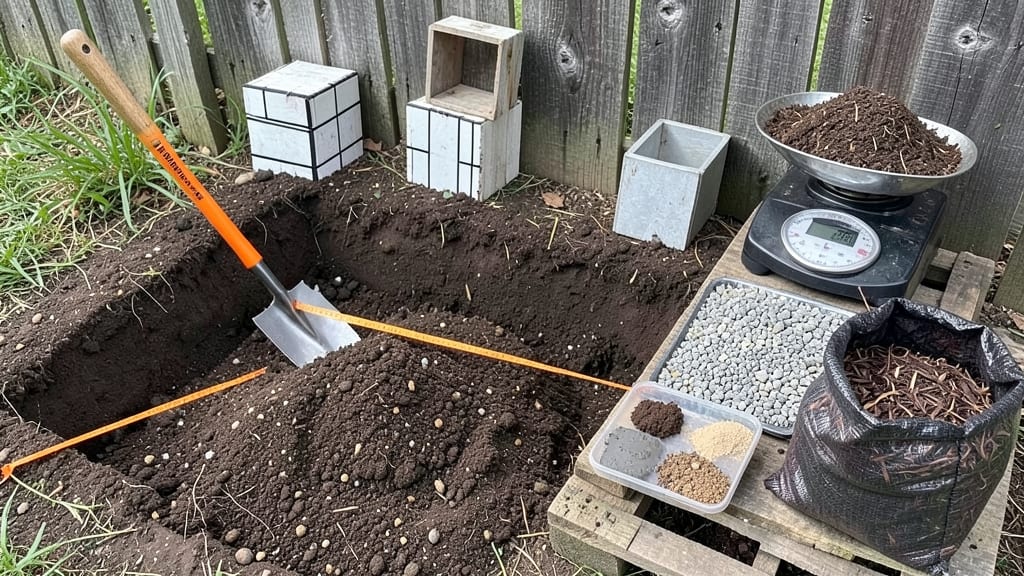
Converting cubic yards of soil to tons depends on soil type: loamy soil weighs about 1.5 tons per cubic yard, sandy soil roughly 1.3 tons, while clay soil can reach 1.8 tons. Density varies due to moisture and compaction, so always verify with local suppliers for precise measurements.
Understanding how cubic yards of soil translate to tons saves you from over-ordering or running short during landscaping projects. 🌱 The weight differences come from how tightly packed the soil particles are—sandy soil has larger gaps between grains, making it lighter, while clay holds moisture and compacts more densely.
For example, a 10-cubic-yard order of sandy soil might weigh just 13 tons, but the same volume of clay could be 18 tons. Always check moisture levels too, since wet soil can weigh up to 30% more than dry soil.
Pro tip: When estimating, use a simple formula—multiply cubic yards by the soil type's weight (e.g., 1.5 for loam) to get a rough tonnage. For precise projects, ask suppliers for moisture-adjusted weights or test a small batch yourself by weighing a known volume.
💡 In This Article
- Soil Density Variations by Type and Moisture Content
- Practical Conversion Chart for Gardeners and Landscapers
Soil density variations by type and moisture content
The weight of soil per cubic yard isn't set in stone—it's all about particle size, composition, and how much water the soil holds. Sandy soil has large, loosely packed grains with air gaps, giving it a lighter weight around 1.3 tons per cubic yard.
Clay soil, on the other hand, has tiny particles that pack tightly and hold moisture, making it denser at 1.8 tons per cubic yard. Loamy soil, the gardener's gold, sits in between with 1.5 tons per cubic yard because it balances sand, silt, and organic matter.
Moisture makes a huge difference—wet soil can weigh up to 30% more than dry soil because water fills those air gaps. For example, a cubic yard of dry sandy soil might weigh 1.3 tons, but when saturated, it could hit 1.7 tons.
This is why suppliers often list weights for "dry" soil—wet soil is heavier and harder to move. 💧 Even organic materials like compost vary: fresh compost weighs 0.5-0.7 tons per cubic yard, but aged compost can reach 1 ton due to decomposition.
Compaction is another game-changer. Foot traffic or heavy machinery can squeeze soil particles closer together, increasing density. A freshly tilled garden bed might weigh 1.2 tons per cubic yard for sandy loam, but after years of being walked on, it could jump to 1.6 tons.
This is why construction sites often use "bulk density" measurements—accounting for how much the soil has been compressed over time.
Here’s a quick breakdown of common soil types and their typical weights:
- Sandy soil: 1.3 tons/cubic yard (loose, dry)
- Loamy soil: 1.5 tons/cubic yard (balanced, moderate moisture)
- Clay soil: 1.8 tons/cubic yard (dense, moisture-heavy)
- Topsoil: 1.4-1.6 tons/cubic yard (varies by organic content)
- Compost: 0.5-1.0 tons/cubic yard (fresh vs. aged)
For precise projects, like raised garden beds or construction, always ask suppliers for moisture-adjusted weights. A simple test at home: Fill a 5-gallon bucket (about 0.07 cubic yards) with your soil, weigh it, and multiply by 14.3 to estimate tons per cubic yard.
This DIY method cuts out guesswork! 🌱