
How To
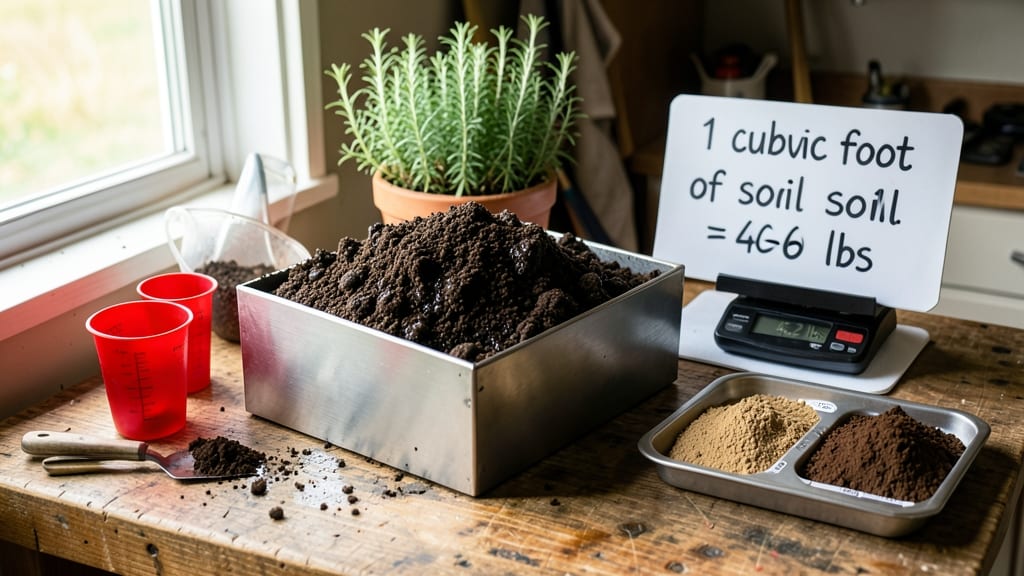
To determine how many pounds one cubic foot of soil equals, it typically ranges from 40 to 140 pounds depending on its composition—sandy soil is lighter (40–60 lbs), loamy soil averages 70–100 lbs, and clay-heavy soil can reach 120–140 lbs. Moisture content significantly increases weight, adding up to 50% more when saturated.
Soil weight isn't just about the dirt itself—it's a mix of particle size, density, and how much water it holds. 🌱 Sandy soils pack lighter because their larger particles leave more air space, while clay soils feel heavier due to tightly packed, dense particles.
Even a small change in moisture can swing the weight dramatically: dry clay might weigh 120 lbs, but saturated it could jump to 180 lbs. For gardening, this matters when calculating how much soil you need for raised beds or containers, as overestimating could lead to structural issues or underestimating might leave your plants thirsty.
Here's a pro tip: if you're working with a large project, like a garden bed or erosion control, grab a 1-cubic-foot container (like a bucket) and fill it with your soil. Weigh it dry, then again after adding water—you'll quickly see how much the moisture adds.
This hands-on approach saves time and guesswork, especially when dealing with heavy clay or lightweight peat blends.
💡 In This Article
- How Soil Composition Affects Weight per Cubic Foot
- Practical Ways to Estimate Soil Weight for Gardening Projects
How soil composition affects weight per cubic foot
Soil weight varies dramatically because it's not just dirt—it's a complex mix of mineral particles, organic matter, water, and air. The key factor is particle size and density: sand particles (0.05-2mm) create loose, airy structures, while clay particles (<0.002mm) pack tightly together.
This is why sandy soil weighs 40-60 lbs per cubic foot—the larger particles leave 40-50% air space, reducing overall mass. Clay soil, with its microscopic plates, can reach 120-140 lbs because those particles bind tightly, eliminating air pockets and increasing density.
The science gets even more interesting when you consider porosity. Loamy soil—the gardener's gold standard—balances sand, silt, and clay to create 40-60% porosity, giving it an ideal weight of 70-100 lbs per cubic foot.
This porosity also explains why moisture plays such a huge role: water fills those air pockets, adding 20-50% more weight when soil goes from dry to saturated.
Think of it like packing a suitcase—loose items (sandy soil) compress less than dense ones (clay), and adding water is like throwing in extra clothes.
Organic matter adds another layer of complexity. Peat moss or compost can halve the weight of mineral soil because organic materials are mostly air and water. A cubic foot of pure peat might weigh just 20-30 lbs when dry, but it swells dramatically when wet.
This is why gardeners often mix organic amendments with heavier soils—they create a lighter, more workable medium while improving drainage. The trade-off? Organic soils lose weight as they decompose, while mineral soils remain stable over time.
Compaction changes everything. A freshly tilled garden bed might weigh 80 lbs per cubic foot, but after heavy foot traffic or machinery, that same volume could weigh 120 lbs. The difference? Compaction squeezes out air and water, forcing particles closer together.
This is why construction sites use proctor tests—they measure how much weight soil can bear after compaction, which directly relates to its density. For gardeners, this means your raised bed soil might feel lighter when loose but become significantly heavier once settled.
Here's a visual comparison to help: imagine three identical buckets—one filled with marbles (sand), one with clay powder, and one with a mix of both (loam). The marbles take up more space but weigh less, while the clay feels heavier in the same volume.
Now add water to each: the marbles barely change, the clay becomes noticeably heavier, and the loam finds a balanced middle ground. That's your soil's weight profile in action!
What most people overlook is how temperature affects moisture retention. Cold soil holds more water (and thus weighs more) because water molecules move slower, while hot soil loses moisture quickly. This seasonal variation can swing your soil's weight by 15-20 lbs per cubic foot between winter and summer.
For precise calculations, always measure soil weight at the same moisture level—typically after a light rain or thorough watering.