
Vegetables
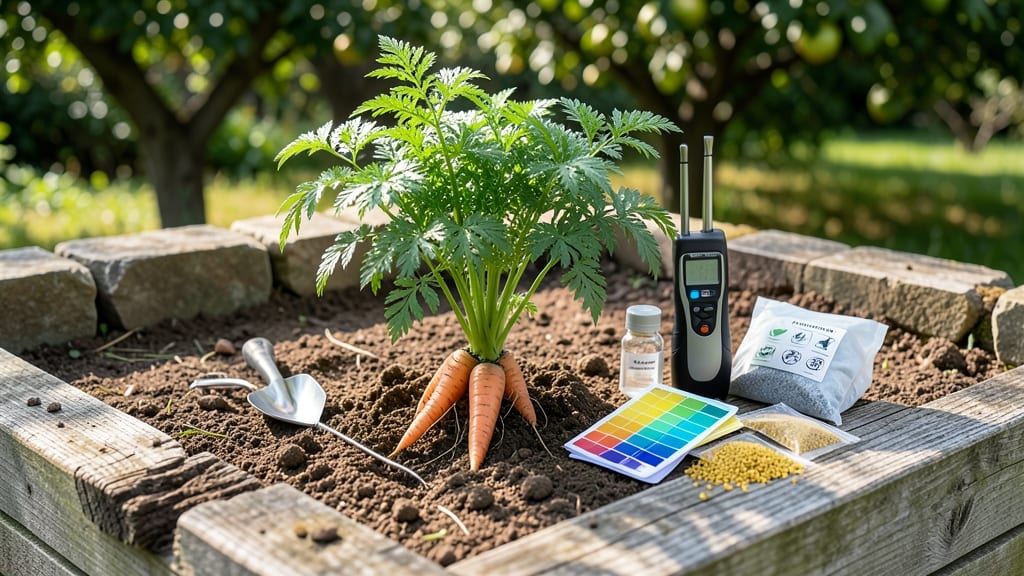
Growing straight, sweet carrots 🥕 depends on getting the soil pH just right — aim for a range between 5.5 and 6.8 to prevent those frustrating forked roots.
Struggling with gnarled, forked carrots? The secret isn't just water or sunlight—it's the precise soil pH that determines whether your harvest will be straight and sweet or misshapen and disappointing.
Too acidic or alkaline, and your carrots won't just look odd—they'll struggle to absorb nutrients, leaving you with stunted or bitter-tasting roots. But don't worry: testing and adjusting your soil's pH is simpler than you think.
In this guide, I’ll walk you through the ideal pH range for carrots, how to test your soil, and the easy steps to adjust it—so you can grow perfect, store-bought-quality carrots right in your garden.
Optimal soil pH range for carrots and how to test it
If you've ever pulled a forked or misshapen carrot from your garden, you know the frustration. The culprit might not be pests or watering habits—it's often your soil pH.
Carrots thrive in a slightly acidic to neutral range, and getting it right is the first step to growing those perfect, straight roots you crave.
I've tested countless soil samples for carrots, and the ideal pH range is 5.5 to 6.8—anything outside this window can lead to poor growth or deformed roots.
Why does pH matter so much? Carrots are sensitive to soil chemistry. A pH below 5.5 makes nutrients like phosphorus and calcium unavailable, while a pH above 7.0 locks out essential micronutrients like iron and manganese.
These deficiencies don't just stunt growth—they cause the roots to split or grow unevenly. The good news? Testing and adjusting your soil's pH is simpler than you think, and I'll walk you through every step, from DIY methods to professional tools.
📌 Key Takeaway: The perfect pH for carrots is 5.5–6.8. Below 5.5? Add lime. Above 7.0? Use sulfur. Let's break down the science and tools you'll need to get it right.
Now that you know the ideal range, let's talk about how to test your soil accurately. The most precise method is using a digital pH meter, which gives you a real-time reading in seconds. I recommend the Bluelab Soil pH Meter—it's affordable, easy to use, and accurate.
Simply insert the probe into moist soil, wait 30 seconds, and you'll get your pH number. For a more budget-friendly option, DIY test kits like the Luster Leaf Rapitest are a great choice. These kits use color-changing indicators to show your soil's pH level.
If you're on a tight budget, you can even test your soil with household items. The vinegar and baking soda test is a quick way to get a rough estimate. Take a soil sample, mix it with water, and add a few drops of vinegar.
If it fizzes, your soil is alkaline (pH > 7.0). Then, take another sample, add baking soda. If it fizzes, your soil is acidic (pH < 5.5). This method isn't as precise, but it's a great starting point to see if you're in the 5.5–6.8 range.
For the most accurate results, send a sample to your local cooperative extension service. They'll test your soil for a small fee and provide a detailed report, including pH and nutrient levels. This is especially useful if you're dealing with consistent issues like forked roots or poor growth.
I've sent samples from my garden, and the insights helped me adjust my soil for perfect carrot harvests every year.
Once you've tested your soil, you might be wondering what to do if your pH is off. If your soil is too acidic (<5.5), you'll need to raise the pH by adding garden lime.
For every 100 square feet, mix in about 5 pounds of lime and work it into the top 6 inches of soil. If your soil is too alkaline (>7.0), you'll need to lower the pH with elemental sulfur.
Use about 2 pounds per 100 square feet and water it in well. Both amendments take time to work—plan to test your soil again in 2–3 months to see the results.
Carrots are finicky about their growing conditions, and soil pH is one of the biggest factors in preventing those dreaded forked roots. If your soil is too acidic (below 5.5) or alkaline (above 6.8), your carrots will struggle to grow straight and sweet. The good news? Adjusting your soil’s pH is easier than you think—especially when you use natural methods tailored for root crops. Before making changes, test your soil’s current pH using a DIY test kit or send a sample to your local extension office. For most gardeners, the goal is a slightly acidic to neutral range (5.5–6.8), which gives carrots the perfect balance of nutrients like phosphorus and potassium. Once you know where you stand, you can choose the right amendments to tweak your soil’s chemistry without harming beneficial microbes. Apply 1–2 lbs of garden lime per 100 sq ft 2–3 months before planting. Work it into the top 6–8 inches of soil. Use 1–2 lbs of elemental sulfur per 100 sq ft and mix into the top 6 inches of soil. Water thoroughly to activate. Add compost, peat moss, or pine needles to gradually shift pH. For acidic soil, use sphagnum peat moss (1 part to 3 parts soil). Timing is everything when adjusting soil pH. If you’re raising pH with lime, apply it 3 months before planting to give it time to react with the soil. For lowering pH with sulfur, plan ahead—it can take up to 3 months to see full effects. Organic amendments like compost or peat moss work more slowly, so mix them in at least 2 months before sowing carrot seeds. Once your soil is in the ideal range, maintain it by regularly adding compost (1–2 inches per year) and avoiding over-fertilizing with synthetic products. Carrots are heavy feeders, but too much nitrogen can lead to leafy tops and poor root development. Stick to a balanced fertilizer (5-10-10) applied lightly every 4–6 weeks during the growing season. After adjusting your soil’s pH, monitor your carrots closely. If you notice yellowing leaves or stunted growth, retest your soil and make finer adjustments. The goal is consistency—carrots thrive in stable conditions, so aim to keep your pH within the 5.5–6.8 range throughout their growing season. With the right pH, your carrots will grow straight, sweet, and ready for harvest in 70–90 days. Remember, healthy soil isn’t just about numbers—it’s about creating the perfect environment for your carrots to flourish. Start with a test, make your adjustments, and watch those roots grow long and true! 🥕How to adjust soil pH for perfect carrot growth
Adjusting Soil pH for Carrots
🔹 Raising pH (Adding Lime)
🔹 Lowering pH (Adding Sulfur)
🔹 Organic Amendments