
How To
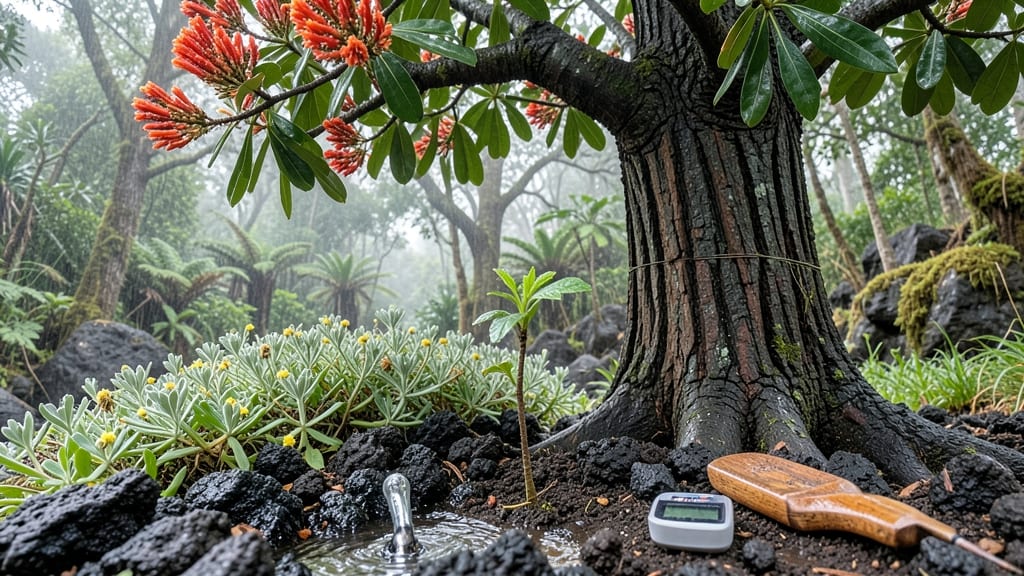
Understanding soil in Hawaii starts with its volcanic foundation, packed with minerals like iron and potassium but often acidic and erosion-prone, making it ideal for certain plants while requiring extra care for others. The fast-draining nature means frequent watering and organic matter additions are essential.
Hawaii's volcanic soil forms from centuries of basaltic lava flows and ash deposits, creating a mineral-rich but porous growing medium. 🌋 The high iron content gives plants a deep green hue, while low natural nitrogen often limits growth without amendments.
Many gardeners use composted green waste or coconut coir to improve moisture retention and microbial activity, which helps offset the soil's tendency to leach nutrients quickly.
This unique terrain also influences what thrives here—native plants like ohi'a lehua and kōlea have adapted to these conditions, while tropical fruits such as lychee and avocado require careful soil management to succeed.
The key is balancing the soil's natural acidity with organic matter while protecting it from heavy rains that can wash away topsoil.
💡 In This Article
- Hawaii’s Volcanic Soil Formation and Mineral Composition
- Best Practices for Amending and Using Hawaii’s Volcanic Soil
Hawaii’s volcanic soil formation and mineral composition
Hawaii’s soil begins its life as molten basaltic lava, which cools and fractures over centuries into jagged, glassy shards called a'a and pāhoehoe textures.
When exposed to tropical rainfall, these volcanic rocks weather into fine particles, creating andisol—a soil type rich in volcanic glass that slowly releases minerals like iron, magnesium, and calcium.
This process, called weathering, can take hundreds of years, but the result is a mineral reservoir that supports lush ecosystems.
The high iron content (often 5-10% by weight) gives plants a vibrant green color, while phosphorus levels typically range from 0.1-0.3%, which is higher than many temperate soils but still requires supplementation for optimal growth. 🌋
The porous nature of volcanic soil comes from its high volcanic glass content, which creates tiny air pockets that improve drainage but also make water retention a challenge.
Unlike clay-heavy soils, Hawaii’s volcanic dirt drains at a rate of 2-4 inches per hour in ideal conditions, meaning plants need frequent watering—sometimes daily—to prevent drought stress. The mineral composition also affects pH, often landing in the 4.5-6.5 range, which is acidic enough to limit nitrogen availability.
Native plants like ohi'a lehua have adapted to these conditions, but many tropical crops struggle without amendments to raise pH and add nitrogen.
What makes Hawaii’s soil unique is its low organic matter content—typically 1-3% compared to 5-10% in temperate soils. This lack of organic material means microbes and earthworms (which thrive in organic-rich soils) are less active, reducing natural nutrient cycling. The solution?
Gardeners often turn to composted green waste or worm castings to boost microbial life and improve soil structure. For example, adding 2-3 inches of compost annually can double organic matter in just a few years, transforming the soil’s ability to retain moisture and nutrients. 🌱
Another critical factor is the soil’s high cation exchange capacity (CEC), which allows it to hold onto nutrients like potassium and calcium. However, this also means these minerals can be quickly leached away by heavy rainfall—a common issue in Hawaii’s tropical climate.
For instance, a single downpour can wash away up to 50% of applied fertilizer if not properly incorporated. This is why slow-release fertilizers or organic mulches are often recommended to protect nutrients and reduce erosion.
The mineral richness, however, makes volcanic soil ideal for plants that thrive in well-draining, mineral-heavy conditions, such as orchids, coffee, and macadamia nuts.
One often-overlooked aspect is how the soil’s texture varies by island and elevation. On windward sides of islands like Maui or Oahu, ash deposits create finer, siltier soil, while leeward areas have coarser, rockier terrain. At higher elevations, cooler temperatures slow weathering, resulting in younger, less decomposed volcanic material.
This variation means gardeners must tailor their approach—adding more organic matter in rocky areas and focusing on erosion control in finer, ash-rich soils. For example, coconut coir mulch works well in windward zones to slow water runoff, while gravel mulch is better suited for leeward, rockier patches. 🌊
The mineral composition also influences which plants thrive. High iron levels can cause toxicity in sensitive species like blueberries, which prefer lower iron and acidic conditions. Meanwhile, crops like pineapple and guava flourish due to the soil’s natural acidity and mineral richness.
Understanding these nuances helps gardeners select the right plants and amendments to create a balanced, productive growing environment. The key takeaway? Hawaii’s soil is a double-edged sword—rich in minerals but demanding in care. 💫