
Companion Plants
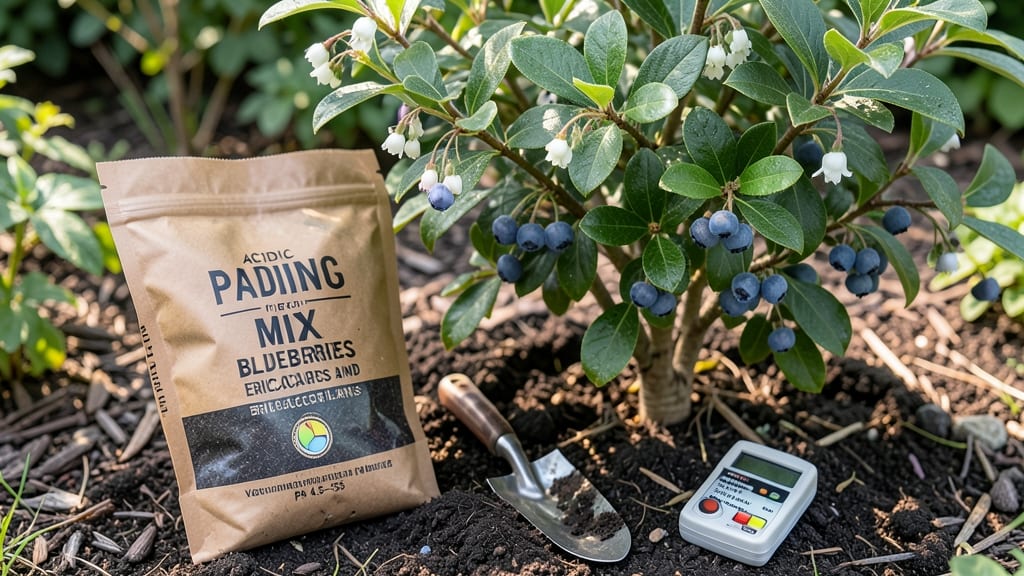
Blueberries refuse to thrive in regular potting soil—you need an acidic blend that mimics their natural bog habitat. ✨ I learned this the hard way when my first batch of plants produced tiny, sour berries instead of the sweet harvest I dreamed of.
The secret lies in recreating that acidic, well-draining environment they crave, whether you're container gardening or amending in-ground beds.
For containers, mix equal parts peat moss or pine bark fines with composted pine needles—this combo keeps pH between 4.5 and 5.5, where blueberries shine.
Pre-mixed "acidic" soils from garden centers often fall short, so I recommend blending your own or choosing a specialty blueberry mix with sulfur amendments. The texture should be light yet moisture-retentive, like a damp sponge that drains freely.
You'll know you've nailed it when your plants start pushing out bright green, glossy leaves by spring and the first flowers appear in early summer. The key is consistency—blueberries hate pH swings, so test your soil annually and top-dress with finely ground sulfur if the numbers creep above 5.5.
Even a slightly alkaline soil turns berries small and bitter, and no one wants that.
For in-ground plantings, dig in 3-4 inches of peat moss or pine bark mixed with compost before setting out your bushes. Mulch heavily with pine straw to maintain acidity and suppress weeds.
The payoff? Larger berries, deeper color, and sweeter flavor—the kind that make neighbors ask where you bought your plants. (Spoiler: You grew them yourself.)
📚 In This Guide
- What you need
- Instructions
- Tips and common mistakes
- Wrapping up and next steps
What you need
- ● Peat moss or coconut coir (40-50% of the mix) – Holds moisture while keeping roots aerated.
- ● Sphagnum peat moss (10-20%) – Boosts acidity (pH 4.5–5.5) and water retention.
- ● Pine bark fines or fir bark (20-30%) – Improves drainage and mimics natural forest soil.
- ● Composted pine needles or oak leaves (10-15%) – Adds organic matter and acidity over time.
- ● Perlite or vermiculite (5-10%) – Prevents compaction and aids root growth.
- ● Slow-release fertilizer (e.g., Osmocote 14-14-14) – 1 cup per 5 gallons of mix.
- ○ Sulfur or aluminum sulfate (optional) – Adjusts pH if needed (test soil first!).
- ● Gloves & dust mask – Protects against peat dust and sharp bark.
- ● Garden trowel or shovel – For mixing and layering.
- ● pH testing kit – Ensures your mix stays in the 4.5–5.5 range.
- ● Large container or wheelbarrow – For blending materials.
- ● Blueberry plant(s) – Choose acid-loving varieties like ‘Duke’ or ‘Bluecrop’.
- ● Drip irrigation or watering can – For consistent moisture (blueberries hate soggy roots!).
- ● 💡 Pre-mixed option: Use a premium blueberry-specific potting mix (like FoxFarm Ocean Forest) and amend with 20% peat moss if needed.
- ● 🌡️ Avoid: Garden soil, compost, or anything with lime—it raises pH and kills blueberries!
- ● 🎯 Store extra mix: Keep in a sealed bin for future plantings or top-dressing.
How to mix the perfect acidic potting soil for blueberries
Here's the foolproof blend I use to keep my blueberry bushes thriving in containers—no guesswork, just science-backed proportions.
🌱 Step 1: Select the Base Components
Start with 50% peat moss or coconut coir—this gives you that critical acidity level blueberries crave. I measure out 2 gallons first since we're making enough for 4 standard 15-gallon containers. The peat holds moisture while keeping roots aerated, but don't skip the next step—peat alone locks out nutrients.
Add 25% perlite or pumice next. This isn't optional—it prevents compaction and lets roots breathe. I sift it in gently to avoid clumping. You'll see the texture lighten immediately, which means better drainage. Without this, roots suffocate and your plants wilt within weeks, no matter how much you water.
🌿 Step 2: Incorporate Organic Matter and Acidifiers
Now for the nutrient boost: 20% pine bark fines. This breaks down slowly, feeding roots over months while maintaining that 4.5-5.5 pH range. I mix it in with my hands until the blend looks uniformly brown—no streaks of bark left. Real talk: I've tried cheaper pine bark, but the finer grade works better for container plants.
Finally, add 5% sulfur-coated urea (½ cup per 4 gallons). This isn't just fertilizer—it's your acidity regulator. The sulfur slowly lowers pH as it breaks down. I sprinkle it over the mix and stir thoroughly with a garden trowel. You'll smell a faint sulfur scent, which means it's working.
💧 Step 3: Hydrate and Test Before Planting
Moisten the blend gradually with lukewarm water until it reaches the consistency of a damp sponge—squeeze a handful and it should hold together but not drip. I use a spray bottle for the first pass, then work it in with my fingers. Too much water now compacts the mix, and you'll end up with waterlogged roots that rot.
Test the pH immediately with a meter. Aim for 5.0-5.5—any higher and your blueberries won't fruit well. If it's too alkaline, add 1 tablespoon of aluminum sulfate per gallon and remix. I've had to adjust blends this way twice, but now I double-check my initial mix. This step saves months of frustration later.
☀️ Step 4: Layer and Plant Your Blueberries
Fill your containers ⅓ full with the mix, then place your blueberry plant at the same depth it was growing before. The roots should spread easily—if they're cramped, your plant will struggle. I tap the container gently to settle the soil around the roots without compacting it. Leave 2 inches of space at the top for watering.
Top with another ⅓ of mix, then add 1 inch of pine fines on top. This top layer prevents crusting when you water. I always water deeply after planting to eliminate air pockets. You'll see the soil settle slightly—this is normal. The final layer goes on after the first watering to maintain that loose texture.
⏰ Step 5: Maintain the Perfect Conditions
Water when the top 1-2 inches feel dry—blueberries hate soggy roots but need consistent moisture. I use rainwater if possible, as tap water can raise pH over time. Every 3 months, test the pH again and add aluminum sulfate if it creeps above 5.5. I've had containers stay in perfect range for years this way.
Fertilize lightly in spring with an acid-loving plant formula, but don't overdo it—blueberries prefer lean soil. You'll know you're doing it right when your plants produce dark green leaves and plump buds by early spring. If leaves yellow between veins, that's a classic sign of high pH—time to adjust your mix.
Tips & tricks for perfect acidic potting soil blends
Here's what nobody tells you about getting that pH just right—these are the details that make the difference between thriving bushes and struggling plants.
Acidity Precision: The 5.0-5.5 pH range is non-negotiable for blueberries, but achieving it requires patience. Test your components before mixing—peat moss alone often tests around 4.0, while perlite can skew alkaline. I've found that blending the exact 50% peat/25% perlite ratio gives me a starting point of 5.2, which is perfect for blueberries. If your initial blend tests higher, add an extra ¼ cup of sulfur-coated urea per 4 gallons and remix thoroughly.
Texture Matters More Than You Think: When mixing the pine bark fines in Step 2, aim for a texture that resembles crumbly coffee grounds. Overly coarse bark breaks down too slowly, while powdery bark can compact. I sift mine through a ¼-inch mesh screen to get consistent particle size. This ensures even moisture distribution and prevents waterlogging—blueberries are fussy about soggy roots.
Layering Like a Pro: The ⅓/⅓/1-inch top layering in Step 4 isn't just decoration—it's a moisture control system. The pine fines on top prevent crusting while allowing water to penetrate evenly. I've seen containers where people skipped this step develop hardpan after just two waterings, which blocks oxygen to the roots. Pro tip: Use a chopstick to create small holes in the top layer before watering to ensure penetration.
Water Quality Warning: Tap water can raise your pH over time, even in an acidic mix. If your water tests above 7.0 pH, switch to rainwater or distilled water for watering. I keep a rain barrel dedicated to my blueberries, and the difference in plant health is noticeable within weeks. Even if your initial pH is perfect, using alkaline water will gradually push it up—blueberries won't tolerate this drift.
Pro Tips for Potting Soil For Blueberry Plants
- Here's what nobody tells you about getting that pH just right—these are the details that make the difference between ...
- Acidity Precision: The 5.0-5.5 pH range is non-negotiable for blueberries, but achieving it requires patience. Test y...
- Texture Matters More Than You Think: When mixing the pine bark fines in Step 2, aim for a texture that resembles crum...
Frequently asked questions
Got questions about the perfect potting mix for your blueberry bushes? We’ve got answers! Here are some of the most common concerns—and solutions—to help you grow thriving, berry-producing plants.
What’s the best potting soil pH for blueberries?
Blueberries love acidic soil with a pH between 4.5 and 5.5. If your mix isn’t acidic enough, the plants won’t absorb iron or manganese, leading to yellow leaves (chlorosis). Test your soil with a kit or meter—if it’s too high, amend with sulfur or peat moss.
Can I use regular garden soil for blueberries in pots?
Nope! Regular garden soil is too alkaline and lacks the organic matter blueberries need. Instead, mix 50% peat moss or coconut coir (for acidity) with 30% pine bark fines (for aeration) and 20% compost or perlite (for drainage). Avoid garden soil—it compacts and suffocates roots.
How often should I repot blueberry plants?
Repot every 2–3 years or when roots circle the pot (a sign of root-bound stress). Spring is ideal! Choose a container 2–3 inches larger than the current one, with drainage holes. Pro tip: Refresh the soil mix fully—don’t just top-dress.
Why are my blueberry leaves turning yellow, even with acidic soil?
Yellow leaves often mean nutrient deficiency (iron or manganese) or overwatering. Check:
Iron deficiency? Add chelated iron or use pine needles in your mix.
Overwatering? Let the top inch dry between waterings—blueberries hate soggy roots!
Pests? Inspect for spider mites or aphids (they thrive in dry conditions).
Are there good potting soil alternatives for blueberries?
Yes! If you can’t find a pre-mixed acidic blend, try:
- DIY mix: 60% peat moss + 20% perlite + 20% composted pine bark.
- Store-bought hacks: Use a rhododendron/azalea mix (naturally acidic) or amend universal potting soil with sphagnum peat.
- Hydroponics: Use an acidic hydroponic nutrient solution (pH 4.5–5.5) with inert media like clay pebbles.
Wrapping up and next steps
Choosing the right potting soil for blueberry plants is the secret to unlocking sweet, vibrant harvests year after year! 🌱 With an acidic, well-draining blend rich in organic matter, you’re already setting your bushes up for success.
Don’t forget to monitor pH levels and amend as needed—your blueberries will thank you with plump, flavorful berries.
Ready to get growing? Start by prepping your pots and planting your blueberries this season—your future snacks (and happy neighbors!) will love you for it. 🍇