
Light Requirements
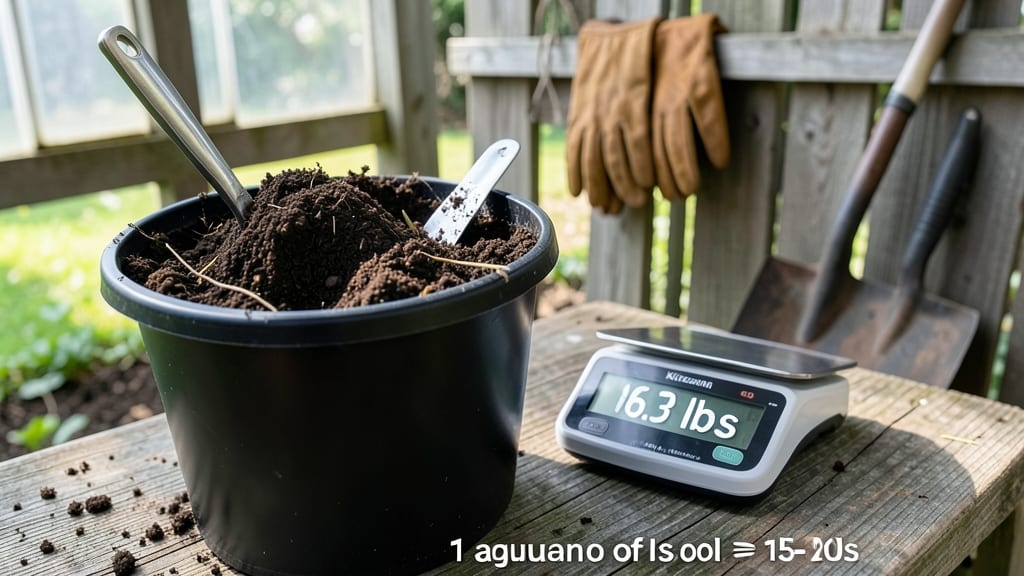
To determine how much a gallon of soil weighs, expect 8 to 12 pounds depending on its composition—sandy soil sits at the lighter end (~8 lbs), while clay-heavy or loamy soil can weigh up to 12 lbs or more. Remember that moisture content drastically increases weight, so always factor that in.
Soil weight varies dramatically based on its makeup. 🌱 Sandy soils are lightweight due to their coarse particles, while clay soils hold more water and organic matter, making them heavier.
Even a small change in moisture can add 2-3 pounds per gallon—that's why gardeners often weigh soil when planning large projects. For example, a 5-gallon bag of potting mix might weigh 35-50 lbs when packed, while the same volume of sandy topsoil could be closer to 25-30 lbs.
Understanding this helps with everything from container gardening to landscaping. If you're filling raised beds, you'll need to calculate how much soil your space can support without overloading the structure.
For potted plants, lighter mixes help prevent root rot while still providing nutrients. Always check labels—many specialty blends list their weight per bag to help with planning.
💡 In This Article
- Soil Density Factors Affecting Weight per Gallon
- Practical Tips for Measuring Soil Weight in Gardening
Soil density factors affecting weight per gallon
Soil weight per gallon is primarily determined by its particle composition. Sandy soils, made of large particles with high air space, typically weigh around 8 pounds per gallon because their loose structure traps less moisture.
In contrast, clay soils have tiny particles that pack tightly, holding more water and organic matter—this can push their weight to 12 pounds or more per gallon. Loamy soils, the ideal mix of sand, silt, and clay, usually fall in the 9-11 pound range due to their balanced density.
The moisture content is another critical factor—dry soil can weigh 20-30% less than its saturated counterpart. For example, a gallon of sandy soil might weigh 6 pounds dry but swell to 9 pounds when moist.
Organic matter, like decomposed leaves or compost, also increases weight by adding bulk without significantly increasing volume. Potting mixes often contain 30-50% organic material, making them heavier than pure mineral soils despite their fluffy appearance.
Compaction plays a surprising role too. When soil is packed tightly—like in a wheelbarrow or raised bed—it can weigh 15-20% more per gallon than loose, fluffy soil from a bag. This is why gardeners often "fluff" soil before measuring for projects.
Even a 10% increase in compaction can add 1-2 pounds per gallon, making lightweight projects suddenly heavy. For instance, a 5-gallon container of loose potting mix might weigh 25 pounds, but when packed for a garden bed, it could reach 30 pounds.
Specialty blends add another layer of complexity. Cactus and succulent mixes, designed to be fast-draining, often weigh 7-9 pounds per gallon due to their high perlite or sand content. On the heavier end, peat-based mixes can reach 13 pounds per gallon when saturated.
These variations explain why garden centers list both volume and weight on bags—what looks like the same amount of soil can feel completely different in your hands.
Here’s a quick comparison to visualize the differences:
- Sandy soil: 8 lbs/gallon (dry), 10 lbs/gallon (moist)
- Loamy soil: 9-11 lbs/gallon (balanced moisture)
- Clay soil: 12+ lbs/gallon (heavy when wet)
- Potting mix: 10-13 lbs/gallon (organic-heavy)
- Cactus mix: 7-9 lbs/gallon (lightweight)
Understanding these factors helps you avoid surprises when moving soil. For example, a 10-gallon bag of clay soil could weigh 120 pounds when wet—enough to strain your back if lifted improperly. Always check labels and adjust your approach based on the soil type you’re working with. 🌱