
Shrubs
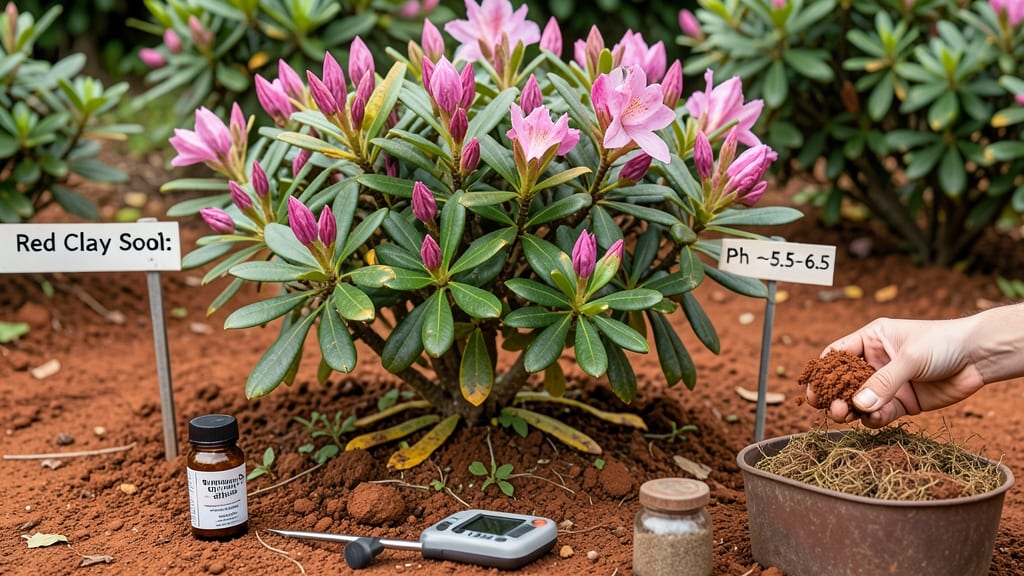
Red clay soil is acidic, typically measuring between 5.0 and 6.5 on the pH scale, though its exact levels depend on factors like organic content and regional climate. While many plants prefer this acidic range, acid-sensitive varieties like blueberries or hydrangeas may require soil amendments.
This acidity comes from the soil's high iron and aluminum oxide content, which naturally lowers pH over time. 🌱 The dense clay structure also slows drainage, trapping organic acids that further acidify the soil.
In the southeastern U.S., where red clay is common, rainfall patterns can shift pH seasonally—heavy rains often leach nutrients and temporarily raise acidity. Testing your soil's pH every 2-3 years helps track these changes and guides plant selection or soil adjustments.
Most shrubs and trees adapt well to this soil type, but if you're growing acid-loving plants like azaleas or gardenias, you'll want to maintain that 5.0-6.5 range. For acid-sensitive plants, adding crushed limestone (to raise pH) or elemental sulfur (to lower it) can create the ideal growing conditions.
I always recommend testing before amending—overcorrecting pH can harm beneficial soil microbes just as much as the wrong pH does.
💡 In This Article
- Factors Influencing Red Clay Soil pH Levels
- Best Plants for Acidic Red Clay Soil and pH Adjustment Tips
Factors influencing red clay soil pH levels
The acidity in red clay soil stems primarily from its mineral composition, particularly iron and aluminum oxides that dominate its parent rock.
These compounds break down over time, releasing hydrogen ions (H+) that lower the pH. The clay particles themselves have a negative charge that attracts positively charged ions, including those that contribute to acidity. This process is accelerated in warm, humid climates like the southeastern U.S., where decomposition occurs rapidly.
Drainage plays a critical role too—red clay's dense structure slows water movement, trapping organic acids from decomposing plant matter. In regions with 50-60 inches of annual rainfall, like Georgia or Alabama, this waterlogging effect can push pH levels toward the lower end of the 5.0-6.5 range.
The texture also matters: finer clay particles create more surface area for chemical reactions, intensifying acidity over time. 🌧️
Organic matter content acts as a double-edged sword. While decomposed leaves or compost can buffer acidity, fresh organic debris initially lowers pH as it breaks down.
This is why mulching with pine needles (which are naturally acidic) can further drop soil pH, while composted hardwood chips provide a more neutral effect. The balance depends on your specific plant needs—some shrubs like azaleas thrive in this environment, while others may struggle.
Regional variations create distinct pH profiles. In the southeastern U.S., red clay often measures 5.2-6.0 due to high rainfall and iron-rich parent material. Compare this to California's red clay soils, which may range 5.8-6.5 because of drier conditions that slow acidification.
Testing your local soil reveals these nuances—many garden centers offer $10-$20 DIY test kits that measure pH in under 10 minutes.
Seasonal rainfall patterns also shift pH temporarily. Heavy spring rains can leach calcium and magnesium, increasing acidity, while summer droughts may concentrate acids near the surface. This fluctuation explains why some plants appear stressed in wet seasons but recover when conditions dry out.
Monitoring these patterns helps you anticipate when amendments might be needed.
One often-overlooked factor is microbial activity. Beneficial bacteria and fungi in red clay soils produce organic acids as byproducts, further influencing pH. These microbes thrive in slightly acidic conditions but can become stressed if pH drops below 5.0, reducing their ability to cycle nutrients.
This creates a delicate balance where soil health directly impacts plant vigor.
Understanding these dynamics lets you work with—not against—your soil's natural tendencies. For example, if you're growing acid-loving plants, you might embrace the natural acidity rather than fight it. But for vegetables like tomatoes or peppers, you'd need to raise the pH slightly to avoid nutrient deficiencies.
The key is testing first and then making targeted adjustments. 💡