
Light Requirements
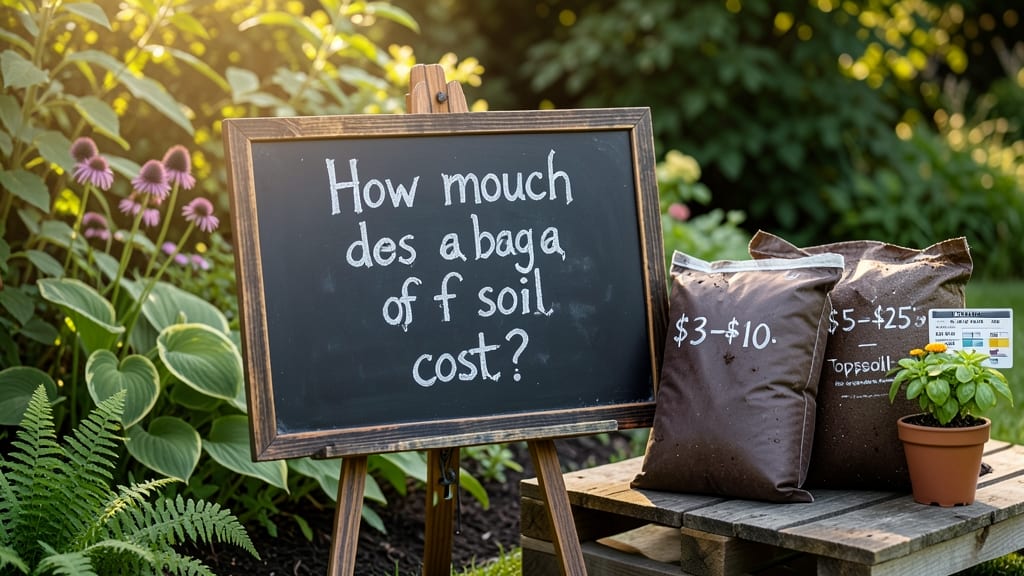
A bag of garden soil costs between $2 and $8, depending on the type—standard topsoil averages $3-$5 per 2 cubic feet, while potting mixes run $4-$7. Specialty soils like cactus or seed-starting blends can cost up to $12 per bag. Buying in bulk slashes per-unit costs significantly.
A bag of soil's price swings wildly based on what you need. Topsoil is the budget-friendly option, ideal for filling garden beds or repairing lawns, while potting mixes include extra nutrients for container plants. 💛 Specialty soils justify their higher price with tailored ingredients—like perlite for drainage or compost for fertility.
I've saved up to 40% by purchasing larger bags (4 cubic feet) for big projects, though you'll need storage space for the extras.
Your location plays a bigger role than you'd think. Urban areas often charge more due to delivery fees, while rural regions with local farms may offer discounts for bulk orders. Online retailers sometimes undercut brick-and-mortar stores, but shipping costs can eat into savings for lightweight bags.
Always check if stores offer loyalty programs or seasonal sales—spring planting time frequently brings promotions.
💡 In This Article
- Soil Cost Factors: Type, Quality, and Bulk Savings
- Where to Buy Soil Cheaply: Stores vs Online vs DIY Mixing
Soil cost factors: type, quality, and bulk savings
The price of soil isn't just about the dirt—it's about the science behind what makes it work for your plants. Standard topsoil costs $3-$5 per 2 cubic feet because it's stripped of rocks and organic matter, making it ideal for filling garden beds or leveling lawns.
However, its basic composition means it lacks nutrients, which is why potting mixes (costing $4-$7) include perlite, peat moss, and compost to improve aeration and moisture retention. These additives aren't cheap—they can add $1-$3 per bag due to processing costs like sterilization to prevent disease.
Specialty soils push prices higher because they're engineered for specific needs. Cactus and succulent mixes with 50% perlite or pumice to prevent root rot can cost $8-$12 per bag, while seed-starting blends with fine texture and moisture control run $7-$10.
The key difference? These mixes use synthetic polymers or biochar to regulate water flow—technologies that cost manufacturers extra. Even organic soils with worm castings or biochar add $2-$4 per bag compared to basic topsoil.
Bag size dramatically affects per-cubic-foot pricing. A 1 cubic foot bag of topsoil might cost $4, but that same soil in a 4 cubic foot bag drops to $6-$8—saving 30-50% per unit. The reason? Larger bags reduce packaging and shipping costs for retailers.
For big projects, buying bulk by the cubic yard (typically $15-$30) becomes even more economical. I once saved $40 on a raised bed project by buying a 2 cubic yard delivery instead of individual bags.
Your location adds another layer of cost variation. Urban areas often charge 20-30% more due to delivery fees, while rural regions with local farms may offer $1-$2 per bag discounts for bulk orders.
Regional differences also matter—coastal areas with sandy native soil might have cheaper topsoil, while arid climates need premium moisture-retentive mixes. Even seasonal fluctuations play a role: spring planting rushes can spike prices by 15-20% as demand outpaces supply.
What most gardeners overlook is how moisture content affects weight and cost. A "dry" bag of soil might weigh 40 lbs, but when watered, it expands to 2 cubic feet—meaning you're paying for both the dry material and its expanded volume.
Some retailers sell by weight instead of volume, which can be a better deal if you're hauling heavy bags. Always check whether the price is per bag or per cubic foot to avoid surprises at checkout.
For the budget-conscious, understanding these factors can save hundreds over a growing season. For example, mixing your own DIY potting soil with 1 part peat moss, 1 part perlite, and 1 part compost can cut costs by 40% while giving you complete control over ingredients.
The trade-off? It requires 10-15 minutes of mixing per batch—but for serious gardeners, that time investment pays off quickly.