
How To
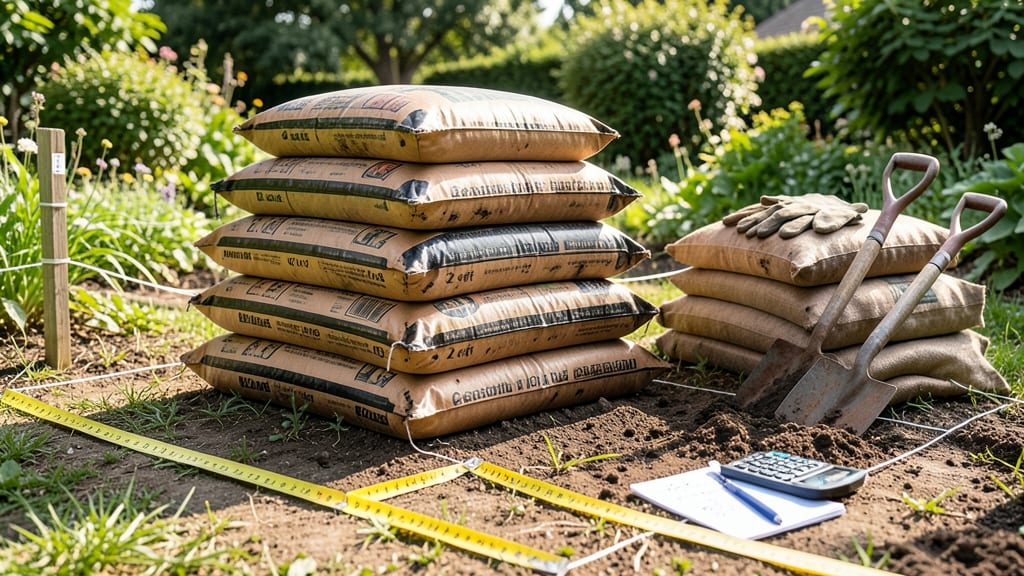
To determine how many bags of topsoil make a yard, remember that one cubic yard equals 27 cubic feet. You'll need about 9 standard 2-cubic-foot bags or 13.5 1.5-cubic-foot bags to create a yard of topsoil. Always factor in the depth—1 inch of coverage requires roughly 10 bags per 100 square feet.
Understanding this conversion helps avoid buying too much or too little topsoil for your project. 🌱 The key is calculating your total cubic feet needs by multiplying length, width, and depth (in feet) of the area you're covering.
For example, a 10x10-foot garden bed that's 3 inches deep would need about 2.5 cubic feet of topsoil—just over one 2-cubic-foot bag. Many gardeners also find that lighter 1.5-cubic-foot bags are easier to carry for smaller projects, while larger 3-cubic-foot bags save time for bigger areas.
What's often overlooked is how settling affects coverage. Fresh topsoil can compact over time, so adding an extra 10-15% to your calculations prevents ending up short.
I always recommend checking the bag's weight specifications too—some brands market "2 cubic feet" bags that actually weigh significantly more due to moisture content, making them harder to handle manually.
💡 In This Article
- Topsoil Volume Conversion: Cubic Feet to Bags Explained
- Choosing Topsoil Bags: Size, Weight, and Best Uses
Topsoil volume conversion: cubic feet to bags explained
The conversion between cubic yards and bags of topsoil relies on a simple but critical math principle: 1 cubic yard = 27 cubic feet. This comes from multiplying 3 feet × 3 feet × 3 feet (the dimensions of a cubic yard).
When you're working with bagged topsoil, this means you'll need to divide your total cubic feet requirement by the volume of each bag to determine how many you'll need.
For example, a 2-cubic-foot bag would require 13.5 bags to make a cubic yard (27 ÷ 2 = 13.5), while a 1.5-cubic-foot bag would need 18 bags (27 ÷ 1.5 = 18).
The key here is understanding that these calculations are based on volume, not weight—so a bag labeled "2 cubic feet" might actually weigh significantly more due to moisture content or soil composition.
Depth plays a surprisingly large role in these calculations. A common mistake is assuming all projects require the same volume of topsoil, but the actual amount needed depends entirely on how deep you're spreading it.
For instance, covering a 100-square-foot area with 1 inch of topsoil requires roughly 6.94 cubic feet of soil (100 sq ft × 1/12 ft = 8.33 sq ft × 0.833 ft depth). That translates to about 4 bags of 1.5-cubic-foot topsoil or 3.5 bags of 2-cubic-foot topsoil.
If you're planning to spread 3 inches deep instead, you'll need triple that amount—so 12 bags of 1.5-cubic-foot topsoil or 10.5 bags of 2-cubic-foot topsoil for the same area.
This is why gardeners often use a simple rule of thumb: 1 inch of depth ≈ 10 bags per 100 sq ft for standard 1.5-cubic-foot bags.
Another factor that trips up beginners is how topsoil settles over time. Freshly spread topsoil can compact by 20-30% after watering or foot traffic, meaning you might end up with less coverage than expected.
To account for this, many experts recommend buying an extra 10-15% more topsoil than your calculations suggest. For example, if your project calls for 12 bags, consider purchasing 14 bags to ensure you have enough after settling.
This extra buffer is especially important for large projects like lawn renovations or raised garden beds, where settling can create uneven surfaces or leave exposed soil underneath.
Visualizing these calculations can help. Imagine a 3-foot cube (1 cubic yard) of topsoil—this is the volume you're working with. Now, picture dividing that cube into smaller sections equal to the size of your topsoil bags.
A 2-cubic-foot bag would fit into this cube 13.5 times, while a 1.5-cubic-foot bag would fit 18 times. The physical act of moving these bags can also give you a sense of how much space they occupy.
A 2-cubic-foot bag typically weighs between 40-50 pounds when wet, while a 1.5-cubic-foot bag weighs around 30-40 pounds. This weight difference can make a big impact on how many bags you can comfortably carry or how quickly you can spread them, particularly for DIY gardeners working alone.
For those working on larger projects, it's worth considering bulk delivery options.
A full cubic yard of topsoil delivered in bulk (typically 27 cubic feet) can be significantly more cost-effective than buying individual bags, especially if you're covering an area larger than 100 square feet at 3 inches deep.
Bulk topsoil is also often less compacted than bagged soil, which can improve drainage and root penetration in your garden. However, bulk delivery requires proper equipment—a wheelbarrow or spreader—to move the soil efficiently.
If you're unsure about the volume you need, many topsoil suppliers offer free estimates based on your project dimensions, which can help you avoid over- or under-ordering.
Here's a quick reference for common project sizes:
- Small raised bed (4'x8'x6" deep): ~1.3 cubic feet → 1 bag of 1.5-cubic-foot topsoil
- Medium garden bed (10'x10'x3" deep): ~2.1 cubic feet → 1 bag of 2-cubic-foot topsoil
- Large lawn patch (100 sq ft x 1" deep): ~6.9 cubic feet → 5 bags of 1.5-cubic-foot topsoil
- Full yard renovation (500 sq ft x 2" deep): ~83 cubic feet → 42 bags of 2-cubic-foot topsoil or 55 bags of 1.5-cubic-foot topsoil
Understanding these conversions and factors will help you plan your topsoil purchase with confidence, ensuring you have just the right amount for your project without wasting money or running out mid-way. 🌿