
Light Requirements
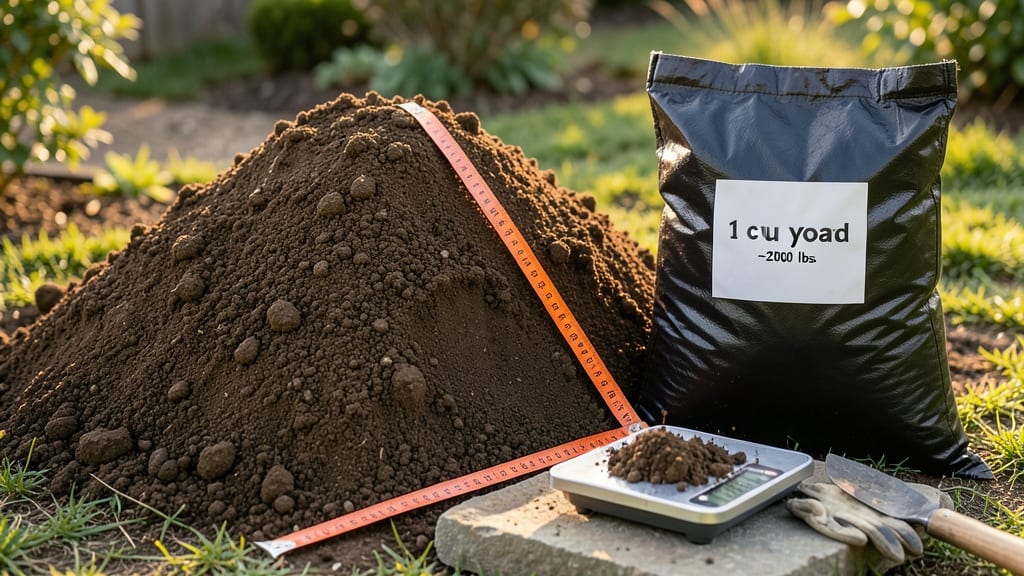
To determine how much 1 cubic yard of topsoil weighs, expect 1,800 to 2,200 pounds based on moisture and soil type—sandy mixes hover near 1,800 lbs, while dense clay or wet soil can push past 2,200 lbs. Always verify with suppliers before purchasing or hauling.
Understanding this weight range helps with everything from truck capacity planning to project budgeting. 🔥 For instance, a standard dump truck holds about 10 cubic yards, so you'd be dealing with roughly 18,000-22,000 pounds—more than most passenger vehicles can safely tow.
The key variables are moisture (wet soil adds significant bulk) and particle composition (clay particles pack tighter than sand). I recommend testing soil moisture with a simple hand squeeze—if it holds shape, it's likely on the heavier side.
For practical applications, consider buying topsoil in bulk when possible—it's often cheaper per cubic yard and lets you verify weight directly. If you're working with bagged soil, check the weight per bag (typically 40-50 lbs) and multiply by the number of bags needed.
Always factor in a 10-15% extra for settling and uneven ground. 💫
💡 In This Article
- Factors Affecting Topsoil Weight per Cubic Yard
- Practical Tips for Measuring and Transporting Topsoil
Factors affecting topsoil weight per cubic yard
Topsoil weight varies dramatically because it's not a uniform material—it's a complex mix of minerals, organic matter, water, and air.
The most critical factor is moisture content: dry topsoil might weigh 1,500-1,800 lbs per cubic yard, but when saturated (like after rain), it can swell to 2,500+ lbs. This happens because water fills the tiny gaps between soil particles, adding significant bulk.
For example, clay soils hold up to 50% more water than sandy soils by weight, which explains why clay-heavy topsoil often exceeds 2,200 lbs per cubic yard when moist. 🔥
Particle size and composition create another major difference. Sandy topsoil, with its large, loosely packed grains, typically weighs 1,600-1,800 lbs per cubic yard—about 20% lighter than clay-based mixes. This is because sand particles have more air pockets between them.
Meanwhile, silt and clay particles pack tightly together, reducing air space and increasing density. Organic matter (like decomposed leaves or compost) also adds weight—it can increase the total by 10-20% compared to purely mineral-based soil.
Think of it like comparing a bag of feathers to a bag of bricks: same volume, wildly different weights.
Compaction plays a surprising role too. Loose, freshly tilled topsoil might weigh 1,800 lbs per cubic yard, but after being packed down (like by heavy machinery or foot traffic), the same volume could weigh 2,000+ lbs. This happens because compaction squeezes out air and forces particles closer together.
For instance, a garden bed that's been walked on repeatedly will feel heavier when moved than one that's been left undisturbed. This is why professional landscapers often specify "loose topsoil" for projects—it's easier to spread and requires less effort to work with. ✨
Regional differences matter as well. Topsoil in arid climates tends to be lighter due to lower organic content and higher sand percentages, while humid regions often have heavier, more organic-rich soils.
Even within the same area, topsoil from different sources can vary—river deposits might be coarser and lighter, while forest floor topsoil (rich in decomposed leaves) can be significantly heavier.
Always ask suppliers about the source and recent weather conditions, as these factors can shift weight estimates by hundreds of pounds per cubic yard. 💫
One often-overlooked factor is the presence of rocks or gravel. While topsoil should be mostly free of large stones, some blends include up to 10-15% coarse material, which can add 50-100 lbs per cubic yard to the total weight.
These heavier particles don't compress like fine soil, so they increase the overall density without changing the volume. For precise projects (like raised beds), screening your topsoil to remove these extras can make a noticeable difference in weight and workability.
To visualize these differences, imagine filling a 5-gallon bucket (about 0.02 cubic yards) with each type:
- Sandy topsoil: ~25-30 lbs (light and easy to lift)
- Loamy topsoil: ~35-40 lbs (balanced texture)
- Clay-heavy topsoil: ~45-50 lbs (dense and heavy)
- Wet topsoil: ~50-60 lbs (noticeably heavier)