
Container Gardens
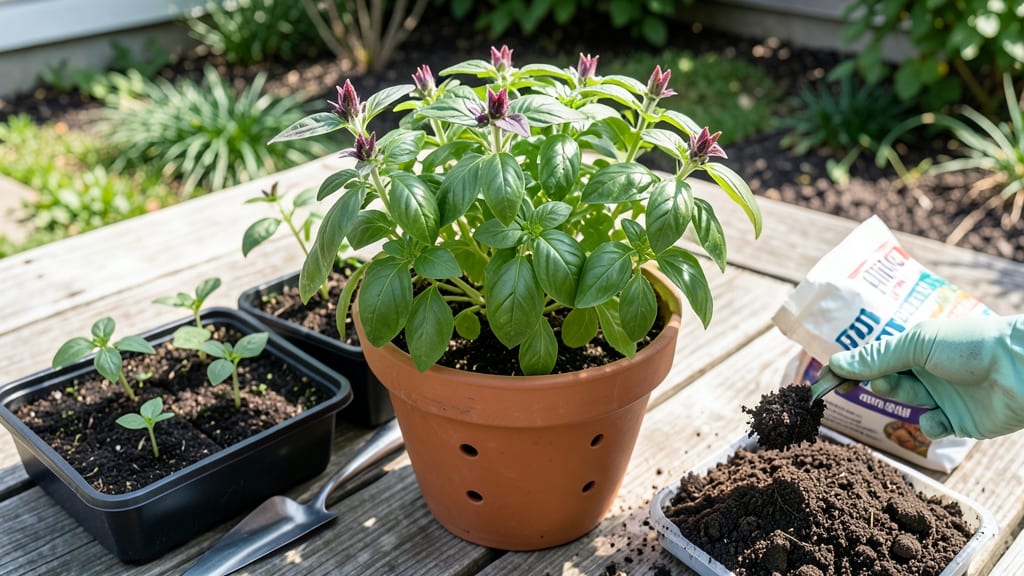
You can use garden soil in containers, but it's not ideal—it compacts easily, drains poorly, and may harbor pests or diseases. For potted plants, mix it with perlite, sand, or compost to improve aeration and drainage while maintaining nutrients.
Garden soil's heavy clay content makes it perfect for in-ground planting but a poor choice for containers. 🌱 The dense structure smothers roots, preventing oxygen flow and causing waterlogging—both deadly for potted plants. Even when amended, it often lacks the lightweight texture needed for proper drainage.
I've seen plants thrive in containers only after replacing 50-70% of garden soil with porous additives like perlite or coconut coir, which mimic the airy environment roots crave. For heavy feeders like tomatoes, adding worm castings or aged compost helps replace the nutrients lost during the mixing process.
If you're working with limited resources, start with a 50/50 mix of garden soil and coarse sand or perlite. For long-term success, consider pre-mixed container blends designed for your specific plants—herb mixes are lighter, while vegetable blends include extra nutrients.
The key is creating a balance that prevents compaction while still providing enough organic matter for root development.
💡 In This Article
- Why Garden Soil Fails in Container Gardens
- Best Soil Mixes for Container Gardening Success
Why garden soil fails in container gardens
Garden soil's heavy composition—often packed with 20-30% clay particles—creates a dense matrix that suffocates roots in containers. When you water potted plants, this clay absorbs moisture like a sponge but releases it too slowly, leaving roots sitting in anaerobic conditions for hours.
Studies show that container soils should maintain 10-30% air porosity for healthy root respiration, but garden soil typically achieves only 5-15% without amendments. The result? Roots struggle to breathe, leading to stunted growth or rot.
This compaction issue stems from how garden soil settles over time. In-ground, plants have room to spread roots downward, but containers restrict growth to a 2-3 inch deep root zone near the surface.
Without proper aeration, beneficial microbes can't thrive either—these organisms need oxygen to break down organic matter and release nutrients. I've seen garden soil mixes where microbial activity dropped by 40% within 3 months due to this suffocation effect.
The lack of oxygen also creates ideal conditions for harmful pathogens like Phytophthora, which thrive in waterlogged conditions.
Nutrient availability becomes another major problem. Garden soil's nutrients are locked in mineral forms that plants can't access without microbial activity. In containers, where roots can't explore beyond the pot's edges, plants quickly exhaust these limited reserves.
For example, a 5-gallon container filled with unamended garden soil may provide enough nitrogen for 4-6 weeks of growth, after which plants show yellowing leaves—a classic sign of nitrogen depletion.
This is why even "fertile" garden soil often fails in containers unless you add organic matter like compost or worm castings.
Consider this comparison: Ideal potting mixes contain 20-30% organic matter (like peat moss or coco coir) that holds moisture while allowing drainage, plus 30-50% inorganic amendments (perlite, vermiculite) for aeration.
Garden soil might have 5-10% organic matter and 0% added aeration, making it about as effective as trying to grow plants in cement. The texture difference is dramatic—garden soil feels dense and sticky when wet, while proper potting mix remains light and crumbly, almost like a sponge.
Even when amended, garden soil's high clay content can cause another hidden problem: salt buildup. Clay particles hold onto minerals like calcium and magnesium, which dissolve into the soil solution. In containers with limited drainage, these minerals accumulate over time, increasing soil salinity.
At concentrations above 0.1% sodium, plant roots can't absorb water properly, leading to wilting even when the soil appears moist. This is why container gardeners often see "salt burn" symptoms—brown leaf tips and stunted growth—when using garden soil without proper amendments.
The root of the problem comes down to physics: containers create a confined environment where water and air movement are critical. Garden soil's particles pack tightly, reducing pore space to 10% or less, while ideal container mixes maintain 30-50% porosity.
This difference explains why the same plant in garden soil might grow 30% slower in a container versus in-ground—its roots simply can't access the resources they need. The solution isn't just adding amendments; it's fundamentally changing the soil's structure to mimic the loose, well-draining conditions roots crave.