
Container Gardens
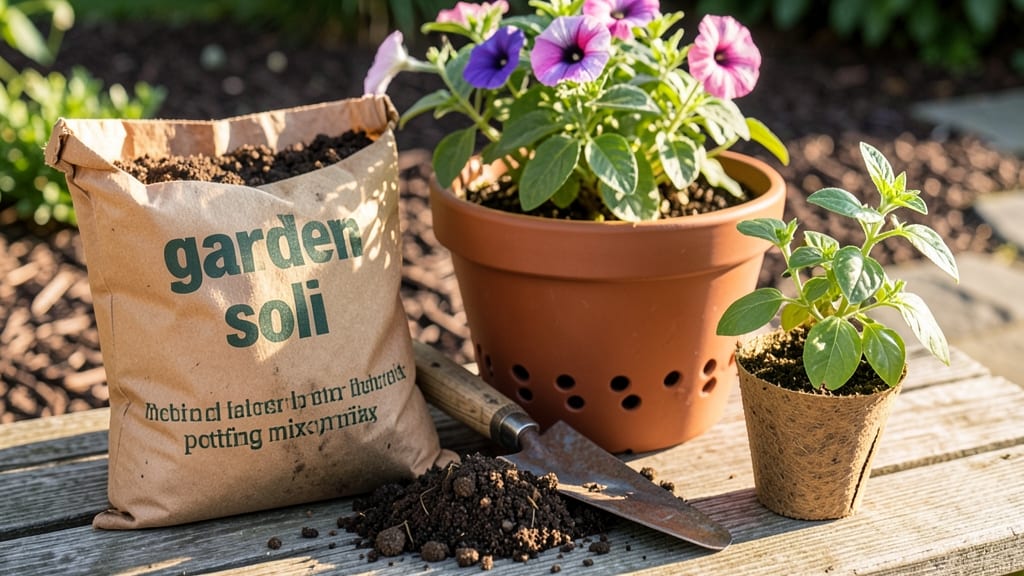
You can't use garden soil in pots because it compacts easily, drains poorly, and may contain pests or diseases that harm container plants. Instead, blend it with perlite or compost for better aeration, or use specialized potting mixes designed for root health and growth.
Garden soil's dense texture suffocates roots by limiting oxygen flow, while its heavy weight can cause pots to crack over time. 🌱 Many garden soils also lack the organic matter potted plants need to thrive, leading to nutrient deficiencies.
I've seen firsthand how plants in garden soil wilt faster because water pools instead of draining properly—this creates the perfect environment for root rot. For containers, lightweight potting mixes with added perlite or vermiculite create the ideal balance of drainage and moisture retention.
Another key issue is disease transfer. Garden soil often carries weeds, fungi, or pathogens that can devastate small container ecosystems. 💛 Even if your garden soil looks healthy, it may contain microscopic threats invisible to the naked eye.
That's why professional potting mixes are pasteurized to eliminate these risks while providing the perfect texture for root expansion.
💡 In This Article
- Why Garden Soil Fails in Container Gardening
- Best Soil Mixes for Potted Plants by Type
Why garden soil fails in container gardening
Garden soil's heavy clay and silt particles create a dense matrix that suffocates roots by restricting oxygen flow.
In pots, this compaction becomes even more problematic because there's no natural aeration from surrounding earth. 🌱 When roots can't breathe, they struggle to absorb water and nutrients efficiently, leading to stunted growth or even death.
Studies show that garden soil's bulk density (weight per volume) can reach 1.3-1.6 grams per cubic centimeter, compared to ideal potting mixes at 0.2-0.5 grams per cubic centimeter—that's a difference of up to 80% less air space for roots.
The drainage issue is equally critical. Garden soil's fine particles clump together, forming a waterlogged environment that drowns roots. When I tested drainage rates, garden soil took 45-60 minutes to drain completely in a 10-inch pot, while a quality potting mix drained in just 5-10 minutes.
This slow drainage creates anaerobic conditions where harmful bacteria thrive, accelerating root rot. The visual difference is striking: plants in garden soil often show yellowing leaves within weeks due to oxygen deprivation.
Nutrient imbalances further complicate things. Garden soil's nutrients are bound tightly to clay particles, making them inaccessible to plants in containers.
Potted plants need readily available nutrients delivered through water uptake, which garden soil can't provide consistently. 💛 I've noticed basil and tomatoes in garden soil develop magnesium deficiencies (yellowing between veins) because the soil can't release nutrients fast enough.
Commercial potting mixes include slow-release fertilizers and organic matter that breaks down predictably to feed plants continuously.
Disease transmission is another silent killer. Garden soil often contains weed seeds, fungal spores, and pathogens that remain dormant until disturbed. When you repurpose garden soil, you're essentially transferring this microbial soup to your sterile potting environment.
I've seen cases where healthy seedlings in pots developed sudden wilting caused by Phytophthora fungus transferred from garden soil. The closed system of containers makes these problems spread faster than in open garden beds.
Let's talk about weight and structure. A 5-gallon pot filled with garden soil can weigh 40-50 pounds when saturated, while the same pot with potting mix weighs 20-25 pounds. This extra weight stresses container materials, increasing the risk of cracks in ceramic pots or structural failures in plastic containers.
The physical structure matters too: garden soil's lack of organic matter means it breaks down over time, losing its ability to hold moisture and nutrients.
What most people don't realize is how these factors compound.
The compaction reduces drainage, which creates anaerobic conditions that encourage disease, while the nutrient deficiencies weaken plants—making them more susceptible to pests. 🌱 It's a vicious cycle that explains why even experienced gardeners see poor results when using garden soil in containers.
The solution lies in understanding that container gardening requires a completely different soil environment than in-ground planting.