
How To
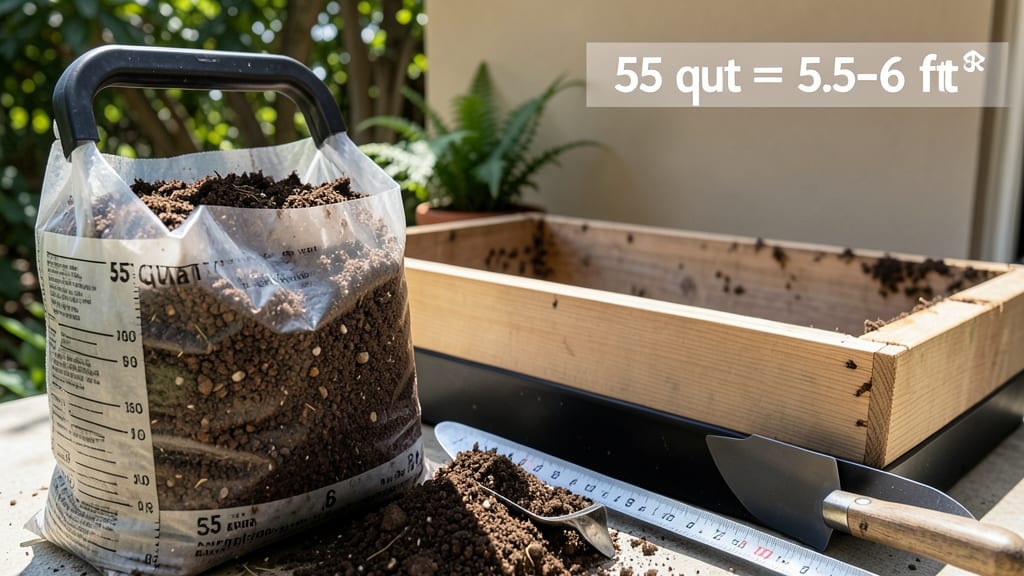
Converting 55 quarts of potting soil equals approximately 1.5 cubic feet (1.5 ft³). This measurement helps gardeners estimate soil volume for containers, raised beds, or bulk planting projects by accounting for soil compaction and moisture content differences.
Understanding how 55 quarts of potting soil translates to 1.5 cubic feet is essential for planning garden projects accurately. 🌱 The conversion works because one cubic foot equals about 25.714 quarts, but potting soil loses volume when packed into containers due to compression.
For example, a raised bed might require more soil than the loose volume suggests, especially when accounting for plant roots and drainage layers. Always measure your space first—this ensures you buy the right amount and avoid waste.
This conversion also helps when mixing soil with amendments like compost or perlite. If you're filling a 4'x4' raised bed (16 sq ft) with 12 inches of soil, you'll need roughly 16 cubic feet—about 11 bags of the standard 55-quart size.
Pro tip: Store extra soil in sealed bins to preserve moisture and prevent compaction over time.
💡 In This Article
- How to Convert Potting Soil Quarts to Cubic Feet Accurately
- Practical Uses for 55-Quart Potting Soil in Gardening
How to convert potting soil quarts to cubic feet accurately
The conversion from quarts to cubic feet relies on a simple formula: 1 cubic foot equals 25.714 quarts. This means your 55-quart bag of potting soil translates to roughly 1.5 cubic feet when loose. However, the real magic happens when you consider how soil behaves in containers—it compresses!
A bag's labeled volume assumes loose, fluffy soil, but once packed into a raised bed or pot, the same 55 quarts might only occupy 1.2-1.4 cubic feet due to settling. 🌱
Why does this happen? Potting soil contains organic matter (like peat moss or coconut coir) that holds air pockets. When you pack it down—whether by watering, planting, or simply pressing it into a container—those air spaces collapse, reducing total volume.
For example, a 10-gallon container (about 0.42 cubic feet) might need 12-14 quarts of soil after accounting for this compression. Moisture also plays a role: damp soil weighs more and packs tighter, further shrinking its cubic footprint.
For precise calculations, use this two-step method: First, divide your target cubic feet by 25.714 to get quarts needed. Then, multiply by 0.85 (a typical compression factor for potting soil) to adjust for real-world packing.
For instance, a 3'x3' raised bed (9 sq ft) filled 12" deep needs 2.7 cubic feet—about 70 quarts after compression. Always round up to avoid shortages, especially for heavy plants like tomatoes that need deep, stable soil. ✨
Pro tip: Measure your space before buying. A 5-gallon pot holds roughly 0.21 cubic feet, so you’d need 5-6 quarts of soil after compression. Use a tape measure to check depth—many gardeners underestimate how much soil their containers actually require.
And remember: 1 cubic foot of packed soil weighs about 40-50 pounds, so plan for lifting or wheelbarrow assistance for larger projects.
Advanced gardeners often pre-mix soil with amendments like perlite or compost before filling containers. Here’s how it affects volume: Adding 20% perlite to your mix can increase total volume by 10-15% (since perlite expands), but it also reduces weight.
For example, a 55-quart bag mixed with 10 quarts of perlite might yield 65 quarts of amended soil—but only 1.6 cubic feet when packed. Always test your mix in a small container first to gauge compression behavior. 💫
One common mistake is assuming "cubic feet" and "quarts" are interchangeable without context. While 1 cubic foot = 25.714 quarts in theory, real-world gardening introduces variables like soil type (peat vs. mineral-based) and container shape.
A round pot compresses soil differently than a rectangular raised bed, so always calculate based on your specific setup. For seed-starting trays, you might only need 1-2 quarts per tray, but larger vegetable gardens demand bulk measurements. 🌿