
Propagation
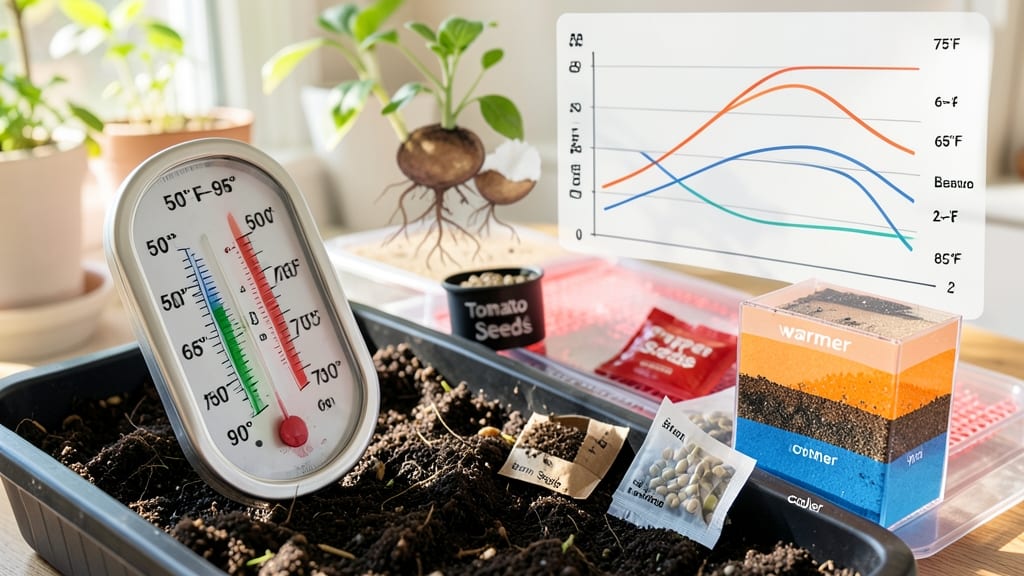
The soil temperature for seed germination depends on plant type, with cool-season crops like lettuce and peas germinating best at 50–75°F, while warm-season plants such as tomatoes and peppers require 65–95°F. Use a soil thermometer or heat mats to maintain optimal conditions, especially in variable climates.
Germination speed hinges on how quickly enzymes activate inside seeds—think of it like turning on a metabolic switch. 🔥 Cool-season seeds often need that gentle nudge of 50–75°F to break dormancy, while tropical varieties like basil or cucumbers stall below 70°F.
I’ve seen seeds take twice as long to sprout when soil temps dip just 5°F below ideal ranges, so precision matters more than you’d expect.
For gardeners in cooler zones, black plastic mulch or seedling heat mats can raise soil temps by 10–15°F—enough to jumpstart germination for warm-season crops. Conversely, shade cloth helps prevent overheating in summer.
Always monitor progress: if seeds haven’t sprouted within 2–3 weeks of the expected window, they may need replanting or a temperature adjustment.
💡 In This Article
- How Soil Temperature Affects Seed Germination Rates
- Adjusting Soil Temperature for Faster Germination
How soil temperature affects seed germination rates
Seeds germinate because soil temperature triggers biochemical reactions inside them. Enzymes like amylase and proteases activate at specific temperature thresholds, breaking down stored nutrients (like starches and proteins) to fuel the seedling’s first growth spurt.
For example, cool-season crops such as lettuce and spinach need 50–75°F soil temps to kickstart these enzymes—below 45°F, their metabolic activity grinds to a near-halt, delaying sprouting by weeks.
Warm-season plants like tomatoes and peppers, however, require 75–95°F to activate their enzymes efficiently; at cooler temps, their seeds may rot before germinating.
The science gets even more precise when you consider radicle emergence, the first stage of germination where the root breaks through the seed coat.
This process is temperature-sensitive: at 60°F, a tomato seed might take 10–14 days to sprout, but at 85°F, it can emerge in just 5–7 days. Conversely, extreme heat above 95°F denatures enzymes, while cold below 40°F can induce dormancy or even kill the embryo.
The sweet spot isn’t just about speed—it’s about survival. 🌱 For instance, basil seeds germinate poorly below 70°F and may fail entirely if soil stays too cool for more than a week.
Temperature also plays a role in breaking seed dormancy, a natural pause that prevents germination under unfavorable conditions. Some seeds, like those of carrots or parsnips, require a period of cold stratification (32–40°F for weeks) to trigger germination.
Without this chilling phase, they might never sprout—even if soil temps later reach ideal ranges. This is why gardeners in warm climates often pre-chill seeds or use cold frames to mimic winter conditions artificially.
Extreme temperatures don’t just slow germination—they can be fatal. For example, seeds of squash or beans exposed to 100°F+ soil for prolonged periods may suffer protein coagulation, a process where heat causes proteins to clump and lose function.
Similarly, freezing soil (32°F or below) can rupture seed membranes, leaching out vital nutrients and killing the embryo. The key is consistency: fluctuations of 10°F or more in a single day can confuse seeds, leading to erratic or failed germination.
Even within ideal ranges, subtle differences matter. Take peppers, which germinate best at 80–90°F: at the lower end of this range, seedlings emerge slower but grow stronger roots, while at the upper end, they sprout faster but may develop weaker structures.
This is why professional growers often use heat mats set to 75–85°F—a balance that maximizes both speed and vigor. For home gardeners, this means avoiding the temptation to crank up heat too high, even if you’re eager for quick results. 🌡️
Monitoring soil temperature isn’t just about hitting a number—it’s about understanding the delicate dance between biology and environment. A soil thermometer placed 2 inches deep (where most seeds are sown) gives the most accurate reading, as surface temps can vary wildly from deeper layers.
For instance, black plastic mulch might raise surface temps by 15°F on a sunny day, but the soil just below it could still be 10°F cooler. This discrepancy can explain why some seeds sprout unevenly or why a batch of tomatoes takes longer than expected.
Here’s a pro tip: if you’re sowing multiple types of seeds, group them by temperature needs. Plant cool-season crops like kale or radishes in one tray with a seedling heat mat set to 65°F, while warm-season cucumbers or melons get their own tray at 80°F.
This way, you avoid the frustration of waiting too long for seeds that prefer warmer conditions—or worse, watching them rot in soil that’s too cold. Precision pays off in the garden. ✨