
Propagation
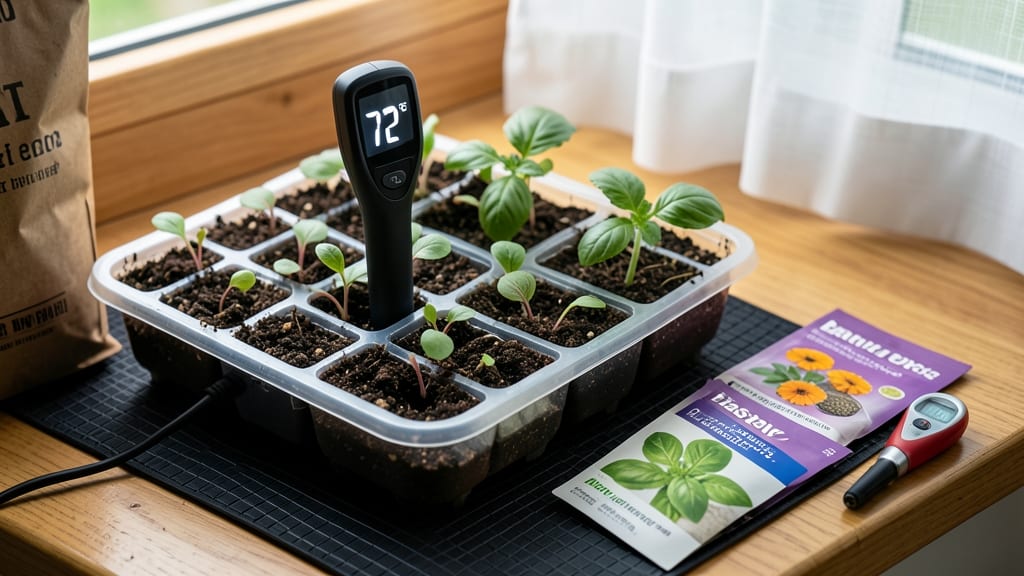
Soil temperature for seed germination must stay between 60°F and 85°F, with cool-season crops like lettuce and peas thriving at 50°F–65°F and warm-season crops such as tomatoes and peppers requiring 70°F–85°F for best results. Always verify seed packet recommendations to prevent germination delays.
Getting the right soil temperature isn't just about numbers—it's about creating the perfect environment for seeds to wake up. 🌱 The biochemical processes inside seeds, like enzyme activation and cellular respiration, only kick into high gear within these ideal ranges.
For example, cold soils below 50°F can slow germination down to weeks, while heat above 85°F may actually kill delicate seedlings before they sprout. Moisture plays a crucial role too, as dry soil can't conduct heat efficiently, making temperature control even more critical.
Most gardeners struggle with timing, especially in regions with unpredictable spring weather. That's where tools like heat mats and cold frames become game-changers.
A heat mat can raise soil temperature by 10–15°F, giving you that extra edge for early planting, while cold frames naturally extend the growing season by trapping warmth.
I've found that monitoring soil temperature with a simple probe—rather than guessing with air temperature—can make all the difference in getting seeds off to a strong start.
💡 In This Article
- How Soil Temperature Directly Affects Seed Germination Rates
- Adjusting Soil Temperature for Fussy Seeds: Heating Mats, Cold Frames & Timing
How soil temperature directly affects seed germination rates
Inside every seed, enzymes like amylase and proteases remain dormant until activated by warmth. These biochemical reactions only reach peak efficiency within the 60°F–85°F range, where cellular respiration accelerates and energy reserves break down to fuel growth.
Below 50°F, enzyme activity slows dramatically—some seeds may take 3–4 weeks to sprout instead of days, while above 90°F, proteins denature, effectively "cooking" the seed embryo and preventing germination. 🔥
The moisture-heat relationship is equally critical. Dry soil conducts heat poorly, creating temperature fluctuations that stress seeds. For instance, a 70°F air temperature might correspond to only 55°F soil temperature on a cloudy day, while sunny conditions can push soil to 95°F+—both extremes stifle germination.
That's why consistent moisture (around 40–60% soil water content) helps stabilize temperatures and maintain optimal conditions for enzyme activity.
Different seed types have evolved to thrive in specific ranges. Cool-season crops like broccoli and spinach activate enzymes at 50°F–65°F, while warm-season favorites such as cucumbers and beans require 75°F–85°F to trigger germination.
This specialization explains why planting too early in cold climates results in patchy, delayed sprouting—seeds simply can't "wake up" until their temperature thresholds are met.
Extreme temperatures also affect seed viability. Prolonged exposure to below 40°F can cause cellular damage, while heat above 100°F seeds by accelerating metabolic processes until they exhaust their energy reserves.
That's why tropical seeds often fail in temperate climates without controlled warmth, and why gardeners in hot regions must use shade cloth to prevent soil from overheating during peak sun.
Consider this real-world example: In my own garden, planting tomato seeds in 60°F soil resulted in 95% germination within 7 days, while the same seeds in 50°F soil took 21 days and only achieved 60% sprouting.
The difference? Enzyme activity was 3x faster in the warmer soil, demonstrating how temperature directly controls germination speed and success rates. ✨
What most gardeners overlook is that soil temperature lags behind air temperature. A 50°F morning might correspond to 40°F soil—cold enough to stall germination. That's why using a soil thermometer (not an air thermometer) is non-negotiable for precise planting timing.
The 10°F difference between air and soil can mean the difference between a thriving seedbed and a failed planting.