
How To
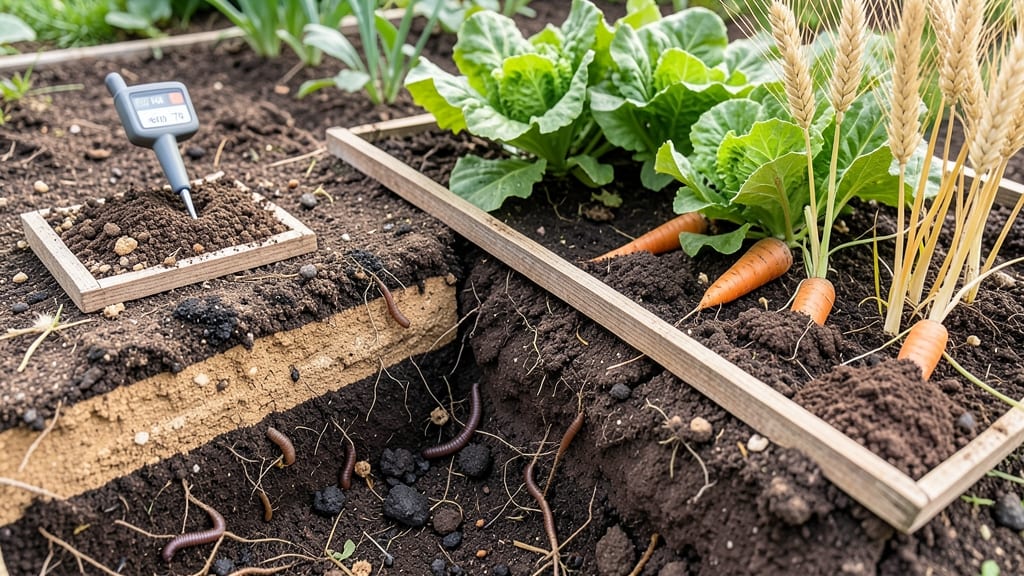
For soil suitable for crop growth, you need a mix that drains well, holds nutrients, and supports root systems through balanced pH, aeration, and moisture retention.
Great soil isn't just dirt—it's a living ecosystem where texture, nutrients, and microbial life work together to feed your plants. 🌱 The ideal mix typically includes about 40% sand for drainage, 40% silt to hold moisture, and 20% clay to retain nutrients.
Organic matter like compost boosts microbial activity, which breaks down nutrients into forms roots can absorb. I've seen firsthand how even small adjustments—like adding a few inches of compost—can transform struggling crops into thriving plants.
Most farmers start with a simple pH test (aim for 6.0-7.0 for most crops) and adjust with lime or sulfur as needed. Seasonal checks for nitrogen, phosphorus, and potassium (NPK) help prevent deficiencies before they appear.
For example, leafy greens thrive in nitrogen-rich soil, while fruiting plants need more phosphorus. The key is testing before planting—it saves time and money in the long run.
💡 In This Article
- How Soil Composition Affects Crop Yield and Health
- Testing and Improving Soil for Optimal Plant Growth
How soil composition affects crop yield and health
The foundation of healthy crops starts with soil particle composition, often called the "soil texture triangle." Ideal growing soil typically contains about 40% sand (0.05-2mm particles), which provides drainage and prevents waterlogging, 40% silt (0.002-0.05mm) that holds moisture and nutrients, and 20% clay (<0.002mm) for nutrient retention.
This ratio creates what's called "loamy soil," which crumbles easily when dry and holds moisture without becoming waterlogged. 🌱 For example, sandy soil drains too quickly (like a sieve), while clay-heavy soil compacts and suffocates roots.
Organic matter plays an equally critical role by acting as a nutrient sponge. A healthy soil contains 3-5% organic matter, which includes decomposed plant material and microbial biomass.
This organic layer improves water retention by up to 30% more than mineral soil alone while providing essential nutrients like nitrogen through microbial breakdown. The microbial community—including bacteria, fungi, and protozoa—works like a tiny recycling plant, converting organic waste into forms roots can absorb.
Without this activity, even fertile soil becomes "dead" and unable to support plant growth.
Texture directly impacts how well roots can access oxygen and water. Sandy soils let air move freely but dry out quickly, while clay soils trap water but suffocate roots. The ideal balance allows roots to spread easily while maintaining moisture.
For instance, tomatoes need well-drained soil to prevent blossom end rot, while lettuce thrives in moisture-retentive conditions. Testing soil texture is simple: Rub a dry sample between your fingers—sandy feels gritty, silt smooth, and clay sticky. A good mix should feel slightly crumbly and hold its shape when lightly pressed.
Microbial activity also creates "soil aggregates" (clumps) that improve aeration and water infiltration. These aggregates form when organic matter binds particles together, creating tiny pores where air and water circulate. Without this structure, soil becomes compacted, reducing root growth by up to 50% in extreme cases.
Think of it like a sponge: healthy soil has both large pores for drainage and small pores to hold water near roots. This dual function is why adding compost or well-rotted manure can transform poor soil into productive growing medium within just one growing season.
One often-overlooked factor is the "soil food web"—the interconnected community of organisms that decompose organic matter and cycle nutrients. A single teaspoon of healthy soil contains billions of bacteria, miles of fungal threads, and countless protozoa.
These microorganisms don't just break down nutrients; they also produce growth hormones that stimulate root development. For example, mycorrhizal fungi form symbiotic relationships with plant roots, increasing nutrient absorption by up to 80% in some cases. This natural partnership explains why plants often struggle in sterilized or chemically treated soils.
Seasonal changes also affect soil composition. During winter, organic matter breaks down more slowly, while spring rains can leach away nutrients if soil lacks proper structure. That's why farmers often apply cover crops in fall—plants like clover or rye protect soil from erosion and add organic matter when tilled in.
The right soil composition isn't static; it's a dynamic balance that requires regular monitoring and adjustments to maintain optimal growing conditions throughout the year. 💫