
How To
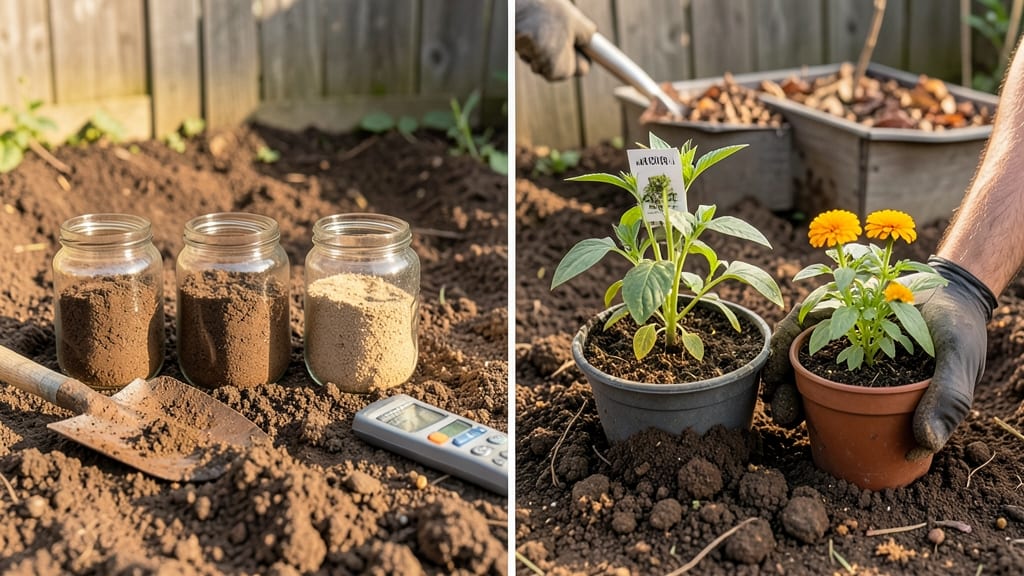
Loamy soil means a balanced mix of sand, silt, and clay that creates the perfect growing environment for plants. This ideal texture drains efficiently while holding moisture and nutrients, promoting strong root systems and healthy microbial activity in the soil.
Loamy soil gets its name from its rich, crumbly texture that feels almost like well-aged compost when moist. 🌱 The perfect balance of mineral particles—about 40% sand, 40% silt, and 20% clay—gives it the best of all soil types: the drainage of sand, the moisture retention of clay, and the nutrient-rich structure of silt.
This combination creates tiny air pockets that roots love, while also holding onto essential minerals plants need to thrive.
What makes loamy soil so special is how it mimics nature's own recipe for fertility. Unlike heavy clay that suffocates roots or pure sand that washes away nutrients, loamy soil stays workable even when wet and never becomes waterlogged.
This consistency is why gardeners and farmers consider it the gold standard for plant growth, supporting everything from delicate flowers to hearty vegetables.
💡 In This Article
- The Science Behind Loamy Soil Composition
- How to Test and Improve Your Garden’s Soil Texture
The science behind loamy soil composition
Loamy soil achieves its magic through the perfect interplay of three mineral particles: sand, silt, and clay, each playing a distinct role in plant nutrition. Sand particles (0.05-2mm) create the soil's drainage system, while silt (0.002-0.05mm) acts as the nutrient reservoir, holding essential minerals like potassium and phosphorus.
The clay fraction (<0.002mm) forms microscopic plates that attract and store water and organic matter, creating a sponge-like structure. Together, they form aggregates that resemble tiny crumbs—ideal for root penetration and microbial activity.
The ideal loam composition typically contains about 40% sand, 40% silt, and 20% clay, though variations exist based on regional geology. This balance creates a porosity rate of 50-60%, meaning half the soil volume consists of air and water-filled spaces.
These pores allow oxygen to reach roots while preventing waterlogging—a critical factor for preventing root rot. The clay particles also carry negative charges that bind positively charged nutrients like calcium and magnesium, making them readily available to plants. 🌱
What truly sets loamy soil apart is its ability to maintain a consistent moisture level without becoming waterlogged. Unlike sandy soils that dry out quickly or clay soils that stay soggy, loam's structure creates capillary action that moves water upward while preventing evaporation.
This moisture regulation supports beneficial soil microbes that break down organic matter, releasing nutrients in forms plants can absorb. The microbial activity in loamy soil can be 10-100 times higher than in sandy soils, creating a thriving ecosystem that naturally fertilizes plants.
Consider how these components work together during a rainstorm: the sand provides immediate drainage, silt acts as a temporary water storage, and clay slowly releases moisture over time. This multi-stage water management system explains why loamy soil can support plants through both drought and heavy rainfall conditions.
The texture also remains workable year-round, unlike clay that hardens when dry or sand that becomes powdery. This consistency makes loamy soil particularly valuable for vegetable gardens where root systems need both stability and oxygen.
The nutrient availability in loamy soil extends beyond basic minerals—it also creates an ideal environment for organic matter decomposition. The balanced structure prevents compaction that would otherwise limit microbial movement, while the clay fraction provides surfaces for microbial colonization.
This symbiotic relationship between soil particles and microbes creates a self-sustaining nutrient cycle that reduces the need for chemical fertilizers. For example, a loamy garden bed might naturally produce 2-3 times more available nitrogen than a sandy counterpart through microbial processes alone.
To visualize this structure, imagine holding a handful of moist loam—it should feel slightly gritty (from sand) but form a loose, crumbly mass rather than a tight clump (like clay) or falling apart (like sand).
When squeezed gently, it should hold its shape briefly before disintegrating, indicating the perfect balance of cohesion and friability. This tactile quality isn't just pleasant to work with; it's a direct result of the particle interactions that create the soil's functional properties. 💫
Understanding this composition helps explain why loamy soil supports such diverse plant life—from deep-rooted perennials to shallow vegetable crops. The root systems of plants like tomatoes or carrots can penetrate easily through the loose structure, while surface plants like lettuce benefit from the moisture retention near the soil surface.
This versatility makes loamy soil the foundation of productive agriculture worldwide, from backyard gardens to large-scale farms.