
How To
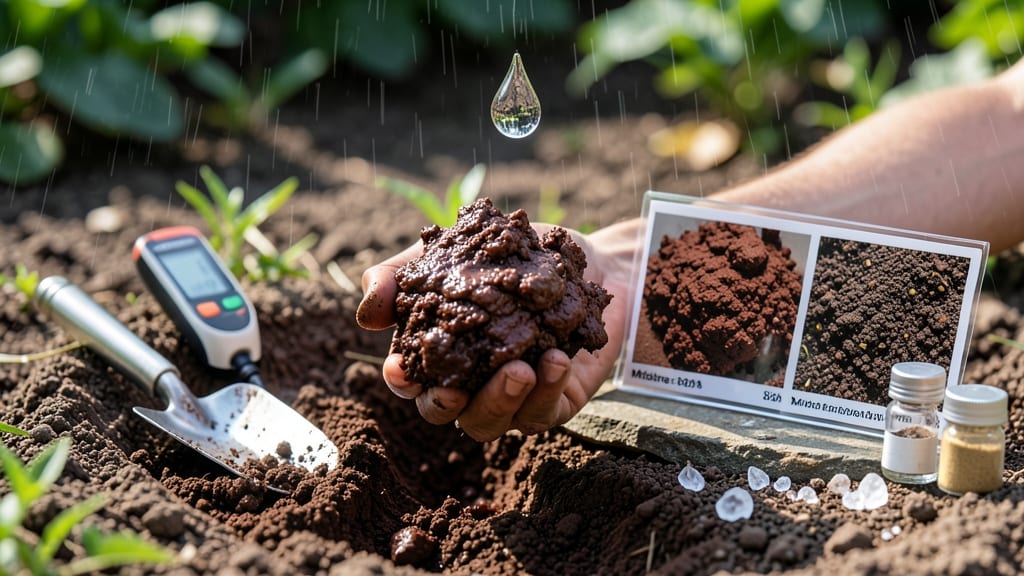
When soil has a high clay content, it becomes dense and waterlogged, suffocating plant roots and limiting nutrient uptake. The solution? Mix in organic matter like compost, coarse sand, or gypsum to loosen the structure and improve aeration—just test your soil first to pick the right fix.
Clay-heavy soil isn't all bad—it actually holds nutrients and moisture better than sandy soil. 🌱 The problem comes when it stays too compacted, cutting off oxygen to roots and creating a breeding ground for waterlogging.
I’ve seen gardens transform after adding a 2-inch layer of compost or a handful of gypsum per square foot—it’s like giving your soil a breath of fresh air. The key is patience; amendments take time to work, so don’t expect miracles overnight.
For best results, aim to increase organic matter to 5-10% of your soil’s volume. This improves both drainage and water retention, creating the ideal balance for most plants.
If your soil feels sticky when wet or hard as a brick when dry, it’s definitely time to act—your plants will thank you!
💡 In This Article
- How Clay Soil Affects Plant Roots and Water Retention
- Natural Amendments for Breaking Up Compacted Clay Soil
How clay soil affects plant roots and water retention
Clay particles are flat and plate-like, packing tightly together like stacked coins when wet, creating a dense, almost impermeable layer. This structure reduces pore space to just 10-30%—far less than loamy soil’s 45-55%—which severely limits oxygen flow to roots.
Without adequate aeration, roots suffocate, leading to stunted growth or even death in severe cases. The tiny gaps between particles also trap water, making clay soil prone to waterlogging, where roots drown in saturated conditions. 🌱
Despite these challenges, clay soil has advantages: it holds 3-5 times more nutrients than sandy soil due to its high surface area, which attracts and retains minerals like nitrogen and phosphorus.
However, the trade-off is that compacted clay can become a nutrient "lockbox"—plants can’t access what’s stored because water can’t penetrate. Compare this to sandy soil, which drains freely but offers little nutrient retention, or loamy soil, which strikes a balance with 40-60% pore space and moderate nutrient availability.
Microbial activity also suffers in dense clay. Beneficial bacteria and fungi need oxygen to break down organic matter, and their populations drop in waterlogged conditions. This slows decomposition, reducing nutrient cycling. For example, earthworms—nature’s plows—struggle to burrow in heavy clay, further compacting the soil.
The result? A vicious cycle where poor drainage leads to fewer microbes, which then worsens drainage even more. 🔄
One critical factor is the soil’s plasticity—its ability to stick together when wet. Clay’s high plasticity means it expands when moist and shrinks dramatically when dry, creating cracks that can damage roots. This cycle of swelling and contracting also breaks down soil structure over time, accelerating compaction.
For instance, a clay soil with 40% clay content might shrink 20% by volume when dry, pulling roots and disrupting their access to water and nutrients.
Visual clues can help identify clay-heavy soil: it feels slick and sticky when wet, forms tight clumps when dry, and often has a grayish or bluish tint. If you press a handful, it holds its shape like modeling clay.
In contrast, sandy soil crumbles easily and feels gritty. The key to improving clay soil lies in breaking this dense structure—whether through organic matter, mechanical tilling, or chemical amendments—to restore the balance between water retention and aeration. ✨
Consider this: a 10% increase in organic matter in clay soil can improve pore space by 15-20%**, making it far more hospitable to roots. This is why gardeners often mix in compost or aged manure—not just for nutrients, but to physically loosen the clay’s grip on water and air.
The goal? Mimic the structure of loamy soil, where roots thrive in a sponge-like environment that holds moisture without suffocating. 💫