
Advice
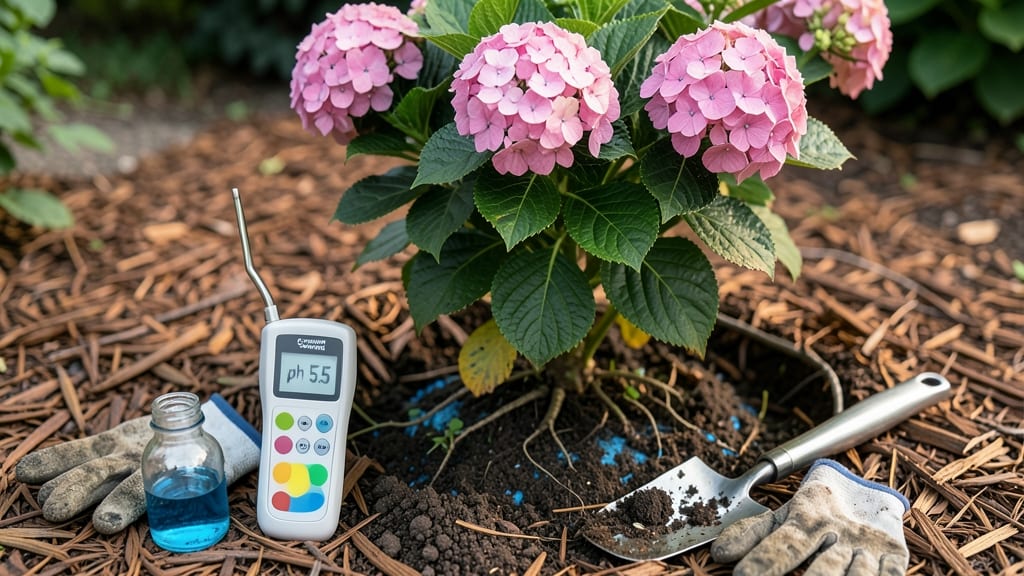
For pink hydrangeas, use acidic soil with a pH between 5.2 and 5.5, blending in organic matter like compost or peat moss to improve drainage and nutrient absorption. Stay away from alkaline soil or heavy clay, which can dull the color and stunt growth.
Pink hydrangeas need acidic soil because their vibrant color comes from anthocyanins, pigments that thrive in low-pH environments. 🌸 The ideal pH range (5.2–5.5) ensures these pigments develop fully, while alkaline soil (above 7.0) can turn blooms blue or greenish.
I’ve found that adding pine needles or oak leaves to the soil mix helps maintain acidity naturally over time. If your soil tests too alkaline, you can amend it with sulfur or aluminum sulfate—but always test first, as overdoing it can harm roots.
Don’t overlook drainage—hydrangeas hate soggy roots. Mixing in compost or coconut coir keeps moisture balanced while preventing nutrient runoff. For existing alkaline soil, consider planting in raised beds filled with acidic potting mix.
The key is consistency: hydrangeas are picky, but once you nail the soil chemistry, you’ll get those show-stopping pink blooms year after year!
💡 In This Article
- Why Acidic Soil Turns Hydrangeas Pink
- DIY Acidic Soil Mix for Pink Hydrangeas
Why acidic soil turns hydrangeas pink
The vibrant pink hues in hydrangeas come from anthocyanins—water-soluble pigments that develop best in acidic conditions. These pigments thrive when soil pH stays between 5.2 and 5.5, creating an environment where aluminum ions become available to the plant.
Aluminum acts as a co-factor in pigment production, directly influencing flower color. When soil pH rises above 5.5, aluminum binds tightly to soil particles and becomes unavailable, shifting pigment production toward blue hues instead.
Here's the science: hydrangea flowers contain two main pigments—delphinidin (blue) and cyanidin (pink/red). The ratio of these pigments depends on soil pH and aluminum availability. In acidic soil (pH 5.2-5.5), cyanidin dominates, producing pink blooms.
The ideal aluminum concentration for pink hydrangeas is about 0.2-0.5 milligrams per kilogram of soil. When soil becomes alkaline (above pH 7.0), delphinidin takes over, turning flowers blue or purple. 🌸 This chemical process explains why hydrangeas can change color dramatically when transplanted to different soil conditions.
What most gardeners don't realize is how quickly soil chemistry can shift. Rainwater, organic decomposition, and even nearby limestone bedrock can gradually raise soil pH over time.
For example, compost made from vegetable scraps often contains calcium carbonate, which raises pH and can turn pink hydrangeas blue within 2-3 growing seasons. That's why regular soil testing (every 1-2 years) is crucial—especially in regions with naturally alkaline soils like the Midwest or Southwest.
Temperature also plays a subtle role in pigment development. Hydrangeas planted in cooler climates (USDA zones 4-6) often develop more intense pink colors because lower temperatures slow metabolic processes, allowing pigments to concentrate. In warmer zones (7-9), flowers may appear paler unless soil acidity is carefully maintained.
The combination of proper pH and temperature creates the perfect storm for vibrant pink blooms that last 6-8 weeks per season.
Consider this real-world example: A hydrangea planted in Boston's acidic soils (natural pH 4.5-5.0) will reliably produce pink flowers, while the same cultivar in Phoenix's alkaline soils (pH 7.5-8.0) may bloom blue.
This dramatic difference shows why soil chemistry isn't just about plant health—it's the secret to controlling flower color through science! 💫
The key takeaway is that pink hydrangeas aren't just picky—they're chemically dependent on acidic conditions. When aluminum becomes unavailable (pH > 5.5), the plant's pigment production system literally "switches gears," producing different anthocyanins.
This biological mechanism explains why gardeners often see color changes year to year without understanding the root cause.