
How To
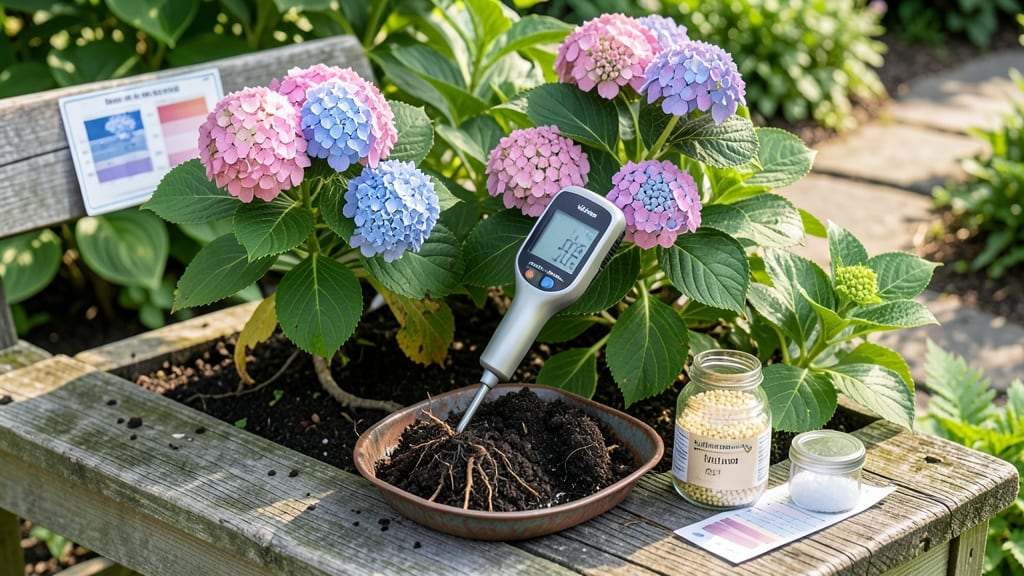
Your hydrangea soil acidity determines whether those blooms turn vibrant blue, soft pink, or deep purple — and getting it wrong means dull, lackluster flowers no matter how much you water.
Picture this: You’ve spent weeks nurturing your 🌸 hydrangeas, only to stare at pale, washed-out blooms come summer. The fix? Adjusting the pH of your soil to unlock the full color potential of your plants. This isn’t just guesswork—it’s science, and I’ll show you exactly how to control it.
From testing your soil’s acidity to choosing the right amendments (like sulfur or peat moss), we’ll cover the optimal pH ranges for each bloom color and troubleshoot common mistakes that ruin your results.
Ready to transform your hydrangeas into a showstopping display? Let’s dive into the exact steps to get your soil—and your blooms—just right.
Optimal hydrangea soil pH ranges for blue, pink, OR purple flowers
Did you know your hydrangea blooms can change color based solely on soil acidity? The pH level of your garden soil directly influences whether your hydrangeas produce blue, pink, or purple flowers.
This isn’t just a gardening myth—it’s science rooted in aluminum availability and pigment production. Let’s dive into the exact pH ranges that unlock stunning colors in your mophead, lacecap, and oakleaf varieties.
Hydrangeas thrive in acidic to slightly acidic soil, with an ideal pH range between 5.0 and 6.0 for blue flowers. As you raise the pH level toward 7.0, the blooms shift from blue to pink, and even purple hues appear in some varieties.
This transformation happens because aluminum becomes more available in acidic soil, which influences the anthocyanin pigments responsible for color. Understanding this relationship is key to achieving the vibrant blooms you’ve always wanted.
The pH scale ranges from 0 (most acidic) to 14 (most alkaline), with 7.0 being neutral. For hydrangeas, staying within the 5.0–7.0 range ensures healthy growth and vibrant colors. However, the color shift isn’t linear—small changes in pH can dramatically alter bloom hues.
For example, a pH of 5.2 might yield deep blue flowers, while a pH of 6.2 could produce soft pink blooms. Let’s explore the exact pH targets for each desired color.
| Desired Bloom Color | Optimal pH Range | Aluminum Availability | Hydrangea Variety |
|---|---|---|---|
| Deep Blue | 4.5–5.2 | High (acidic soil) | Mophead, Lacecap |
| Soft Pink | 5.5–6.0 | Moderate | All varieties |
| Purple | 6.0–6.5 | Low (neutral soil) | Oakleaf, Some Mophead |
| Lavender | 6.5–7.0 | Very Low | Lacecap, Oakleaf |
Note: Aluminum availability decreases as pH increases, shifting pigment production from blue to pink or purple.
If you’re growing mophead hydrangeas, aim for a pH between 5.0 and 5.5 to achieve that classic blue hue. These varieties are particularly sensitive to soil acidity, so even a slight shift toward 6.0 can turn your blooms pink.
For lacecap hydrangeas, the pH range is slightly more flexible, allowing for blue at 5.0–5.5 and pink at 6.0–6.5. Meanwhile, oakleaf hydrangeas can handle a broader range, producing purple or lavender blooms when the pH reaches 6.5–7.0.
Why does this happen? The anthocyanin pigments in hydrangea flowers rely on aluminum ions to produce blue colors. In acidic soil, aluminum becomes more soluble and available for uptake by the plant, enhancing blue pigmentation.
As the pH rises, aluminum binds to soil particles and becomes less accessible, leading to a shift toward pink or purple hues. This is why testing your soil pH and making targeted adjustments is crucial for achieving your desired bloom color.
For deep blue blooms, maintain a pH of 4.5–5.2. This range ensures maximum aluminum availability and vibrant blue pigmentation. If your soil is naturally alkaline, you’ll need to lower the pH using organic amendments like peat moss, pine needles, or sulfur.
On the other hand, if you prefer pink or purple flowers, allow the pH to rise to 6.0–7.0 by adding lime or wood ash. Each adjustment should be made gradually to avoid shocking your plants.
One common misconception is that hydrangeas can thrive in any soil as long as they get enough water. However, soil acidity plays a far more significant role in bloom color and overall plant health.
For instance, yellowing leaves or stunted growth often signal pH imbalances. By monitoring and adjusting your soil pH, you can ensure
How to test and adjust soil acidity for hydrangeas
Testing your hydrangea soil acidity is the first step to unlocking those dreamy blue blooms or soft pink flowers. Most gardeners don’t realize how much control they have over bloom color simply by adjusting their soil’s pH level.
The good news? You don’t need a fancy lab to get accurate results—simple DIY pH test kits work perfectly for hydrangeas.
Before diving into amendments, grab a soil pH test kit (available at garden centers for $10–$20) or send a sample to a local extension office for precise lab testing.
For best results, test your soil in early spring before planting or fertilizing. This gives you time to adjust pH levels before your hydrangeas start pushing new growth.
While hydrangeas thrive in acidic soil (pH 5.0–6.0), pushing the pH too low (below 4.5) can harm roots and stunt growth. Aluminum sulfate and peat moss are effective but potent—always start with small amounts (½ cup per plant) and retest soil in 4–6 weeks.
Overdoing it can create a toxic environment for your shrubs.
Once you’ve confirmed your current pH level, it’s time to adjust. For blue blooms, aim for pH 5.0–5.5. To lower pH, mix elemental sulfur (1–2 pounds per 100 sq ft) into the top 6 inches of soil and water thoroughly.
Organic options like pine needles or composted leaves also work slowly over time.
Need pink or purple blooms instead? Raise the pH to 6.0–7.0 by adding lime (1–2 pounds per 100 sq ft). Sprinkle it around the base of your hydrangea in early spring, then water deeply.
Avoid lime near the stems to prevent root burn. For a gentler approach, use wood ash sparingly (¼ cup per plant).
After amending, monitor your hydrangeas closely. Yellowing leaves often signal over-acidification, while brown leaf tips may mean the soil is too alkaline. Re-test soil every 3–4 months during the growing season to maintain your target pH. Mulching with pine bark or sphagnum peat moss helps preserve acidity naturally.
Remember, consistency is key. Hydrangeas respond best to gradual changes—never shock the roots with drastic pH shifts. With patience and the right soil amendments, you’ll be rewarded with show-stopping blooms in your desired color every season! 🌸