
Pruning
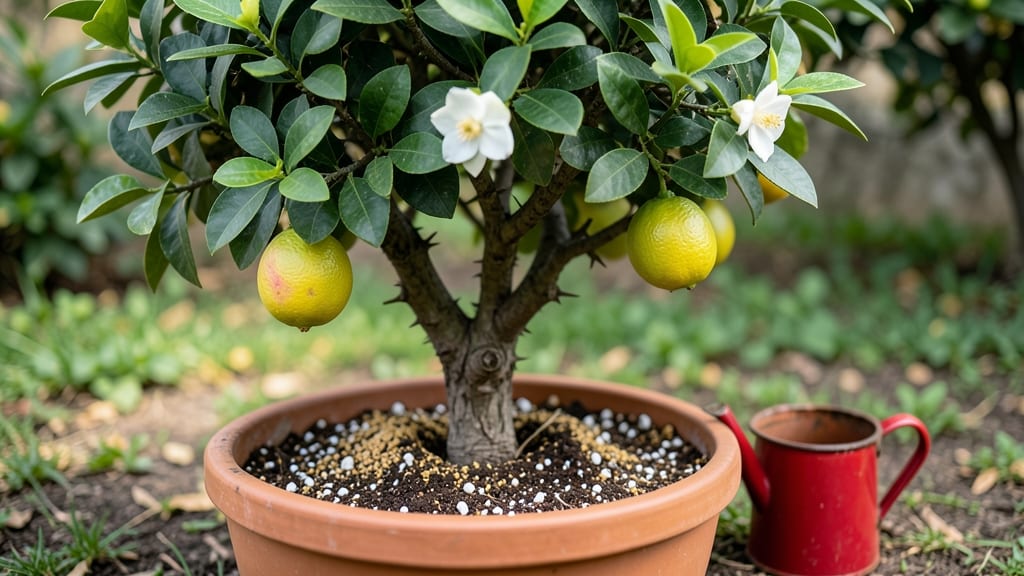
For a Meyer lemon tree, you'll want well-draining, slightly acidic soil with a pH between 5.5 and 6.5, created by mixing equal parts sandy loam, peat moss, and compost. Avoid heavy clay or alkaline soils to prevent root rot and nutrient deficiencies.
The right soil mix isn't just about drainage—it's about creating the perfect environment for nutrient absorption. 🌱 Meyer lemon trees love slightly acidic conditions because this pH range unlocks essential minerals like iron and manganese, which are crucial for vibrant foliage and fruit production.
If your soil tests higher than 6.5, the tree may struggle to absorb these nutrients, leading to yellowing leaves even when moisture levels seem fine. I've seen firsthand how a simple soil adjustment can transform a struggling Meyer lemon tree into a thriving one within just a few months.
When mixing your own blend, focus on aeration and organic matter. Sandy loam provides the grit needed for drainage, while peat moss retains moisture without suffocating roots. Adding compost introduces beneficial microbes that help break down organic material into plant-accessible nutrients.
For container growing, I recommend adding 10-20% perlite to improve airflow, especially in smaller pots where roots can become compacted more easily.
💡 In This Article
- Why Soil pH Matters for Meyer Lemon Tree Health
- DIY Meyer Lemon Tree Soil Mix Recipes for Containers and Ground Planting
Why soil pH matters for Meyer lemon tree health
Meyer lemon trees require a slightly acidic soil environment with a pH range of 5.5 to 6.5 because this acidity level optimizes nutrient availability in the root zone.
At this pH, essential micronutrients like iron, manganese, and zinc—crucial for chlorophyll production and enzyme function—become soluble and readily absorbable through the root hairs.
When soil pH rises above 6.5, these nutrients precipitate into insoluble forms, leading to deficiency symptoms like interveinal chlorosis (yellowing between leaf veins) even when the plant appears adequately watered.
The root system of Meyer lemons develops a network of fine feeder roots that thrive in well-aerated, slightly acidic conditions. These roots actively seek out nutrients through a process called chelation, where organic compounds bind to metal ions, making them accessible.
In alkaline soils (pH 7.0+), this chelation process breaks down, causing nutrient lockout. I've observed that trees in alkaline soil often exhibit stunted growth and poor fruit set because their roots can't access the iron and zinc they desperately need—even when these nutrients are present in the soil.
Another critical factor is how pH affects microbial activity in the rhizosphere (the soil region influenced by root secretions). Beneficial microbes like mycorrhizal fungi and nitrogen-fixing bacteria flourish in acidic conditions, creating a symbiotic relationship that enhances nutrient uptake.
These microbes help break down organic matter into forms the tree can use, while also producing growth-promoting hormones. When soil pH drifts toward neutral or alkaline, this microbial community diminishes, reducing the tree's overall nutritional efficiency by up to 40% in severe cases.
Visual clues can help you identify pH-related issues. Yellowing leaves that start between the veins (while keeping green veins) are classic signs of iron deficiency, often caused by alkaline soil. The tree may also produce small, underdeveloped fruit or exhibit slow growth despite adequate watering.
To test your soil's pH, use a simple home test kit or send a sample to your local cooperative extension service—they'll provide precise readings and recommendations for amendments.
For container growers, pH management is even more critical because roots have less volume to buffer against fluctuations. The confined environment means any pH imbalance affects the entire root system more quickly.
I recommend testing container soil annually, especially if you notice new growth problems. A 1-2 point pH shift can significantly impact nutrient availability, so regular monitoring prevents long-term health issues.
If your soil tests too alkaline, you can lower the pH by incorporating elemental sulfur (apply 1-2 pounds per 100 square feet and water thoroughly) or organic amendments like pine bark fines or peat moss.
These materials release hydrogen ions over time, gradually acidifying the soil. For immediate results, you can use sphagnum peat moss mixed into the root zone—it's one of the most effective organic acidifiers available.
The bottom line is that pH isn't just a number—it's the foundation of your Meyer lemon tree's ability to access the nutrients it needs to thrive. When the pH is in the ideal range, you'll see stronger stems, darker green foliage, and more abundant flowering. 🌿