
How To
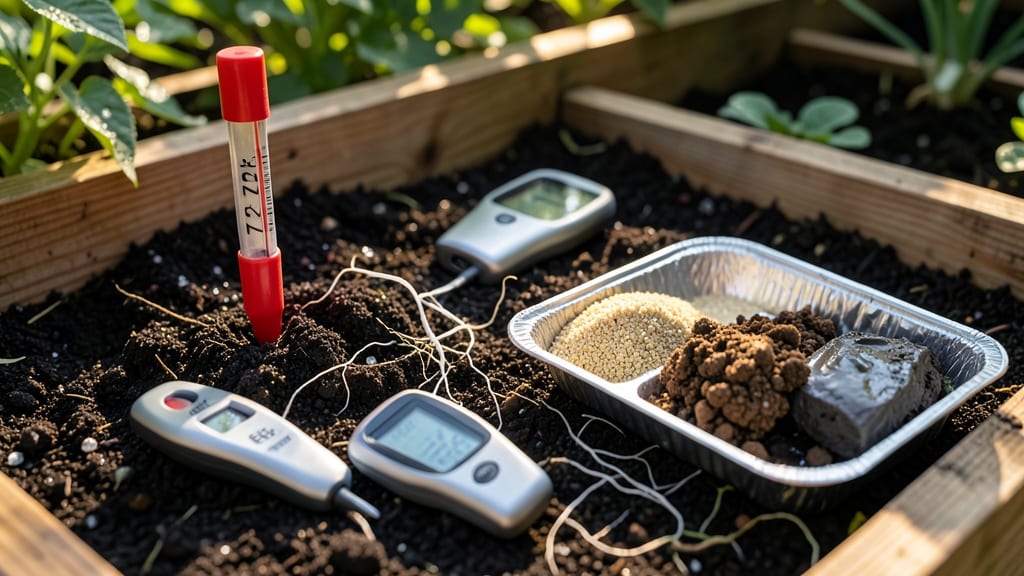
Soil and temperature work together to determine plant growth success by influencing root development, nutrient absorption, and microbial activity. Ideal soil warmth (60-75°F) unlocks enzyme activity, while moisture retention and aeration depend on soil composition and ambient heat balance.
Understanding how soil temperature interacts with your garden's foundation is key to unlocking healthy plant growth. 🌱 When soil stays within the optimal range, roots grow more aggressively, absorbing nutrients more efficiently.
For example, cool-season crops like lettuce thrive at 50-65°F, while tropical plants need 75-85°F to activate their full metabolic potential. The right balance also prevents soil-borne diseases by keeping microbial activity in check, which is why I always monitor both temperature and moisture levels before planting.
What many gardeners overlook is how soil composition affects temperature regulation. Sandy soils heat up and cool down quickly, while clay holds warmth longer but can become waterlogged. This is why I recommend testing your soil's texture and adjusting with organic matter—like compost—to improve both temperature stability and nutrient availability.
The goal is creating an environment where roots can thrive year-round, not just during peak growing seasons.
💡 In This Article
- How Soil Temperature Affects Root Systems and Nutrient Uptake
- Adjusting Soil Conditions for Optimal Temperature Performance
How soil temperature affects root systems and nutrient uptake
Soil temperature directly controls root respiration rates, which determine how efficiently plants absorb water and nutrients. At temperatures below 50°F, root activity slows dramatically, often stalling germination and early growth.
This is why cool-season crops like spinach and peas thrive in spring when soil temps hover around 50-65°F—their roots can still function while avoiding heat stress. The magic happens between 60-75°F, where enzyme systems in roots reach peak efficiency, breaking down complex nutrients into forms plants can absorb.
The relationship between temperature and microbial activity is equally critical. Soil microbes—like bacteria and fungi—require warmth to decompose organic matter, releasing nutrients like nitrogen and phosphorus. At 75°F, microbial activity can double compared to 50°F, but exceeding 85°F often kills beneficial organisms.
Sandy soils, which heat up faster, may see nutrient spikes in summer, while clay soils retain warmth longer but can develop anaerobic zones where microbes suffocate. This is why soil texture matters—it dictates how quickly heat penetrates and how long it lingers, affecting nutrient cycles.
Root growth patterns also shift with temperature. In cooler soils (55°F), roots grow deeper in search of warmth, while in warmer soils (70°F), they spread wider to maximize nutrient absorption.
This explains why shallow-rooted plants like strawberries struggle in hot climates—their roots can't access moisture deep enough. The temperature also influences root hair development, which increases surface area for nutrient uptake. At 68°F, root hairs grow most vigorously, creating a 10x greater absorption capacity than at 45°F.
One often-overlooked factor is how temperature affects nutrient solubility. Phosphorus, for example, becomes 3x more available at 70°F than at 50°F, while nitrogen compounds break down faster in warmer soils. This is why fertilizers applied in cold soil may wash away before plants can use them.
The balance between temperature and moisture is delicate—too dry and roots can't regulate their internal temperature, leading to stress. This is why mulching isn't just about moisture retention; it also moderates soil temperature swings by 5-10°F.
Consider the case of tomato plants: at 65°F, they develop strong root systems, but temperatures above 80°F cause roots to produce ethylene, a stress hormone that stunts growth. The same principle applies to microbial communities—beneficial mycorrhizal fungi thrive at 72°F but die off at 90°F.
This explains why organic matter decomposes faster in summer but may become locked away in cold soil, unavailable to plants until spring thaws.
For gardeners, understanding these thresholds means timing plantings precisely. Cool-season crops like broccoli should go in when soil temps are 40-50°F, while warm-season crops like peppers need 70°F+ to germinate. The key is matching plant needs to soil conditions—not just air temperature, which can be misleading.
A shaded area might stay 10°F cooler than full sun, creating microclimates where certain plants can thrive while others fail.
What most gardeners miss is how soil temperature interacts with pH levels. Warmer soils increase microbial activity, which can lower pH over time, making nutrients like calcium less available. This is why regular soil testing is critical—it reveals how temperature fluctuations affect your garden's chemistry.
The goal isn't just hitting a temperature range; it's creating an environment where roots, microbes, and nutrients work in harmony. 🌱