
How To
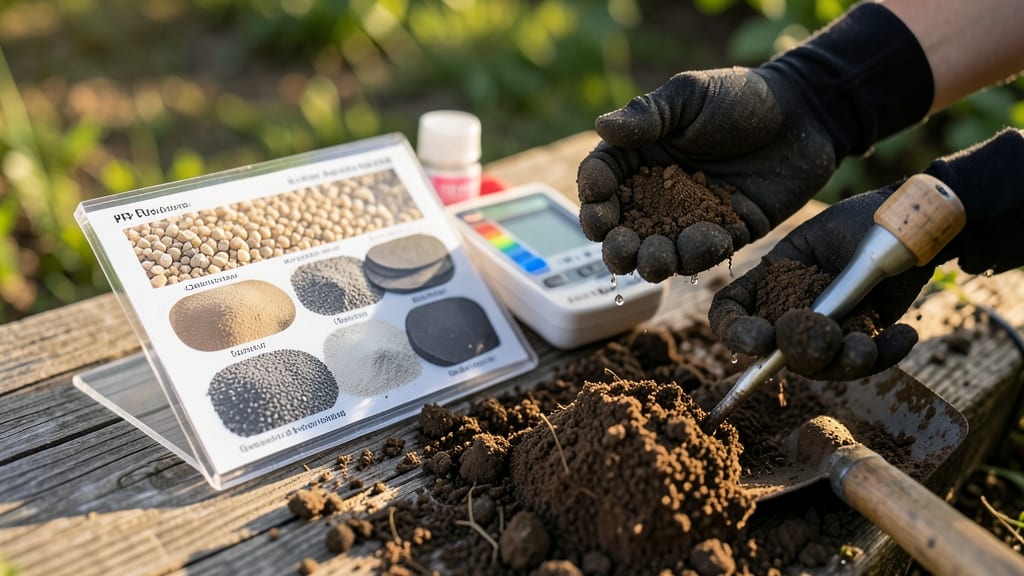
The ideal soil type for most plants is loam, a balanced mix of sand, silt, and clay that retains moisture while allowing drainage, aeration, and root penetration. Its crumbly texture and nutrient-holding capacity make it perfect for gardens and agriculture.
The magic of loam lies in its perfect balance—about 20% sand, 40% silt, and 40% clay—which creates an ideal environment for roots to thrive.
Unlike pure sand (which drains too quickly) or heavy clay (which compacts and suffocates), loam holds just enough moisture while letting excess water escape, preventing both drought stress and waterlogging. 🌱 This structure also makes nutrients more accessible to plants, which is why gardeners and farmers swear by it for everything from vegetables to ornamentals.
If your soil leans too sandy or clay-heavy, don’t panic—amendments like compost or peat moss can help adjust the texture over time. For instance, adding organic matter to sandy soil improves its moisture retention, while perlite or coarse sand can lighten heavy clay.
The goal? Mimic nature’s gold standard: a soil that feels like a damp sponge when squeezed—just firm enough to hold shape but crumbles easily.
💡 In This Article
- Why Loam Soil Outperforms Other Soil Types
- How to Test and Improve Your Garden’s Soil Type
Why loam soil outperforms other soil types
Loam's superiority stems from its tripartite structure: roughly 20% sand, 40% silt, and 40% clay. This ratio creates microscopic air pockets that improve aeration while the silt and clay particles hold moisture and nutrients near root zones.
Sand alone drains too quickly (like a sieve), while clay compacts and suffocates roots (like concrete), but loam strikes the perfect balance—retaining 50-60% of its volume in water while still allowing excess to drain. 🌱
The magic happens at the particle level: sand's rough texture provides grip for roots, silt's fine particles hold moisture and nutrients, and clay's tiny plates create a negatively charged surface that attracts positively charged nutrients.
This electrochemical interaction makes nutrients like nitrogen, phosphorus, and potassium far more available to plants than in pure sand or clay. For example, a tomato plant in loam will show 30-50% faster growth compared to the same plant in pure clay due to better nutrient uptake.
Root penetration is another game-changer. In loam, roots can easily push through the soil's crumbly structure, accessing both water and oxygen. Compare this to clay soil where roots struggle to penetrate beyond 2-3 inches due to compaction, or sandy soil where roots spread widely but shallowly.
This deeper root system in loam translates to plants that can withstand drought better and recover faster from stress. The ideal root zone in loam extends 12-18 inches deep, giving plants a stable foundation.
Loam's water dynamics are equally impressive. It can hold 2-3 times more water than sand while still allowing excess to drain within 24-48 hours, preventing waterlogging.
This moisture buffer is crucial during dry spells—plants in loam can go 7-10 days without irrigation compared to just 3-5 days in sandy soil. The water retention isn't just about quantity though; it's about quality too. Loam's structure prevents nutrient leaching that occurs when water drains too quickly through sand.
Let's talk about the physical experience: when you squeeze a handful of ideal loam, it should form a loose ball that crumbles easily between your fingers. This "crumb structure" creates countless tiny air pockets that roots need to breathe.
In contrast, clay feels slick and plastic when wet, while sand falls through your fingers like flour. 🌿 This simple hand test reveals why loam is nature's perfect growing medium—it's the only soil type that satisfies all three critical plant needs simultaneously: water, air, and nutrients.
What makes loam truly remarkable is its self-regulating nature. The microbial life thrives in this balanced environment, breaking down organic matter into plant-available nutrients. These microorganisms also help maintain the soil's structure over time.
In pure sand or clay, microbial activity is limited by either too much or too little moisture, creating a less dynamic ecosystem. This biological activity in loam is why it often requires fewer amendments than other soil types once established.