
Vegetables
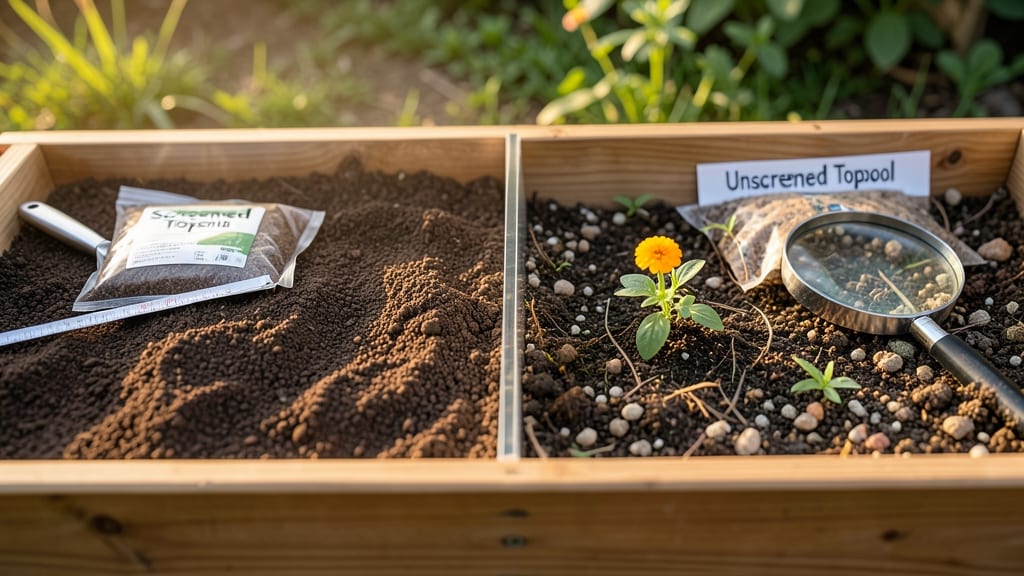
Your vegetable roots will either thrive or suffocate depending on whether you choose screened topsoil vs unscreened—and the difference isn't just about drainage. 🌱 I learned this the hard way when my tomato plants struggled in heavy, clumpy soil last summer, only to explode with growth once I switched to properly screened dirt.
The choice affects everything from water flow to weed pressure, and picking wrong can mean wasted time and money.
Screened soil gets sifted through a ¼-inch mesh, removing rocks, roots, and debris, leaving behind uniform, crumbly texture that drains like a dream. It’s pricier but ideal for raised beds, container gardens, and vegetable plots where you want perfect conditions.
Unscreened soil, on the other hand, keeps the natural structure—including stones and organic matter—which can be great for restoring native soil or filling large areas where cost matters more than precision.
Here’s the kicker: screened soil prevents root rot by letting excess water escape, while unscreened soil can compact over time, trapping moisture and inviting weeds.
For tomatoes, peppers, and herbs, screened is the clear winner—but if you’re restoring a lawn or filling a massive garden bed, unscreened might save you hundreds while still getting the job done.
Need a quick rule of thumb? Use screened for high-value plants or small spaces, and unscreened for bulk projects where a few rocks won’t ruin the party. Either way, you’ll see the difference in how your plants grow—just don’t skip the prep work.
The first product explained
Meet EcoGrow Premium Screened Topsoil—your go-to choice for gardeners who demand perfect drainage without sacrificing nutrient-rich soil. 🌱✨ This product is meticulously screened to remove rocks, debris, and clumps, ensuring a consistent, fine texture that promotes healthy root growth and optimal water flow.
Whether you're growing veggies, herbs, or flowers, EcoGrow’s screened topsoil delivers pro-level results with ease.
📏 Key Specs & Features
- Screened to ¼-inch: Eliminates unwanted particles for a smooth, workable texture.
- Organic blend: Enriched with compost and essential nutrients to support plant vitality.
- pH-balanced (6.0–7.0): Ideal for most vegetables and flowering plants.
- Lightweight yet dense: Improves aeration while retaining moisture efficiently.
- 1.5 cubic feet per bag: Perfect for raised beds, containers, or small garden patches.
🎯 Who’s It For?
EcoGrow is a must-have for:
- Urban gardeners with limited space (containers, window boxes).
- Vegetable growers prioritizing drainage + nutrition (tomatoes, peppers, greens).
- DIY landscapers creating neat, debris-free garden beds.
- Organic enthusiasts who want clean, chemical-free soil.
💰 Price Point & Value
Priced at $12.99 per 1.5 cu. ft. bag (or bulk discounts for 5+ bags at $10.99 each), EcoGrow offers unmatched value for its quality. While it’s slightly more expensive than unscreened options, the time and hassle saved (no weeding through rocks!) make it a smart long-term investment.
Pro Tip: 💡 Mix EcoGrow with perlite or vermiculite for even better drainage in heavy-clay soils!
The second product explained
If you're looking for a budget-friendly yet high-quality option that balances affordability with performance, Unscreened Topsoil (Bulk Delivery) is your go-to choice. 🌱 This raw, natural soil is perfect for gardeners who prioritize cost savings without compromising on organic matter—ideal for filling large garden beds, raised planters, or even land grading projects.
Key Specs & Features
Unscreened topsoil is the unrefined version of screened soil, meaning it retains larger particles, roots, and organic debris—giving it a richer, more natural composition. Here’s what sets it apart:
- Particle Size: Mixed, including small rocks, roots, and organic matter (no uniform screening).
- Moisture Retention: Higher due to natural organic content, but may require occasional aeration.
- Drainage: Slower than screened soil (⚠️ not ideal for waterlogged areas unless amended).
- Nutrient Density: Packed with decomposing plant material, beneficial for long-term soil health.
- Best For: Bulk projects, compost blending, or areas where drainage isn’t a primary concern.
Who Should Use It?
This product is a gardeners’ secret weapon for:
- 🌿 Large-scale landscaping (e.g., filling in low spots or creating slopes).
- 🍅 Vegetable gardeners who want to build soil fertility over time (great for compost mixing!).
- 🏡 DIYers on a budget—unscreened soil is often 30–50% cheaper than screened per cubic yard.
- 🌳 Tree/hedge planting where root penetration isn’t restricted by fine particles.
Price Point & Availability
Pricing varies by region, but unscreened topsoil typically costs $12–$25 per cubic yard (vs. $25–$40 for screened).
Many local nurseries or bulk soil suppliers offer free delivery on orders over 10+ yards, making it a steal for big projects. Pro Tip: 💡 Call ahead to ask about compost blends—some suppliers mix in aged manure or biochar for extra nutrients!
⚠️ Caution: If drainage is critical (e.g., for root veggies like carrots or potatoes), consider amending with perlite or sand to improve airflow.
Head-to-head comparison
🌱 Performance: Drainage & Root Health
When it comes to keeping your veggie roots happy, drainage is everything! Screened topsoil and unscreened topsoil take drastically different approaches to this critical task.
| Factor | Screened Topsoil | Unscreened Topsoil |
|---|---|---|
| Drainage Efficiency | ✅ Excellent – Removes rocks, debris, and large particles, allowing water to flow freely. Ideal for heavy clay soils or raised beds. | ⚠️ Moderate – Natural particles (rocks, roots, sticks) can clog drainage pathways, leading to water pooling. |
| Root Oxygenation | ✅ Superior – Uniform texture promotes better aeration, reducing root rot risk in moisture-sensitive crops like tomatoes and peppers. | ⚠️ Variable – Uneven texture may create air pockets or compaction, stressing roots in plants like carrots or beets. |
| Water Retention | 💧 Balanced – Holds moisture without sogginess, perfect for drought-prone areas or container gardening. | 💧 Higher (but risky) – May retain too much water, drowning delicate seedlings or encouraging fungal growth. |
💡 Pro Tip: For maximum drainage control, mix screened topsoil with perlite or coarse sand (1:4 ratio) in raised beds or containers!
🛠️ Features: Texture & Composition
What’s actually in your soil can make or break your garden’s success. Here’s how these two stack up:
- Particle Size:
- Screened: Uniform, fine-to-medium particles (typically <0.5" diameter). Feels silky-smooth like a fresh batch of baking flour! 🍞
- Unscreened: Mixed textures—sandy patches, pebbles, and organic debris. Think of it like a trail mix for soil! 🥜
- Debris Content:
- Screened: Zero rocks, roots, or weeds. Ready to plant ASAP!
- Unscreened: May contain twigs, seeds, or even old roots. Requires extra prep (like sifting or composting).
- Nutrient Density:
- Screened: Often sterilized (heat-treated), so it’s nutrient-neutral. Great for amending existing soil.
- Unscreened: Naturally richer in organic matter but inconsistent. Could be a goldmine—or a minefield of weeds!
⚠️ Watch Out: Unscreened soil might hide surprises like weed seeds or disease spores. Always solarize or bake it first!
$💰 Price: Cost per Cubic Yard
Budget matters, and these two options deliver very different price tags:
| Type | Avg. Cost (USD) | Best For |
|---|---|---|
| Screened Topsoil | $15–$30/cubic yard | 🌿 Urban gardens, containers, or high-value crops (e.g., strawberries, herbs). |
| Unscreened Topsoil | $10–$20/cubic yard | 🌱 Large-scale planting, bulk amendments, or low-maintenance areas (e.g., ground covers). |
💡 Pro Tip: Buy screened topsoil in smaller bags (1–2 cubic feet) if you’re testing drainage in containers—it’s cheaper per unit than bulk!
🏗️ Durability: Longevity & Erosion Resistance
How well your soil holds up over time affects years of harvests. Here’s the breakdown:
- Compaction Resistance:
- Screened: High – Uniform texture resists compaction, ideal for foot-traffic areas (e.g., garden paths).
- Unscreened: Low-Medium – Rocks and debris can create weak spots. Best for loose, undisturbed areas.
- Erosion Risk:
- Screened: Lower – Smooth particles bind better, reducing runoff in sloped gardens.
- Unscreened: Higher – Loose debris can wash away in heavy rains. Mulch heavily to protect!
- Settling Over Time:
- Screened: Minimal – Stays fluffy longer, great for long-term raised beds.
- Unscreened: Moderate – May compact or decompose faster, requiring top-ups.
🌡️ Extreme Climate Tip: In freeze-thaw zones, screened soil’s uniformity prevents ice lenses (frost heaves) that can uproot seedlings!
🔄 Maintenance: Effort & Upkeep
Some soils demand more TLC than others. Here’s what to expect:
| Task | Screened Topsoil | Unscreened Topsoil |
|---|---|---|
| Pre-Planting Prep | ✅ Zero effort – Just spread and plant! | ⚠️ Moderate – May need sifting, composting, or solarization to remove debris. |
| Weed Control | ✅ Nearly weed-free – Screening removes seeds. | ⚠️ High risk – Weed seeds and roots may sprout. Mulch aggressively! |
| Amendments Needed | 🔄 Frequent – Nutrient-poor; add compost or fertilizer regularly. | 🌿 Occasional –
Which one should you choose?So, which topsoil reigns supreme for your garden’s drainage and root health? The answer depends on your specific needs, project type, and long-term goals. Here’s a clear breakdown to help you decide: ✅ Choose Screened Topsoil If:
🌱 Opt for Unscreened Topsoil If:
🔄 Pro Tip for Hybrid Solutions:Can’t decide? Layer them! Use unscreened topsoil as a base for nutrients, then top with screened topsoil for drainage—especially in vegetable beds. This gives you the best of both worlds: fertility + flow. 💡 Final Verdict: For vegetable gardens and high-drainage needs, screened topsoil is the MVP. For low-maintenance, nutrient-rich projects, unscreened wins. Test your soil first—if it’s already fertile, screened might be all you need. Happy planting! 🌱 |