
How To
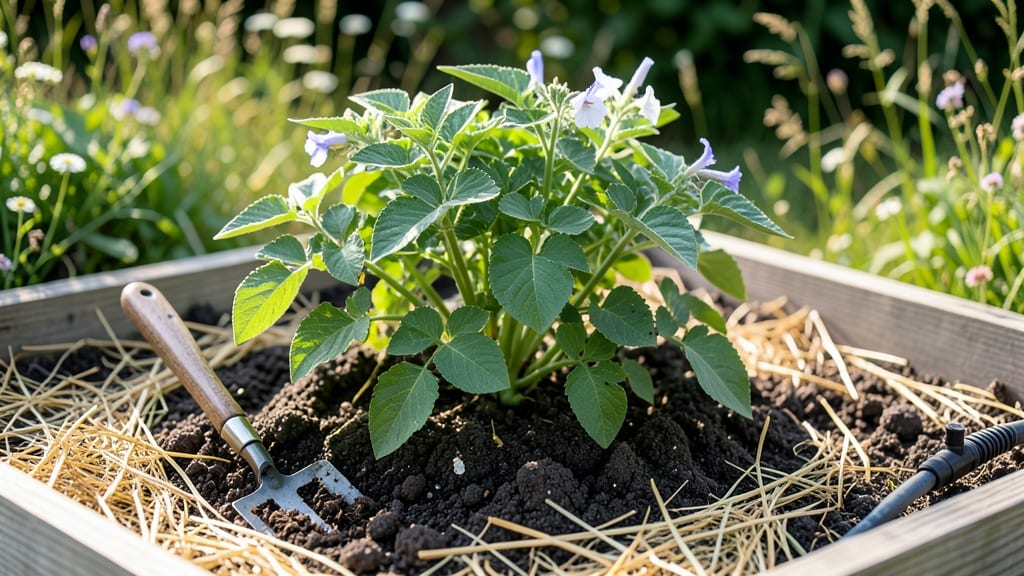
For healthy potato growth, your soil must meet three key requirements: loose texture, excellent drainage, and a slightly acidic pH—anything less and you’re risking rot or stunted tubers.
Picture this: you’ve planted your 🥔 seed potatoes with high hopes, only to find them shriveling underground because the soil is too dense or waterlogged. The right mix isn’t just about dirt—it’s about creating the perfect environment for those tubers to swell and thrive.
In this guide, I’ll break down the exact soil composition potatoes crave—think 40-60% organic matter, the ideal sand-to-clay ratio, and how to fix heavy clay or sandy soil in just a few steps.
You’ll also learn why pH matters (hint: potatoes hate alkaline soil) and how to amend your garden for maximum yield.
Whether you’re working with in-ground beds or raised planters, these soil secrets will help you grow potatoes that rival your favorite farm stand—no fancy equipment required.
Ideal potato soil composition: loose texture, high organic matter, and perfect drainage
Potatoes thrive when planted in loose, well-aerated soil that balances moisture retention with excellent drainage. The perfect mix isn't just dirt—it’s a carefully crafted blend that prevents tuber rot while delivering nutrients directly to growing plants.
Think of it as a fluffy, nutrient-rich sponge that holds water without suffocating roots.
For maximum yields, your potato soil should contain 40-60% organic matter like compost or aged manure. This organic boost feeds microbes that break down nutrients into forms potatoes can absorb. Without it, your harvest will be small and stunted, no matter how much you water.
The remaining 40-60% should be mineral soil—a mix of sand, silt, and clay in the right proportions.
Here’s the science: Loose texture (achieved with 40% sand, 40% silt, and 20% clay) prevents compaction, which is critical because potatoes need room to expand underground. Too much clay makes soil dense, while too much sand causes nutrients to wash away.
The ideal ratio keeps roots oxygenated while holding moisture near the tubers.
Now, let’s break down the key components of perfect potato soil in this quick-reference table:
Don’t overlook pH balance—potatoes prefer slightly acidic soil between 5.0 and 6.5. Test your soil with a simple kit (available at garden centers for under $10). If your soil tests higher than 7.0, it’s too alkaline, and nutrients like phosphorus (critical for tuber formation) become locked away.
For acidic soil (below 5.0), add crushed limestone; for alkaline soil, mix in elemental sulfur or peat moss.
To test drainage at home, dig a hole 12 inches deep and fill it with water. If it drains completely within 1-2 hours, your soil is perfect. If water pools after 4+ hours, amend with coarse sand or perlite to improve aeration.
Heavy clay soil? Mix in 2-3 inches of compost and let it sit for a month before planting.
One common mistake is assuming "dirt" is enough. Pure mineral soil lacks the organic matter potatoes crave. Amend with well-rotted compost (not fresh manure—it burns roots) and consider adding bone meal for phosphorus.
My own garden’s potato patch doubled in yield after I swapped heavy clay for a 50-50 compost-mineral mix with perlite for extra fluff.
Pro tip: Mulch heavily with straw or grass clippings after planting. This keeps soil loose at the surface (where tubers form) and reduces weeds. Just avoid piling mulch against stems—keep it 2-3 inches away to prevent rot. With the right soil mix, your potatoes won’t just grow—they’ll explode underground.
🌱
How to amend your soil for potatoes: step-by-step mixing guide
Potatoes thrive in soil that’s loose, fertile, and well-draining—think of it as a fluffy, nutrient-rich bed for your tubers. If your garden soil is heavy clay or pure sand, don’t worry: with the right amendments, you can transform it into the perfect growing medium.
The key is balancing organic matter, aeration, and nutrient density to prevent rot and encourage strong root development.
Before you begin, test your soil’s pH (aim for 5.0–6.5) and texture. Clay soils need grit to break up compaction, while sandy soils require organic matter to hold moisture. No matter your starting point, these steps will help you create a potato-friendly soil mix tailored to your garden’s needs.
Step-by-Step Soil Amendments for Potatoes
- 1 Add 2–3 inches of compost to the top 6–8 inches of soil. Use well-rotted compost or aged manure (chicken, cow, or horse) to boost organic matter and microbial activity.
- 2 Incorporate perlite or vermiculite (1 part per 3 parts soil) to improve drainage and aeration. This is especially critical for clay-heavy soils to prevent waterlogging.
- 3 Mix in bone meal or kelp meal (1 tbsp per square foot) for a phosphorus and potassium boost. These nutrients support root development and tuber formation.
-
4
Adjust for soil type:
- • Clay soil: Add coarse sand (1 part sand per 2 parts soil) to loosen texture.
- • Sandy soil: Blend in peat moss (1 part peat per 3 parts soil) to retain moisture.
- • Loamy soil: Focus on compost and organic matter—it’s already balanced!
- 5 Till or double-dig the amendments into the top 12 inches of soil. This ensures even distribution and breaks up compacted layers where tubers will grow.
- 6 Test and mulch: After amending, add a 2-inch layer of straw or grass clippings to lock in moisture and suppress weeds. Replenish mulch as needed during the growing season.
For raised beds, mix amendments directly into the bed’s soil before planting. If you’re working with in-ground soil, repeat the process annually to maintain fertility. The goal? A soil so light and airy that your potatoes can expand freely without hitting a wall of compaction or drowning in water.
Pro tip: If your soil is alkaline (pH > 7.0), add elemental sulfur (1 lb per 100 sq ft) to lower the pH gradually. For acidic soils (pH < 5.0), sprinkle lime (5 lbs per 100 sq ft) and retest in 2–3 months. Balancing pH ensures your potatoes absorb nutrients efficiently.
With these amendments in place, your potatoes will have the perfect foundation to grow into plump, disease-resistant tubers. Happy digging! 🌱