
Tools
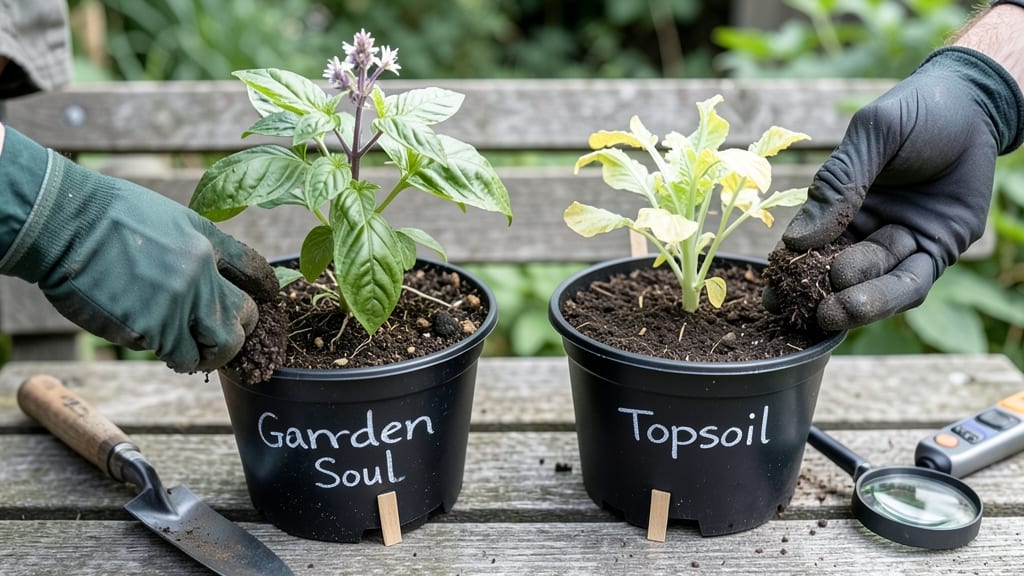
Garden soil is not the same as topsoil: topsoil is the nutrient-rich uppermost layer of earth, while garden soil blends topsoil with compost, sand, or organic matter to improve plant growth and drainage for specific gardening needs.
Garden soil is specifically formulated to meet the needs of different plants, often containing higher levels of organic matter like compost or peat moss to enhance fertility and moisture retention. 🌱 While topsoil is naturally occurring and great for leveling landscapes or establishing new lawns, garden soil is engineered to support vigorous plant growth by improving aeration and nutrient availability.
This makes it ideal for vegetable gardens, flower beds, and container plants where roots need optimal conditions to thrive.
For example, when planting tomatoes or peppers, garden soil's balanced composition helps prevent common issues like root rot or nutrient deficiencies.
Meanwhile, topsoil's natural structure makes it better suited for large-scale projects like filling in low spots or creating new garden beds where you want to preserve the soil's existing characteristics.
💡 In This Article
- Topsoil vs Garden Soil: Composition and Soil Structure Differences
- Choosing the Right Soil for Your Garden: Topsoil vs Garden Soil Uses
Topsoil vs garden soil: composition and soil structure differences
At the microscopic level, topsoil is nature's own fertilizer factory, packed with organic material that's been slowly decomposing for years. This layer—typically the top 6-8 inches of earth—contains 5-10% organic matter by volume, along with living microorganisms that break down nutrients into plant-available forms.
The texture varies naturally, often containing 20-30% sand, 30-40% silt, and 20-30% clay, creating a loose, crumbly structure that allows roots to penetrate easily.
Garden soil, however, is a carefully engineered product designed to optimize plant growth. Manufacturers typically blend 30-50% compost (often from yard waste or cow manure) with 40-60% topsoil, plus 5-15% perlite or vermiculite to improve aeration.
This creates a lighter, fluffier texture than natural topsoil—almost like mixing cake batter where every ingredient plays a specific role. The organic matter content jumps to 15-25%, providing immediate nutrients while improving water retention.
You'll notice how garden soil feels almost silky when moist, compared to topsoil's slightly grittier texture.
The nutrient profiles tell the full story. Natural topsoil contains slow-release nutrients that become available over seasons, while garden soil incorporates fast-acting fertilizers like bone meal or blood meal.
For example, a bag of garden soil might contain 0.5-1.0% nitrogen, 0.2-0.5% phosphorus, and 0.2-0.4% potassium upfront, compared to topsoil's 0.1-0.3% nitrogen that requires microbial activity to unlock. This explains why plants in garden soil often show visible growth within 2-3 weeks versus 6-8 weeks in natural topsoil.
Another key difference lies in the pH balance. Garden soil is typically amended to maintain a 6.0-7.0 pH range, ideal for most vegetables and flowers, while natural topsoil can vary widely—sometimes as acidic as 5.0 or as alkaline as 8.0 depending on the region.
This controlled pH is crucial for micronutrient availability; for instance, iron becomes more accessible to plants when the soil is slightly acidic, but too much acidity can lock out calcium and magnesium. 🌱
Consider the physical structure under a microscope: topsoil particles clump together in larger aggregates, while garden soil's added organic matter creates smaller, more stable crumbs. This difference affects drainage dramatically—garden soil drains 20-30% faster than natural topsoil while retaining 15-20% more moisture.
The porous structure also supports beneficial microbial colonies that can number in the billions per cubic inch, creating a thriving ecosystem that accelerates decomposition and nutrient cycling.
For gardeners who've worked with both, the sensory differences become obvious when handling them. Fresh garden soil often carries a rich, earthy aroma from the compost additions, while topsoil smells more mineral and neutral.
When moistened, garden soil forms delicate ribbons between your fingers before crumbling, while topsoil tends to form thicker, more durable strands. These tactile differences reflect their fundamentally different purposes in the garden ecosystem.